The Growth of Energy Storage and its Impact on Electrical Contractors
June 14, 2020
The world has seen remarkable changes in the electricity sector.
Vast quantities of renewables and bi-directional flows on the grid, along with rapid cost declines and performance improvements have allowed for several major deployments of energy storage.
The continued growth of energy storage could create unprecedented opportunities for Canadian electrical contractors in the not too distant future.
We sat down with Paul Luukkonen, (Emerging Technologies Consultant) with Customized Energy Solutions, to understand the growing world of energy storage.
What is energy storage?
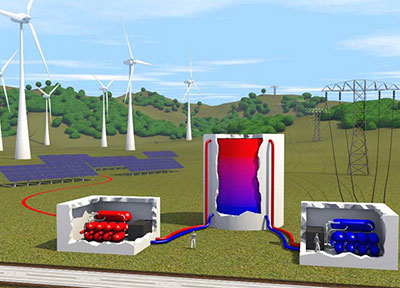
Energy storage is the capture of energy produced for future use. The energy can be stored in various ways, from pumped hydroelectric, compressed air, flywheels, batteries to thermal energy storage.
A core function is to store energy when supply exceeds load and inject energy when load exceeds supply. The technology provides high round trip efficiency, low operating cost, near-instantaneous response, zero direct emissions and the ability to free up generation capacity.
Energy storage also has the potential to reduce fossil fuel generation from natural gas peaker plants, enabling better utilization of surplus energy generated from renewable resources.
Massive growth
Across the industrial, commercial and residential sectors, energy storage is seeing massive growth in both demand and efficiency.
According to EIA’s Annual Electric Generator Report operating utility-scale battery storage power capacity has more than quadrupled from the end of 2014 (214 MW) through March 2019 (899 MW). Assuming currently planned additions are completed and no current operating capacity is retired, utility-scale battery storage power capacity could exceed 2,500 MW by 2023.
“Corporate policy and the general public’s preference for clean energy has also had an impact on what we’re seeing in the industry,” explains Paul. “New ways that energy is now managed in homes, businesses, transportation, local distribution systems and across the Provincial grid create substantial flexibility and demand for energy storage resources.”
“In other jurisdictions, we’re also seeing hybrid renewables paired with energy storage systems which improve system performance on-site and from a grid balancing perspective, giving more of what it needs in terms of reliability,” says Paul.
What this means for electrical contractors
With the growth in industry comes growth in jobs.
“When solar energy started booming about ten years ago, it began a disruptive shift from conventional sector activity and created numerous specialization opportunities,” says Paul. “There is a similar opportunity emerging around energy storage with its diversity in applications and scalability.”
Electrical contractors will likely see an increase in evolving labour opportunities, including grid-connected, hybrid, industrial and residential projects.
“Companies that are able to develop streamlined supply chain relationships, installation or other process efficiencies will have a competitive advantage as demand for energy storage increases,” says Paul.
“Government policy and efficient market mechanisms have a direct impact on industry growth. California has been a leader for many years, and recent government policy in New York will see substantial storage deployments through utility RFPs and incentives.”
As markets adapt and the adoption of energy storage continues to grow, so will job opportunities for Canadian electrical contractors.
The Joint Electrical Promotion Plan (JEPP) has chosen Customized Energy Solutions to perform its energy storage market research on future impacts and opportunities. CES is an Energy Services and Consulting Company and is a third-party operator of 220 MW of Energy Storage across North America.
This article was first published online by Powering Communities, an online initiative of the Electrical Contractors Association of Ontario (ECAO) and the International Brotherhood of Electrical Workers (IBEW). The ECAO and IBEW are a formidable team of employers and electricians who are recognized industry leaders in delivering safe, stable and high quality electrical/telecommunications construction and maintenance services. Find out more: www.poweringcommunities.ca