Ground Fault Circuit Interrupters & Ground Fault Protection – What’s The Difference?
February 25, 2022
By Ark Tsisserev,
P.Eng. former Chief Electrical Inspector for the City of Vancouver
This terminology is quite prominent in the industry, but it appears that some installers of electrical equipment have a bit of difficulty in differentiating ground fault circuit interrupters and ground fault protection. And what is the difference between a typical overcurrent protective device and a ground fault circuit interrupter?
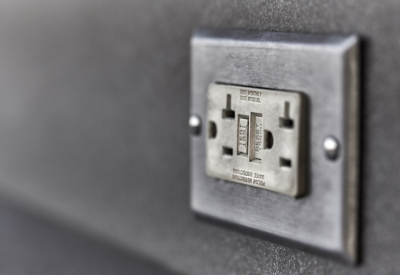
In general, a ground fault circuit interrupter (GFCI) is a device that detects dangerous ground faults and automatically turns off the power – to prevent electric shocks.
The electrical industry practitioners are well aware that there is a Class A GFCI, which provides personnel protection and operates when a fault current to ground (leakage current) exceeds 5 milliamps, and there is a Class B GFCI that provides equipment and circuit protection and trips when a fault to ground current exceeds 20 milliamps. Some GFCIs function as appliance leakage current interrupters (ALCI).
A Class A GFCI is also intended to open the circuit to the load if the neutral conductor is inadvertently grounded between the interrupter and the load.
Typical ground fault protection devices are intended to protect electrical equipment with different trip levels set as low as practicable, so normal operation of equipment would not be interrupted.
It should be noted that GFCIs and various types of ground fault protections are designed to automatically open the circuit to the load when a ground fault current level is less than a ground fault current or short circuit current required to operate the circuit overcurrent device.
However, the best place to find the difference between these various means of interrupting ground faults is the Canadian Electrical Code, Part I (CE Code).
First of all, let’s take a look at the relevant definitions offered by the CE Code.
Ground Fault – an unintentional electrical path between a part operating normally at some potential to ground, and ground.
Ground Fault Circuit Interrupter (GFCI) – a device that functions to interrupt a circuit or portion of a circuit, within a predetermined time, when a current to ground exceeds some predetermined value that is less than that required to operate the overcurrent protective device of the supply circuit.
Ground Fault Circuit Interrupter, Class A (Class A GFCI) – a ground fault circuit interrupter that will interrupt the circuit to the load, within a predetermined time, when the ground fault current is 6 mA or more but not when the ground fault current is 4 mA or less (see Appendix B).
Ground Fault Detection – a means of detecting a ground fault (see Appendix B).
Ground Fault Protection – a means of detecting and interrupting a ground fault current at a level less than the current required to operate the circuit overcurrent device (see Appendix B).
Overcurrent Device – any device capable of automatically opening an electric circuit, under both predetermined overload and short-circuit conditions, either by fusing of metal or by electromechanical means.
Some of the CE Code definitions shown above, provide additional explanatory notes on these definitions in Appendix B as follows:
Ground Fault Circuit Interrupter, Class A (Class A GFCI)
A Class A ground fault circuit interrupter (Class A GFCI) is an interrupter that will interrupt the circuit to the load when the ground fault current is 6 mA or more, but not when the ground fault current is 4 mA* or less in a time:
1. not greater than that given by the equation where T is in seconds; and I is the ground fault current in rms milliamperes for fault currents between 4 mA and 260 mA; and
2. not greater than 25 ms for ground fault currents over 260 mA.
* When the ambient air temperature is less than -5°C or more than 40°C, the minimum tripping current may be 3.5 mA instead of 4.
In addition, a Class A GFCI is to be capable of interrupting the circuit to the load, in keeping with the above requirements, if the identified circuit conductor (neutral) becomes inadvertently grounded between the interrupter and the load.
The prime function of a Class A GFCI is to provide protection against hazardous electric shocks from leakage current flowing to ground from defective circuits or equipment. It does not provide protection against shock if a person makes contact with two of the circuit conductors on the load side of the GFCI. Class A GFCIs are marked “GROUND FAULT CIRCUIT INTERRUPTER CLASS A” or with an abbreviated form such as “GFCI CL A”, “GFCI A”, or “CL A” where the area available for marking makes the complete text impracticable.
Ground Fault Detection
Ground fault detection devices (or devices and remote current sensors making up a detection system) are devices that detect a ground fault and provide an indication or alarm, or both, that a ground fault has been detected. They do not necessarily control or interrupt ground fault current and are therefore not considered a form of ground fault protection.
Ground Fault Protection
Ground fault detection devices that indicate a ground fault but do not control or interrupt ground fault current are not considered a form of ground fault protection. Users of this Code should refer to Canadian Electrical Code, Part II Standards for design, construction, and performance requirements for each particular type of ground fault protection mandated by this Code.
It is clear from these CE Code definitions and explanatory notes, that ground fault circuit interrupters are designed and constructed – to open a circuit upon presence of a predetermined level of a leakage current or a ground fault current, which is less than setting or rating of overcurrent devices designed to automatically open the electrical circuit if the circuit current reaches a value that will produce a dangerous temperature in the apparatus or conductor.
The CE Code provides requirements for installation of ground fault protection in feeders and circuits supplying very specific equipment. For example, ground fault protection is mandated by the CE Code for each feeder for distribution equipment on fixed or floating piers, docking facilities, and boathouses, with the ground fault setting sufficient to allow normal operation of the distribution equipment, but in no case greater than 30 mA. (see Section 78 of the CE Code).
Rule 64-112, which applies to interactive inverter or power conditioning unit connected to the supply authority system, mandates ground fault protection for equipment from all ground fault current sources, and requires ground fault protection devices for use with supplies connected to those load side terminals which are suitable for back-feeding.
Rule 62-116 mandates installation of ground fault protection – to de-energize all normally ungrounded conductors of electric heating cable sets, heating panel sets, and fixed infrared radiant heaters of the metal-sheath glowing element type, with a ground fault setting sufficient to allow normal operation of the heater.
Rule 34-302 requires to provide secondary-circuit ground fault protection for neon supplies in signs and outline lighting.
Rule 26-956 mandates ground fault protection to de-energize all normally ungrounded conductors supplying the submersible pump, and a ground fault current trip setting of such ground fault protection must be adjusted to function as low as practicable, in order to permit normal operations of the pump, but in no case shall the ground fault current setting be greater than 10 mA for an operating time period not exceeding 2.7 s.
It should be noted that some overcurrent devices installed in certain circuits of solidly grounded systems under conditions described in Rule 14-102(1) of the CE Code, must be also equipped with ground fault protection (see below):
14-102 Ground Fault Protection (see Appendix B)
(1) Ground fault protection shall be provided to de-energize all normally ungrounded conductors of a faulted circuit that are downstream from the point or points marked with an asterisk in Diagram 3 in the event of a ground fault in those conductors as follows:
(a) for circuits of solidly grounded systems rated more than 150 volts-to-ground, less than 750 V phase-tophase, and 1000 A or more; and
(b) for circuits of solidly grounded systems rated 150 V or less to ground and 2000 A or more.
Diagram 3 of the CE Code depicts where the ground fault protection required by Rule 14-102 must be located.

Rule 14-102 elaborates in great detail on the location and types of ground fault protection in circuits of solidly grounded systems on the required components of a ground fault tripping system and on operation requirements for various sensors in a ground fault protection system.
The CE Code also provides a wide range of requirements for protection of certain receptacles by a Class A ground fault circuit interrupter. These requirements are based on the objective of preventing a shock hazard to the persons using cord connected appliances plugged into receptacles intended for equipment maintenance, located in the vicinity of sinks, shower stalls, bathtubs, or receptacles in buildings of residential occupancy, when these receptacles are installed outdoors within 2.5 m of finished grade, etc.
A few examples of such requirements are shown below:
24-116 Receptacles Subject to Standing Fluids on the Floor or Drenching of the Work Area (see Appendix B)
All receptacles in areas subject to standing fluids on the floor or drenching of the work area shall be (1) protected by a ground fault circuit interrupter of the Class A type
26-704 Protection of Receptacles by a Ground Fault Circuit Interrupter of the Class A type (see Appendix B)
Receptacles having CSA configuration 5-15R or 5-20R installed within 1.5 m of sinks (wash basins complete with a drainpipe), bathtubs, or shower stalls shall be protected by a ground fault circuit interrupter of the Class A type, except where the receptacle is
(a) intended for a stationary appliance designated for the location; and
(b) located behind the stationary appliance such that it is inaccessible for use with general-purpose portable appliances.
26-710 Receptacles for Maintenance of Equipment Located on Rooftops (see Appendix B)
Receptacles required by Rule 2-316 for maintenance of heating, ventilating, air-conditioning, and similar equipment located on a rooftop shall be
(1) protected by a ground fault circuit interrupter of the Class A type
26-722 Protection of Residential Occupancy Receptacles Installed Outdoors by a Ground Fault Circuit Interrupter of the Class A type (see Appendix B)
Except for vehicle heater receptacles provided in conformance with Rule 8-400, all receptacles installed outdoors and within 2.5 m of finished grade shall be protected with a ground fault circuit interrupter of the Class A type.
38-085 Ground Fault Circuit Interrupter Protection for Personnel
(1) Each 125 V, single-phase receptacle installed in pits, hoistways, elevator and enclosed vertical platform lift car tops, and escalator or moving walk wellways shall be of the Class A ground fault circuit interrupter type.
58-308 Ground Fault Circuit Interrupter
Each 125 V, single-phase receptacle installed in machine rooms, control rooms, machine spaces, control spaces, and counterweight enclosures shall be protected with a ground fault circuit interrupter of the Class A type.
64-410 Receptacles for maintenance
Receptacles installed for maintenance of the wind turbine having CSA configuration 5-15R or 5-20R shall be protected by a ground fault circuit interrupter of the Class A type.
66-404 Receptacles
Receptacles having CSA configuration 5-15R or 5-20R installed in itinerant midways, carnivals, fairs, and festivals and intended to supply loads in outdoor or damp locations shall be protected by ground fault circuit interrupters of the Class A type.
68-064 Receptacles
(2) Receptacles located between 1.5 m and 3 m of the inside walls of a pool shall be protected by a ground fault circuit interrupter of the Class A type
72-110 Connection Facilities for Recreational Vehicles and Mobile Homes (see Appendix B)
(4) The receptacle described in Subrule (1)(a) or (b) shall be protected by a ground fault circuit interrupter of the Class A type.
76-016 Receptacles
Receptacles having CSA configuration 5-15R or 5-20R installed to provide power for buildings or projects under construction or demolition shall be protected by ground fault circuit interrupters of the Class A type.
78-050 Receptacles (see Appendix B)
(5) All receptacles rated at 125 V, 15 A or 20 A installed in conformance with Subrule (1) shall be protected by a ground fault circuit interrupter of the Class A type.
86-306 Receptacles for Electric Vehicle Supply Equipment (see Appendix B)
(2) When the receptacle referred to in Subrule (1)(a) is installed outdoors and within 2.5 m of finished grade, it shall be protected with a ground fault circuit interrupter of the Class A type.
It should be noted that in addition to the receptacles indicated in the examples above, the CE Code also mandates that other electrical equipment must be protected by a Class A ground fault circuit interrupter, if such equipment is located in a vicinity of swimming pools, represents a bare element water heater, a heating device which is installed less than 1.8 m above the floor and less than 1 m from a sink, or a switch installed within 1 m from a bathtub or shower stall.
It is interesting to note that although a ground fault detection does not interrupt the ground fault current, it automatically initiates a visual and audible alarm to indicate the presence of the ground fault to qualified persons. So, it could be considered as a part of ground fault protection. It should be also noted that the ground fault circuit interrupters, ground fault protection and ground fault detection devices are designed, constructed, tested, marked and certified to the CSA C22.2 No. 144 series standards.
Hopefully this was helpful in clarifying the difference between the referenced ground fault protection devices. And, as usual, the local AHJs should be consulted for specific issues related to installation of GFCIs and ground fault protection devices.
 Ark Tsisserev is President of EFS Engineering Solutions, Ltd., an electrical and fire safety consulting company, and is a registered professional engineer with a master’s degree in Electrical Engineering. Prior to becoming a consultant, Ark was an electrical safety regulator for the city of Vancouver. He is currently the chair of the Technical Committee for the Canadian Electrical Code and represents the CE Code Committee on the CMP-1 of the National Electrical Code.
Ark can be reached by e-mail at: ark.tsisserev@efsengineering.ca.
His company website is: http://www.efsengineering.ca
Article Published with Permission from the Author