Renewable Microgrids Are the Way Forward for Canada’s Remote Communities
Feb 6, 2016
Each year, over 90 million litres of diesel fuel are transported, at great cost, to remote communities in Canada. The season to safely navigate ice roads has become shorter due to climate change, leaving communities exposed to increased price and supply volatility. The Pembina institute has partnered with key stakeholders to see if renewable microgrids can offer a clean alternative, local economic development, and a renewed sense of community pride.
To many First Nation, Inuit and Metis communities, reducing diesel fuel use is consistent with their traditional way of life — using local resources and protecting the environment for future generations, says BarendDronkers, a consultant with the PembinaInstitute.*
This past fall, the Pembina Institute held its second Renewables in Remote Microgrids conference in Yellowknife, Northwest Territories. This conference brought different groups together including First Nations representatives, environmental NGOs, manufacturers, utilities, managers, extraction companies, and government representatives from both Canada and the U.S. (Alaska).
The conference focused on breaking down barriers to renewable energy investments in remote communities with microgrids. Discussions included local capacity including available skills and training, the right policies incentives, and affordable financing options. Delegates discussed the need to provide more efficient funding models including power purchase agreements (PPA), eliminating red tape for microgrid permits, and seeing through projects from start to finish
Building community capacity in order to ensure success was also talked about during the conference. Examples of programs which support community capacity for remote Canadian communities include British Columbia’s Coastal First Nation Great Bear Initiative. This program provides assistance to First Nation communities in discussion and planning for new energy projects.
Remote northern communities have many unique challenges. First, having access to high quality affordable food is needed. Healthy foods like fruits and vegetables are often expensive, a small bag of apples can cost as much as $15.00CDN. Lack of accessible healthy food has also created severe health problems in many Canadian First Nation communities, including high rates of diabetes.
The Pembina Institute supports using renewable microgrids to power northern greenhouses, along with training for local communities to grow vegetables in them. As a non-profit with a broad range of experts, the Pembina Institute is uniquely capable of offering such a holistic approach and partnering with northern communities.
Second, northern towns are trucking diesel in to power their energy system. This causes economic, financial, and environmental strain. Consider, 90 million litres of diesel were imported yearly from 2004 to 2008, according to an analysis from Natural Resources Canada.
By reducing the burden of diesel imports, more could be done to address a lack of modern infrastructure, provide access to clean drinking water, and improve housing.
Third, climate change is making winters shorter for northern First Nation Communities. This decreases the months for winter roads, which is vital for bringing in necessary goods. Ontario Regional Chief of the Assembly of First Nations Isadore Day said recently winter roads cannot be relied on anymore as they used to be a way of life for them. First Nations raised this concern during COP21 in Paris late last year.
Renewable microgrids can provide a way of leapfrogging forward for these communities who need clean energy alternatives, while providing modern access to energy, which can help in reducing food costs, improving housing conditions, and cutting diesel transportation to First Nation areas.
According to Barend Dronkers and the Pembina Institute, the pace of technological advancement in renewable energy and microgrids is faster than utilities, governments, and communities can react. Projects already on the ground should be driving policy and demonstrating positive effects on local capacity. Technology — properly deployed — can also reduce investment risk and increase community benefit. Examples include modularized plug-and-play systems and standardized technical designs. Governments can help by supporting developers with best-practice project execution that mitigates the risks of working in remote regions with harsh, unpredictable environments.
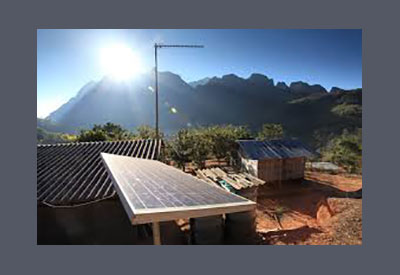
Already, we are slowly seeing this transformation taking shape. LutselK’e Dene First Nation in the Northwest Territories built a 35kW solar panel array in order to reduce high diesel costs. The system is likely to produce the most during summer months when delivery supply routes are cut off.
With the global microgrid market expected to reach US$35.1 billion by 2020, a great potential lies for Canadian First Nation remote communities, with the proper financial assistance, and training to build a resilient system in order to improve their lives.
Adam Johnston Is currently studying at the School of the Environment Professional Development program in Renewable Energy from the University of Toronto. Adam graduated from the University of Winnipeg with a three-year B.A. combined major in Economics and Rhetoric, Writing & Communications. His eventual goal is to be a cleantech policy analyst, and is currently sharpening his skills as a renewable energy writer. You can follow him on Twitter @adamjohnstonwpgor at www.adammjohnston.wordpress.com.
This article was first published by Microgrid Media, http://microgridmedia.com. Microgrid Media publishes empowering stories about resilience, renewable energy, and eliminating energy poverty.
* The Pembina Institute advocates for strong, effective policies to support Canada’s clean energy transition. It provides expertise to industry and government leaders. Find out more: www.pembina.org.

![Guide to the Canadian Electrical Code, Part 1[i], 26th Edition– A Road Map: Section 74 — Airport installations](https://electricalindustry.ca/wp-content/uploads/2026/05/EIN-Stock-Guide-Code-Canada-Map-1200-768x403.png)





![Guide to the Canadian Electrical Code, Part 1[i], 26th Edition– A Road Map: Section 74 — Airport installations](https://electricalindustry.ca/wp-content/uploads/2026/05/EIN-Stock-Guide-Code-Canada-Map-1200.png)