Guide to the Canadian Electrical Code, Part 1 — Instalment 13
May 3 2016
In this article: CE code Section 20 — Locations in which corrosive liquids, vapours, or excessive moisture are likely to be present. The code is a comprehensive document. Sometimes it can seem daunting to quickly find the information you need. This series of articles provides a guide to help users find their way through this critical document. This is not intended to replace the notes in Appendix B or the explanations of individual requirements contained in the CEC Handbook, but will provide some help in navigating the code.
General
Section 22 amends or supplements the general requirements of the code. It provides specific rules for locations classified as Category 1 (moisture) or Category 2 (corrosive) environments that are sufficient enough to interfere with the normal operation of electrical equipment.
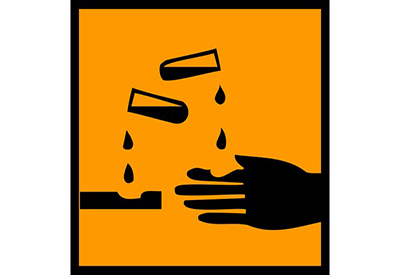
A Category 1 location is defined as one where moisture in the form of vapour or liquid is present. The moisture can be caused by condensation, dripping or splashing of liquid, or other means. A Category 2 location is defined as one where corrosive liquids or vapours are likely to be present. Where neither Category is mentioned in a rule in this section, then the rule applies to both categories. Appendix B contains examples of Category 1 and 2 occupancies.
Equipment
As per rule 22-100, only equipment that is essential to the process being carried out in that area may be located in a Category 1 or 2 location. Service equipment, motors, panelboards, switchboards and similar equipment need to be installed outside the category area. This includes any enclosures containing moulded case circuit breakers in a Category 2 location unless they have been approved and marked as suitable for that application, because internal corrosion can occur.
Rules 22-102 (1) to (6) outline the types of construction required of equipment to be installed in the various moist or corrosive atmospheres. This information is marked on the equipment if not self-evident.
Rules 22-104 to 22-108 specify requirements for pendent lamp holders, luminaires, receptacles, plugs, and portable cords to be installed or used in Category 1 or Category 2 locations.
Wiring
Rule 22-200 provides the requirements for wiring in Category 1 locations. Generally conductors must be selected in accordance with rule 4-008(1) and table 19. Note that NM cable must be NMU or NMWU, MI cable must be spaced 6mm from any wall at supports, and aluminum conductors must have joints adequately sealed against moisture.
Rule 22-202 provides the requirements for wiring in Category 2 locations. All conductors must have protection from corrosion. NMW and NMWU cable is permitted. Raceways, conductors and cables may only be used as permitted by Table 19. MI, alu-sheathed and copper-sheathed cable must be suitably corrosion protected. Any termination or joint of aluminum conductors must be adequately sealed against ingress of corrosive liquids or vapours.
Rule 22-204 outlines the appropriate wiring methods in buildings housing livestock or poultry. Again generally, these are wet or damp locations and all wiring must be selected in accordance with rule 4-008(1), with consideration given to adequate ventilation for a damp location. NMW or NMWU cable may be used, but aluminum conductors may not, and NMS cable must be provided with mechanical protection against damage by rodents.
Rule 22-206 deals with wiring in curling and skating rinks. Generally, lighting areas are subject to condensation so wiring must be selected in accordance with Rule 4-008(1) and Table 19 for wet locations. Other areas may be wired in accordance with Section 12 observing any moisture conditions. Areas with adequate mechanical ventilation (at least three changes per hour) may be considered dry locations.
Drainage, sealing, and exclusion of moisture and corrosive vapour
Rules 22-300 and 22-302 specify methods for excluding moisture and corrosive vapours from entering conduit, cables, equipment or locations through the use of approved fittings, drip loops, adequate drainage, sealing, and orientation.
Circuit control
Rule 22-400 requires that each circuit in a Category 1 or 2 location must be capable of being de-energized from outside the location.
Materials
Rule 22-500 specifies that all metal materials including conduit, enclosures, and even every nut bolt and screw must be corrosion protected or resistant to the specific corrosive environment.
Bonding
Rule 22-600 requires all non-current carrying metal parts of equipment to be bonded to ground as per Section 10.
Sewage lift and treatment plants
Rules 22-700 to 22-710 apply to installations in sewage lift, pumping stations and treatment plants where moisture, corrosion, explosions, fire and atmospheric poisoning can occur. Note that the rules of Section 18 apply to associated methane gas generating facilities.
Rule 22-702 outlines some special terminology used in this subsection to define continuous positive pressure ventilation, dry well, suitably cut off, and wet well.
Rule 22-704 provides guidelines for the classification of these types of areas that may be both Category 1 or 2, and hazardous locations under Section 18. Reference material for hazardous area classification can be found in NFPA 820. Appendix B also has some notes regarding safety issues in these types of facilities.
Rule 22-706 specifies that wiring methods in these types of areas shall be in accordance with Rules 22-200, 22-202 or Section 18 depending on the location classification. Note that there are some restrictions, conditions and special handling for metal conduit, tubing, armoured cable, mineral-insulated cable, aluminum sheathed cable, and copper-sheathed cable.
Electrical equipment
Rule 22-708 specifies that electrical equipment in these types of areas shall be in accordance with the other applicable sections of the code or Section 18, depending on the location classification. Note that there are some restrictions, conditions and special handling for receptacles, lighting switches, unit emergency lighting equipment, emergency lighting control units, heating equipment, motors, and any electrical equipment in a wet well. Also note in sub-rule 22-708(4) that ventilation fans shall not be located in a wet well. One other significant sub-rule, 22-708(5), requires that areas provided with continuous positive ventilation must be interlocked to de-energize all electrical equipment if the ventilating equipment becomes inoperative, unless the electrical equipment in that area is approved for a Class 1 hazardous location.
Rule 22-710 requires all structural steel below ground, in contact with earth to be bonded to the system ground.
In the next instalment we will be discussing Section 24 — Patient care areas.
* The source for this series of articles is the Canadian Electrical Code, Part I, published by CSA
Read the rest of the instalments in the series:
Part 1: Guide to the CE Code, Part I – A Roadmap (Installment 1 in a Series)
Part 2: A Road Map to the CE Code, Part I – Installment 2
Part 3: Guide to the Canadian Electrical Code, Part I – Installment 3
Part 4: A Road Map to the CE Code, Part 1 – Installment 4
Part 5: Guide to the Canadian Electrical Code, Part I — Installment 5
Part 6: Guide to the Canadian Electrical Code, Part I — Installment 6
Part 7: Guide to the Canadian Electrical Code, Part I — Installment 7
Part 8: Guide to the Canadian Electrical Code, Part I — Installment 8
Part 9: Guide to the Canadian Electrical Code, Part I — Installment 9
Part 10: Guide to the Canadian Electrical Code, Part 1 – Installment 10
Part 11: Guide to the Canadian Electrical Code, Part 1 – Installment 11
Part 12: Guide to the Canadian Electrical Code, Part 1 — Instalment 12
Part 13: Guide to the Canadian Electrical Code, Part 1 — Instalment 13
Part 14: Guide to the Canadian Electrical Code, Part 1 — Instalment 14
Part 15: Guide to the Canadian Electrical Code, Part I — Instalment 15
William (Bill) Burr is the former Chair of the Canadian Advisory Council on Electrical Safety (CACES), former Director of Electrical and Elevator Safety for the Province of BC, and former Director of Electrical and Gas Standards Development and former Director of Conformity Assessment at CSA Group. Bill can be reached at Burr and Associates Consulting billburr@gmail.com.

![Guide to the Canadian Electrical Code, Part 1[i], 26th Edition– A Road Map: Section 74 — Airport installations](https://electricalindustry.ca/wp-content/uploads/2026/05/EIN-Stock-Guide-Code-Canada-Map-1200-768x403.png)

![Guide to the Canadian Electrical Code, Part 1[i], 26th Edition– A Road Map: Section 74 — Airport installations](https://electricalindustry.ca/wp-content/uploads/2026/05/EIN-Stock-Guide-Code-Canada-Map-1200.png)