Guide to the Canadian Electrical Code, Part I — Instalment 16
August 3, 2016
In this article: the second of two parts on Section 26 — Installation of electrical equipment. The code is a comprehensive document. Sometimes it can seem quite daunting to quickly find the information you need. This series of articles provides a guide to help users find their way through this critical document. This is not intended to replace the notes in Appendix B or the explanations of individual requirements contained in the CEC Handbook, but will hopefully provide some help in navigating the code.
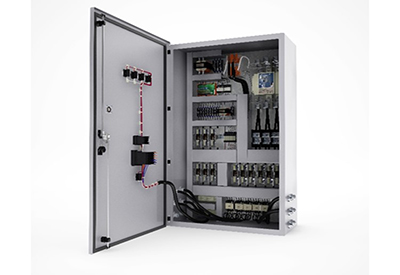
Photo credit: Wattco
Panelboards — see Section 0 – Definitions
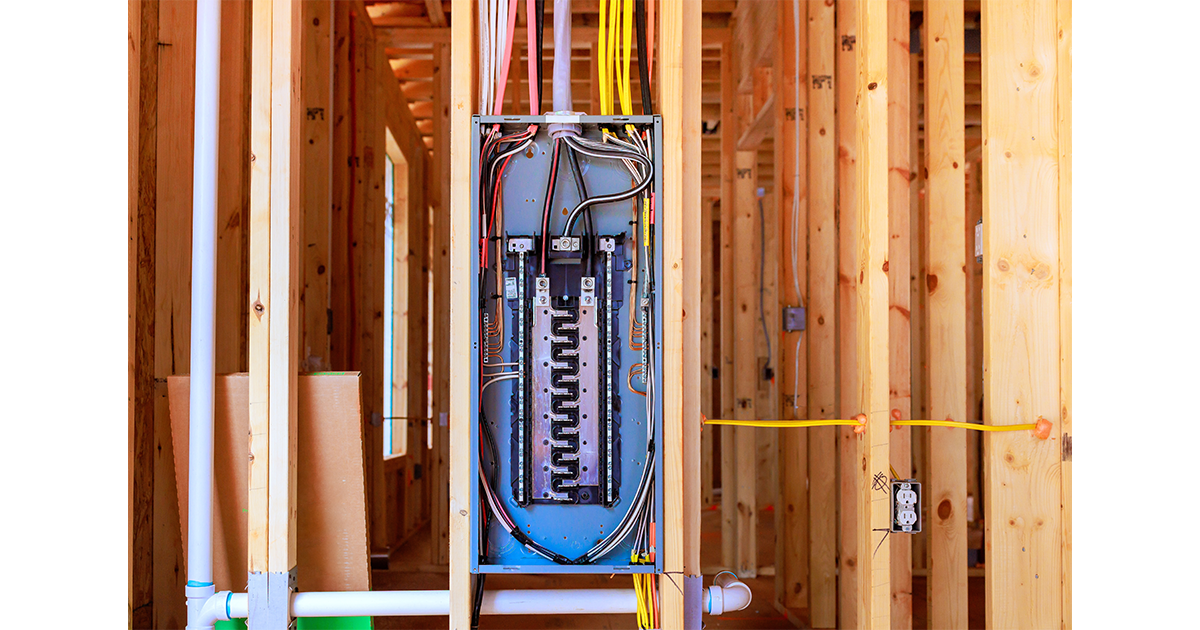
Rules 26-400 and 26-402 prescribe the requirements for panelboards in dwelling units and the location of panelboards.
Lightning arrestors
Rules 26-500 to 26-504 outline the requirements for use, location, and installation of lightning arrestors both indoors and outdoors. Rules 26-506 to 26-512 describe the requirements for installation of choke coils, connection and insulation of accessories, and the grounding of lightning arrestors.
Low voltage surge protective devices
Rule 26-520 governs the installation and connection of low-voltage surge protective devices. Note that Appendix B has additional guidance on the use of these devices.
Storage batteries
The scope of this part includes the installation of storage batteries and the installation of electrical equipment in a battery room.
Special terminology for these rules includes a sealed cell or battery that has no provision for the addition of an electrolyte and storage battery consisting of more than one rechargeable cell.
Rules 26-544 to 26-552 outline the requirements for location, ventilation of batteries and battery rooms or areas, installation, and wiring to batteries.
Rule 26-554 specifies that, for the installation of electrical equipment in a battery room, it be considered a dry location.
Arc lamps
Rules 26-600 to 26-604 cover the location of conductors to and overcurrent protection for arc lamps. Rules 26-606 and 26-608 provide the requirements for the use and enclosing of resistors or regulators, and the use and guarding of globes and spark arrestors.
Resistance devices
Rules 26-640 to 26-644 provide requirements for the installation, location, selection of conductors, and use of incandescent lamps as resistance devices.
Receptacles
Rules 26-700 to 26-704 apply generally to all receptacles.
Rule 26-700 requires the configuration of all receptacles to be in accordance with Diagrams 1 and 2 with a few exceptions and to be connected to circuits having corresponding voltage and ampere ratings. In addition, this rule prevents interchangeability of receptacles connected to differently rated configured circuits on the same premises.
Other issues covered by this rule include installation requirements for receptacles with exposed terminals, located in floors, and installed facing downwards. This rule also provides requirements for effectively bonding to ground of ungrounded/bonded receptacles when replacing them through subrules 26-700(7)(8) and (9). As per subrule (10), Receptacles after installation are required to have their faces project a minimum of 0.4 mm from conductive faceplates, no openings that permit a 6.75mm rod to enter, and not prevent the use of an approved attachment plug. Subrules (11),(12) and (13) require the provision of Class A type ground fault circuit interrupters for all receptacles installed within 1.5 m of sinks, bathtubs, or shower stalls and tamper-proof receptacles installed in child care facilities with the exception of those located for and behind stationary appliances.
Rules 26-702 and 26-704 provide requirements for the installation of receptacles exposed to the weather and for receptacles located on rooftops for the maintenance of equipment. Appendix B provides additional guidance on these subrules.
Receptacles for residential occupancies
Rules 26-710 to 26-714 apply to receptacles installed in residential occupancies, which include dwelling units and single dwellings. See Section 0 – Definitions for the distinction between these terms.
Rule 26-710 applies generally to receptacles installed in all residential occupancies, and provides requirements for the type, location, control, and ground fault protection of receptacles in indicated locations.
Rule 26-712 applies to receptacles installed in dwelling units, which include single dwellings. The rule provides requirements for the type, number, location, control, and ground fault protection of receptacles in indicated locations.
Rule 26-714 applies only to receptacles installed in single dwellings and provides requirements for the type, and location of receptacles in indicated locations.
Branch circuits in residential occupancies
Rules 26-720 to 26-726 apply to branch circuits for all residential occupancies, which include dwelling units and single dwellings.
Special terminology for these rules include arc fault protection, combination-type arc-fault circuit interrupter, and outlet branch-circuit-type arc-fault circuit interrupter. The distinction between the two types of arc-fault circuit interrupters (AFCI) is important in observing these rules.
Rule 26-722 applies generally to branch circuits in all residential occupancies and provides requirements for the type, location, and rating of branch circuits in indicated locations.
Rule 26-724 applies to branch circuits installed in dwelling units, which include single dwellings. The rule provides requirements for the type, location, rating and AFCI protection of circuits in indicated locations.
Rule 26-726 applies only to branch circuits installed in single dwellings and provides requirements for the location of branch circuits in indicated locations.
Electric heating and cooking appliances
Rules 26-740 to 26-750 apply to heating and cooking appliances and provides requirements for the location, installation, supply connection, type of receptacle, branch circuit, heat signaling and control for electric heating and cooking appliances.
Heating equipment
Rules 26-802 to 26-808 apply to circuits supplying power to non-portable fuel fired heating equipment. These requirements provide for mechanical protection of conductors, safety controls, type and rating of branch circuits, location, and disconnecting means for heating equipment.
Pipe organs
Rule 26-900 applies to the installation of electrically operated pipe organs.
Submersible pumps
Rules 26-950 to 26-956 apply to the installation of submersible pumps.
Special terminology for these rules include a deep well submersible pump intended to be used in a well casing and a submersible pump intended to be submerged in open water.
Rule 26-952 applies to all submersible pumps and requires them to be installed in accordance with manufacturers instructions as well as this section.
Rule 26-954 applies to deep well submersible pumps installed in wells, and provides requirements for the type, support, and installation of power supply conductors, and bonding to ground of the pump.
Rule 26-956 applies to submersible pumps installed in bodies of water, and provides the requirements for the voltage supply, bonding to ground, wiring method, and ground fault protection.
Data processing
Rule 26-100 requires the isolation of branch circuits supplying data processing units.
In the next instalment, we will be discussing Section 28 — Motors and generators.
* The source for this series of articles is the Canadian Electrical Code, Part I, published by CSA. Read the first part of this two-part series: http://electricalindustry.ca/latest-news/2352-guide-to-the-canadian-electrical-code-part-i-instalment-15.
Read the rest of the instalments in the series:
Part 1: Guide to the CE Code, Part I – A Roadmap (Installment 1 in a Series)
Part 2: A Road Map to the CE Code, Part I – Installment 2
Part 3: Guide to the Canadian Electrical Code, Part I – Installment 3
Part 4: A Road Map to the CE Code, Part 1 – Installment 4
Part 5: Guide to the Canadian Electrical Code, Part I — Installment 5
Part 6: Guide to the Canadian Electrical Code, Part I — Installment 6
Part 7: Guide to the Canadian Electrical Code, Part I — Installment 7
Part 8: Guide to the Canadian Electrical Code, Part I — Installment 8
Part 9: Guide to the Canadian Electrical Code, Part I — Installment 9
Part 10: Guide to the Canadian Electrical Code, Part 1 – Installment 10
Part 11: Guide to the Canadian Electrical Code, Part 1 – Installment 11
Part 12: Guide to the Canadian Electrical Code, Part 1 — Instalment 12
Part 13: Guide to the Canadian Electrical Code, Part 1 — Instalment 13
Part 14: Guide to the Canadian Electrical Code, Part 1 — Instalment 14
Part 15: Guide to the Canadian Electrical Code, Part I — Instalment 15
William (Bill) Burr is the former Chair of the Canadian Advisory Council on Electrical Safety (CACES), former Director of Electrical and Elevator Safety for the Province of BC, and former Director of Electrical and Gas Standards Development and former Director of Conformity Assessment at CSA Group. Bill can be reached at Burr and Associates Consulting billburr@gmail.com.

![Guide to the Canadian Electrical Code, Part 1[i], 26th Edition– A Road Map: Section 74 — Airport installations](https://electricalindustry.ca/wp-content/uploads/2026/05/EIN-Stock-Guide-Code-Canada-Map-1200-768x403.png)



![Guide to the Canadian Electrical Code, Part 1[i], 26th Edition– A Road Map: Section 74 — Airport installations](https://electricalindustry.ca/wp-content/uploads/2026/05/EIN-Stock-Guide-Code-Canada-Map-1200.png)