100 Murray Street: Canada’s First Zero Carbon Building
Oct 29, 2018
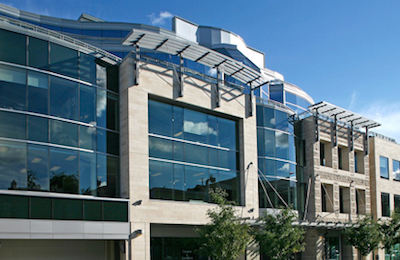
Early this summer, 100 Murray Street in Ottawa’s central Byward Market, asset managed and operated by Bentall Kennedy, was awarded the country’s first Zero Carbon Building (ZCB) — Performance certification. This existing 60,000 sq. ft. Class A commercial office space further built on its proven energy performance results and LEED Gold certification in 2016, to demonstrate that it had achieved a balance of zero carbon emissions from the building.
ZCB-Performance certification for existing buildings like 100 Murray Street requires buildings to demonstrate that they are not contributing greenhouse gas emissions over a 12-month period of operations, with performance verified annually. To earn this certification, Bentall Kennedy’s project team also had to evaluate energy use holistically and determine the GHG emissions associated with structural and envelope materials.
A case study for how any high-performing existing building can reach zero carbon
When the project team at Bentall Kennedy decided to pursue CaGBC’s new Zero Carbon Building Standard, they wanted to test out how one of their buildings could perform at a higher level in an effort to replicate that formula in the future. 100 Murray Street was the perfect candidate: a boutique office building located in Ottawa’s trendy Byward Market that was already high-performing, including a LEED for Existing Buildings Gold certification in 2016 and one of the first group of buildings to receive Energy Star certification in Canada in 2018.
Constructed in 2006, the building was already primarily using an electric heating system supported by an advanced building automation system. The heating, cooling and ventilation system is also variable and relies on temperature and carbon dioxide sensors to optimize occupant comfort and reduce energy. Interior spaces throughout the building receive ample natural light and provide for picturesque urban views of the historic area. It is also within close proximity to many forms of active and public transportation, and the building promotes wellness and lifestyle enhancements with many rooftop terraces, private washrooms/showers and first class finishes.
“We were delighted to be named the first Zero Carbon Building — Performance certified property in Canada,” says Anna Murray, Vice President, Sustainability at Bentall Kennedy. “The industry is starting to shift its focus to evaluating performance based on carbon emissions and this certification highlights this very direction. At Bentall Kennedy, we believe in investing soundly + sustainably. Across our portfolio, we strive to mitigate portfolio obsolescence risk and minimize property operating costs through energy and GHG management, water usage and waste reduction strategies, so pursuing this Standard just made sense.”
How the CaGBC Zero Carbon Building Standard helped to demystify the process
While still a relatively new concept, the Bentall Kennedy team including Anna Murray, and Technical Services Manager, Brandon Malleck, used the CaGBC’s new standard to simplify the process of reducing emissions and cut through the confusion of what it means to have a zero carbon building.
“The ZCB Standard recognizes those properties that are taking a closer look at high performance in energy efficiency, and also the types of energy used by making carbon emissions the key indicator of building performance,” says Malleck. “The tools and lessons learned from the standard will guide future decision making to drive operational excellence at the property.”
“Green building certifications validate the environmental performance of our assets, enhance transparency and establish a clear market differentiator that our investors and tenants value,” adds Murray. “Further, green building certification creates a virtuous circle that generates the potential for higher value, more satisfied tenants, and forestalls obsolescence for our investor clients.
“The CaGBC’s ZCB also provides a credible and verifiable pathway for landlords to contribute to the goals outlined in the Paris Agreement.”
Embodied carbon and zero carbon transition plans key to certification
Bentall Kennedy says this certification benefits them by simplifying and standardizing how the industry evaluates and quantifies carbon. Some of this is done through two studies that are required for certification: the first quantifies embodied carbon and the second investigates how the building will transition away from fossil fuels. The latter study was found to be especially valuable as an educational tool for the property management and construction teams.
The project team encourages others not to underestimate the cost or effort of the embodied carbon report, but note that the result is an extremely valuable report that they will carry into the future.
“Doing these reports has challenged us to think about carbon and fossil fuels in a different way,” notes Murray. “At the organizational level, completing these reports paints a better picture of the carbon impacts our buildings have on the environment and puts into perspective what steps need to be taken to take meaningful action to transition away from fossil fuel.”
What LEED practitioners can learn from the ZCB process
The Bentall Kennedy team acknowledged the advantages that high performing buildings in low carbon electricity grids have in achieving the goal of zero carbon certification. When asked about specific challenges, Malleck refers to the future elimination of fossil fuels through the strategies identified in the Zero Carbon Transition Plan, due to a disincentive to move from natural gas to electricity even when factoring in the costs of carbon emissions.
The project team also offers the following advice:
• Start to use the “total” energy cost (including renewable energy purchases or other carbon offset mechanisms) when evaluating projects. For 100 Murray Street, this added 3–10 cents/ekWh (depending on the fuel type) improving the business case for moving to a zero carbon world.
• Develop the Zero Carbon Transition plan in house; the exercise of thinking through the pathway to zero carbon is even more valuable than the plan.
Bentall Kennedy’s experience in earning the country’s first Zero Carbon Building – Performance certification proves the efficacy and value of pursuing CaGBC’s Zero Carbon Building Standard. Click here to learn more.
This article was previously published online by CaGBC: www.cagbc.org/CAGBC/Zero_Carbon/Project_Profiles/evolv1_Profile.aspx