Improve Test & Measurement Safety and Efficiency by Matching Thermal Imaging-Enabled Devices with the Appropriate CAT Rating
May 3, 2021
By Rob Milner, Global Business Development Manager, Condition Monitoring, FLIR Systems
When you think of test and measurement tools, you are most likely not thinking about thermal imaging. You might first think of traditional tools like non-contact voltage detectors, multi meters, clamp meters and videoscopes. Today, you can find electrical tools like clamp meters and multimeters integrated with thermal imaging capabilities. A primary benefit of this matchup is that users can now quickly and safely “visualize” potential electrical issues using thermal then verify volt and amp measurements, all with one tool. You can even find videoscopes with thermal imaging, enabling temperature readings on electrical equipment in hard-to-access places, such as underground utility vaults.
Thermal imaging captures relative temperature based off the target’s “emitted energy”. This is ideal for professionals that must do inspections with their target under full load conditions. Thermal allows the user to safety inspect for common issues like loose connections, load imbalances, and abnormal temp measurements from cables from 3 to 5 feet away from the given target. This allows the user to avoid approaching a potentially dangerous situation. Most electricians are not looking for precise temperature measurement, they are looking to see if there are any differences in temperature that are not typical with that target’s load or normal working conditions. Given this, the lower IR resolution capabilities embedded in test and measurement tools are sufficient if the arc-flash limit of approach allows. For applications where absolute temperature measurements are needed or the target is located at a greater distance, higher resolution thermal cameras may be required.
Users need to be aware that when using a test tool with integrated thermal imaging to perform electrical scans, there are several effects that can create false readings, specifically low emissivity surfaces, like shiny metals, reflections, forced convectional cooling such as wind, solar loading or low or no load targets. Given these situations, it is very important that users understand the basics around thermal imaging. It is highly recommended to take, at minimum, a basic thermography course to understand how to take and interpret a thermal image.
Simply put, when using a test tool with thermal imaging users can quickly and safety pinpoint potential issues allowing them to work more efficiently and to also be able to clearly verify the issue was properly fixed.
Understanding CAT Ratings
While thermal imaging is an ideal first step in visually identifying potential issues, now we need to consider when the test instrument is being used to collect voltage/amp data. This leads us to understanding the CAT rating of a test tool. Make sure all meters, test leads and probes have an adequate category (CAT) safety rating. Sometimes, the only thing standing between an electrical worker and an unexpected spike is their meter and test leads. If you use the wrong equipment with the wrong voltage, you could be putting yourself and others at risk. So, before conducting any test, make sure your choice of instrument is correct. Professionals should determine the proper category (CAT) rating required, based on the highest hazard exposure throughout their day.
The CAT rating method of classification, divided into four parts, known individually as category (CAT) ratings: CAT I, CAT II, CAT III and CAT IV, provide a quick and simple guide to match the right tools for the job. Understanding what each of these categories means is vital to avoid exposure to unnecessary risk, including significant injury or death.
In the CAT ratings system, the roman numerals, (i.e., I through IV) refer to the location of a circuit in relation to the power source, defined in terms of the total potential transient voltage danger.
• CAT I describes secondary circuits not intended to be connected to the mains electricity supply, such as personal electronics, and circuits powered by regulated low voltage sources.
• CAT II is defined as local-level electrical distribution, such as a standard mains socket and plug-in loads. This category includes household appliances, such as washing machines, and portable plug-in power tools.
• CAT III references a building’s electrical installations, including circuit-breakers, wiring, switches and industrial equipment.
• CAT IV involves the source of the low-voltage power installation, essentially the power grid infrastructure, such as underground utility vaults or outdoor power lines. 
However, determining the appropriate voltage category is only half the story. Simply matching the presumed voltage to the test and measurement device will not provide adequate safety assurance. Failed electrical units can experience impulse or transient voltages on the order of many times a particular electrical tool’s rating. For example, a line may normally have a voltage of 120 or 240, but the transient voltage from a lightning strike can generate several thousand volts, causing a short circuit and arcing that may severely injure personnel working with inadequate equipment.
IEC supplies a quick-reference chart to determine whether or not a given electrical tool is appropriate for the task at hand.
|
Rated Voltage |
IEC 61010-1 2nd Edition |
UL 61010B-1 |
||||
|
|
CAT IV |
CATIII |
CAT II |
CATIII |
CAT II |
CAT I |
|
150V |
4000V |
2500V |
1500V |
2500V |
1500V |
800V |
|
300V |
6000V |
4000V |
2500V |
4000V |
2500V |
1500V |
|
600V |
8000V |
6000V |
4000V |
6000V |
4000V |
2500V |
|
1,000V |
12kV |
8000V |
6000V |
8000V |
6000V |
4000V |
|
Resistance |
2-ohms |
2-ohms |
12-ohms |
2-ohms |
12-ohms |
30-ohms |
Matching the Right Electrical Tools for the Job
Included below are some test and measurement examples where thermal imaging and CAT ratings play a crucial role in the user’s safety and efficiency.
Multimeters
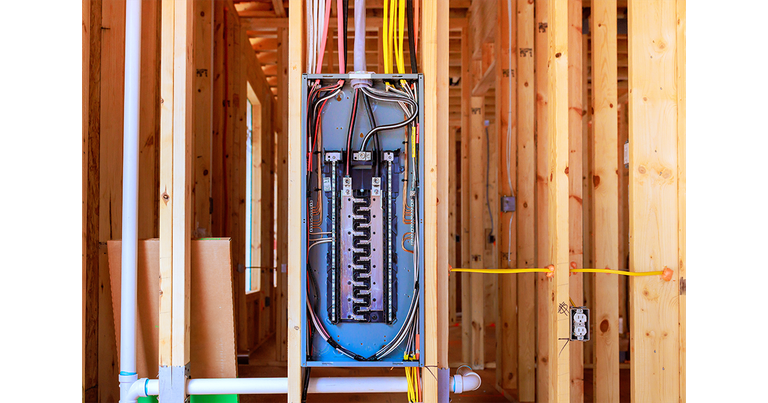
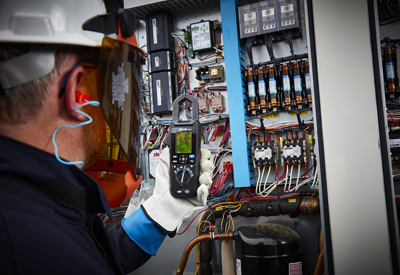
Thermal imaging-enhanced multimeters can help guide electrical professionals to the precise location of temperature anomalies and potential problems. For instance, when facing a maze of wires or scanning complex electrical panels for issues, that visibility is invaluable to pinpoint likely issues without requiring any direct contact with the test site. Once an issue is observed, leveraging a properly CAT rated multimeter’s current, voltage and other advanced functions will allow the user to accurately diagnose the equipment problem.
Clamp Meters
Clamp meters with built-in thermal imaging can eliminate guess work to quickly identify issues while keeping a safe distance from contact with panels, cabinets, or cluttered wires and cables that may present a safety hazard. For a situation where the issue appears to be a failing motor or compressor, a thermal camera-enabled clamp meter can help quickly verify the source—is it the power supply, or something else? For clamping around electrical conductors, ensuring the device has the right CAT rating for the job becomes crucial to maintaining an appropriate safety environment, no matter what additional precautions are taken.
Videoscopes
An industrial thermal and visual videoscope with a properly CAT rated probe tip can help professionals quickly and safely find hidden dangers in difficult-to-access locations, especially underground electrical distribution vaults. Crews can safely, efficiently, and effectively inspect vented manholes and identify potential problems without having to remove the cover or even having to enter the structure. This reduces the physical effort required, the time it takes to complete an inspection and enhances data collection activities to support regular infrastructure planning and maintenance.
Keeping Safety and Efficiency Top of Mind
Thanks to advances in test and measurement equipment with integrated thermal imaging technology electricians and service technicians have the ability to diagnose and solve electrical system problems quickly and safely. Another advantage is they can then go back with the thermal camera and take an image to verify that the work done has actually solved the problem. However, it is important to remember that although CAT ratings and thermal imaging provide an additional layer of safety, they are not a complete replacement of the other tried-and-true safety protocols, including wearing appropriate personal protective equipment (PPE) for the job and following all local and national safety codes, and ensuring that where jobs require extreme caution, the operator never works alone.