Lithium-ion Battery Energy Storage Systems – Making Storage Safe
October 26, 2022
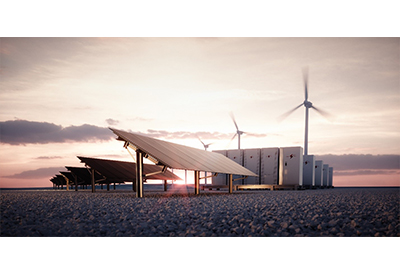
The way we generate power has been undergoing a radical shift over the last few years as our attention has turned more and more toward decarbonization, primarily using solar and wind power on a large scale. For these renewable technologies to be efficient and cost effective, the intermittency supply with solar and wind must be dealt with. The energy from these renewable sources needs to somehow be stored and released when needed most.
This is causing a shift in energy storage with a primary focus on using battery banks to store large amounts of energy. Lithium-ion battery energy storage systems are currently the dominant storage technology for large scale energy storage. Lithium-ion batteries gained popularity because they store a higher density of energy versus previous battery technologies. The widespread use of Lithium-Ion batteries attests to their value in multiple applications.
However, storing high density of energy does have inherent risks. High-energy Lithium-ion batteries contain highly flammable electrolytes that are proven to be prone to quick ignition and violent explosions in worst-case scenarios. According to several research efforts in the industry, thermal runaway is the primary risk related to the use of lithium-ion batteries. It is an occurrence caused by an abuse condition where the lithium-ion cell enters an uncontrollable high temperature rise, releasing energy stored in the battery (i.e.: gas, particulates, etc.). Thermal Runaway can also be caused by aging of battery or mechanical damage/defect.
Understanding those risks and utilizing advanced technology to manage those risks are keys to fulfilling a safe energy storage system operation. Obviously, these risks must be mitigated to ensure that damage to equipment, and potentially individuals, is minimal.
Since 2018, Siemens has completed multiple test programs with several global Lithium-ion battery manufacturers. Through that process, Siemens have come up with some realistic protection objectives for stationary Lithium-ion battery storage systems. The main goal is to protect the battery systems, the modules, as well as the cells against external (electrical) fires. It is crucial that cell fires be limited to individual cells or affected modules only. Then to prevent further spread, the propagation of thermal runaways beyond the affected module and secondary fires must also be prevented.
To achieve the goal above, a developing thermal runaway must be recognized as early as possible by the detection of electrolyte release and an adequate concentration of the extinguishing agent must be generated before the separator of the first battery cell breaks down to enable effective mitigation against cell-to-cell propagation.
With the FDA241 detector, Siemens can provide up to 28 minutes of advanced warning versus the specialty off-gas detection technology. The dual-wavelength detection technology used in the FDA241 unit provides early and reliable warning detection of the battery overheat conditions, well before actual thermal runaway condition begins.
The advance warning allows adequate time for mitigation steps to be taken, so the emergency can be contained. These steps include the battery charger shutdown and electrical isolation of batteries through the Battery Management System (BMS) and a release of the gaseous extinguishing systems to stop electrical fires, contain initial thermal runaway, prevent cell-to-cell propagation and the spread of secondary fires throughout the facility. Each of these steps is essential to prevent a potential catastrophic event.
In all, an effective fire protection concept should include the earliest possible detection, emergency shutdown, and an effective fire suppression system. Siemens’ solution checks each of these boxes.
That said, Siemens is the only company currently with an approved solution on the market. Their solution holds a VdS approval for effective protection of Lithium-ion batteries.
The world is changing and with that how we produce, store, distribute and use energy. For those pushing forward with innovative energy production and storage, Siemens offers a solution that protect your assets and ensure secure and safe operations.
To learn more, visit Siemens Fire protection for lithium-ion battery energy storage systems homepage or contact your local Siemens sales representative for more information.
![Guide to the Canadian Electrical Code, Part 1[i], 26th Edition– A Road Map: Section 74 — Airport installations](https://electricalindustry.ca/wp-content/uploads/2026/05/EIN-Stock-Guide-Code-Canada-Map-1200-768x403.png)



![Guide to the Canadian Electrical Code, Part 1[i], 26th Edition– A Road Map: Section 74 — Airport installations](https://electricalindustry.ca/wp-content/uploads/2026/05/EIN-Stock-Guide-Code-Canada-Map-1200.png)