Build Communities Strong Fund for Infrastructure Projects Overview
June 15, 2026
The Build Communities Strong Fund is investing in a wide range of infrastructure projects that support economic prosperity, housing, sport, education, health, transit, and climate adaptation.
It provides $51 billion over 10 years, starting in 2026-27, and $3 billion per year ongoing, to support new and renewed public infrastructure.
Types of infrastructure
The Build Communities Strong Fund supports a range of infrastructure projects across the country.
- Housing-related infrastructure, such as water systems, public transit systems, roads, and active transportation networks
- Education-related infrastructure, such as colleges and universities
- Health infrastructure, such as hospitals, medical schools, and community health centres
- Community infrastructure, such as parks and sports, recreational and cultural facilities
- Climate resilient infrastructure, such as projects that increase community resiliency by preventing and protecting against the impacts of climate change
As part of this plan, the Build Communities Strong Fund is investing in important infrastructure that spurs economic growth, creates skilled trade jobs, and attracts investment through reliable public assets.
Provincial and Territorial Streams
he Provincial and Territorial stream of the Build Communities Strong Fund will provide $17.2 billion over 10 years, starting in 2026-27, to support infrastructure projects and priorities identified by provinces and territories related to housing, post-secondary education, and health care. Investments will also help the federal agency Build Canada Homes achieve its goals by accelerating the right housing-related infrastructure needed to support housing growth.
From this stream, $5 billion in health infrastructure funding will be provided over three years to help provinces and territories ensure their health infrastructure – such as hospitals, emergency rooms, urgent care centres and medical schools – can respond to the health care needs of Canadians. This funding will complement existing health-related support given to provinces and territories.
Funding
The Provincial and Territorial stream will be delivered through bilateral agreements between the federal government and the provinces and territories, who in turn can provide funding to municipalities and other eligible recipients. Provinces will be required to cost-match federal funding under this stream.
To access funds for infrastructure related to housing and post-secondary education, provinces will need to show a commitment to reducing development charges where these charges pose a significant barrier to new construction. Provinces and territories will also need to commit to not levying other taxes that hinder housing supply to encourage housing development.
The federal government has already started engaging with provinces and territories on key program features and how investments can support joint priorities.
Allocations
The Provincial and Territorial stream is an allocation-based stream that will provide funding to provinces and territories to support new and renewed public infrastructure. The allocations consist of a base amount for each province and territory, combined with a per capita calculation using 2021 Statistics Canada Census data.
To ensure equitable funding for rural, northern, and Indigenous communities, at least 20% of the funds under the Provincial and Territorial stream will go towards projects in these communities.
Allocations table
The funding allocationsFootnote1 for each province and territory are included in the table.
| Province/Territory | Housing- and education-related funding | Health infrastructure funding | Total funding |
|---|---|---|---|
| Newfoundland and Labrador | $225,800,620 | $126,443,380 | $352,244,000 |
| Prince Edward Island | $117,417,580 | $87,178,420 | $204,596,000 |
| Nova Scotia | $365,795,380 | $177,160,620 | $542,956,000 |
| New Brunswick | $305,958,910 | $155,483,090 | $461,442,000 |
| Quebec | $2,664,419,020 | $1,009,904,980 | $3,674,324,000 |
| Ontario | $4,412,095,540 | $1,643,052,460 | $6,055,148,000 |
| Manitoba | $479,823,370 | $218,470,630 | $698,294,000 |
| Saskatchewan | $415,470,940 | $195,157,060 | $610,628,000 |
| Alberta | $1,370,596,480 | $541,179,520 | $1,911,776,000 |
| British Columbia | $1,596,394,480 | $622,981,520 | $2,219,376,000 |
| Yukon | $82,418,890 | $74,499,110 | $156,918,000 |
| Northwest Territories | $82,418,890 | $74,499,110 | $156,918,000 |
| Nunavut | $81,289,900 | $74,090,100 | $155,380,000 |
| Total | $12,199,900,000 | $5,000,100,000 | $17,200,000,000 |
Direct Delivery Stream
The Direct Delivery stream of the Build Communities Strong Fund will provide $6 billion over 10 years, starting in 2026-27, to support regionally significant projects, climate adaptation, and community infrastructure.
Under this stream, Canada’s Regional Development Agencies are delivering $1 billion in funding over four years to support smaller community infrastructure projects.
Funding
Eligible recipients under the Direct Delivery stream consist of provinces, territories, municipalities, Indigenous communities, and not-for-profit organizations. Private sector entities are eligible if they are working in collaboration with an eligible public sector entity (province, territory or municipality) or Indigenous recipient.
Eligible assets under this stream include large building retrofits, climate adaptation, and community infrastructure.
Under this stream, proponents of regionally significant projects may be invited to apply. These projects will need to consider private sector investment, including through the Canada Infrastructure Bank, to maximize public investment capacity and reduce pressure on government budgets.
Projects will be identified by the federal government through various channels, including those named in Budget 2025, pipelines of projects within existing programs, consultations, and public calls for expressions of interest.
Expression of interest
The Government of Canada is moving quickly to build the infrastructure our country needs, which is why the Build Communities Strong Fund emphasizes momentum and rapid delivery.
Projects under this stream will aim to strengthen community resilience, support sustainable economic development, enhance environmental outcomes, and contribute to the cultural and social vitality of regions and communities.
Eligible project proponents can now submit their initial expressions of interest for projects. Proponents who are responsible for a project’s implementation and who own – or will own – the asset(s) are eligible to apply.
How to submit an expression of interest
Step 1. Identify a shovel-ready project
- Projects must be able to start over the next 12 months and have Class C estimates at a minimum.
- Projects that have already started construction are not eligible.
Step 2. Gather information on the applicant and project
- The following information should be provided in the expression of interest:
- Applicant information: Legal name, recipient type (i.e., not-for-profit, municipality, Indigenous recipient), and contact information;
- Project: Short project description, objective, estimated costs, anticipated federal funding share requested, and class estimates; and estimated construction start date.
Step 3. Read the Privacy and Third-Party Information Notice Statement
- Applicants should be aware that the information they provide in the expression of interest may be shared for the purpose of assisting with the project review, evaluation, and selection process.
Step 4. Send an email
- Submit the expression of interest, with all applicant and project information, by email to
canadastrong-canadafort@infc.gc.ca.
Small projects
Applicants seeking $1 million or less in funding are encouraged to apply to the Local Impact Stream. Eligible projects must build or improve community infrastructure that is accessible to the public and has economic, social, and/or environmental benefits for the broader community or region. This includes community buildings, recreation facilities, and cultural facilities.
In the coming days and weeks, applicants can visit the website of the Regional Development Agency that serves their region:
- Atlantic Canada Opportunities Agency (ACOA)
- Canada Economic Development for Quebec Regions (CED)
- Canadian Northern Economic Development Agency (CanNor)
- Federal Economic Development Agency for Southern Ontario (FedDev Ontario)
- Federal Economic Development Agency for Northern Ontario (FedNor)
- Prairies Economic Development Canada (PrairiesCan)
- Pacific Economic Development Canada (PacifiCan)
Community Stream
The Build Communities Strong Fund is investing in a wide range of infrastructure projects that support economic prosperity, housing, sport, education, health, transit, and climate adaptation.
It provides $51 billion over 10 years, starting in 2026-27, and $3 billion per year ongoing, to support new and renewed public infrastructure.
The Government of Canada is making generational investments in infrastructure to support economic prosperity, housing, education, health, and climate adaptation. As part of these investments, the Canada Community-Building Fund (CCBF) has been rebranded as the Build Communities Strong Fund (BCSF) Community stream.
The Community stream is a stable, predictable, and indexed source of funding provided up front to provinces and territories who, in turn, flow this funding to their communities. The funding allows local communities to make strategic investments in essential infrastructure, such as roads and bridges, public transit, drinking water and wastewater infrastructure, and recreational facilities.
The Community stream delivers over $2.5 billion every year to over 3,700 communities across the country. Communities select how best to invest the funds, having the flexibility to make strategic investments across 19 different project categories:
- public transit
- wastewater infrastructure
- drinking water
- solid waste management
- community energy systems
- local roads and bridges
- capacity building
- highways
- local and regional airports
- short-line rail
- short-sea shipping
- resilience
- broadband and connectivity
- culture
- tourism
- sport
- recreation
- fire halls
- brownfield redevelopment
These investments contribute to the development of Canada’s housing supply by supporting infrastructure projects that align with regional housing goals and help to improve housing affordability for Canadians. Community stream funding also contributes to the growth of strong communities, promotes investments in increased productivity and economic growth, and a clean environment. The renewed 10-year Community stream agreements, which came in effect on April 1, 2024, tie access to its funding to actions by provinces, territories, and municipalities to increase housing supply and affordability, where it makes sense to do so.
Over the 10-year agreement period, the Government of Canada will invest $26.7 billion, ensuring that the Community stream continues to provide communities across Canada with a stable, predictable source of bankable funds to build core infrastructure.
The Community stream helps Canadians by supporting local infrastructure projects that improve daily life. Whether it’s upgrading public transit, expanding recreational spaces, or building greener communities, it strengthens the places Canadians live, work, and play. By investing in long-term sustainability and growth, it ensures healthier, more connected, and more resilient communities across the country.
Funding Allocations
The Community stream is a transfer-based program that provides $2.5 billion per year in funding to communities across Canada. This investment is indexed at 2% and delivered in $100 million increments. The funds are first transferred from the federal government to the provinces and territories who in turn distribute the funding to their communities.
Distribution of Community stream funds to agreement recipients is allocated on a per-capita basis, with some adjustments. The allocations are determined as follows:
- Northwest Territories, Yukon, Nunavut, and Prince Edward Island receive base amounts representing 0.75 percent of the total annual Community stream funding amount.
- Shares for Indigenous communities and the remaining nine provinces are then calculated based on proportionate census data and funds are allocated on a per-capita basis.
- An allocation for the First Nations population on Reserve or on Crown Land in the ten provinces is provided directly to Indigenous Services Canada who combines Community stream funding with other sources of funding and administers the funds through the First Nations Infrastructure Fund program.
- Indigenous populations other than First Nations and First Nations in the territories receive funding through their respective territory based on their status as recognized communities within their respective jurisdiction.
- Funding distribution is adjusted every five years when new census data is available. The allocations for fiscal years 2024-25 through 2028-29 are based on 2021 Census data. Allocations for fiscal years 2029-30 through 2033-34 will be based on 2026 Census data.
- Each province or territory develops its own formula for distributing funds to their communities. These measures are described in each of the Administrative Agreements signed by Canada and each province or territory.
Allocation tables
Allocations for each province or territory, as well as actions to be taken to address housing needs, are confirmed annually through a letter from the Minister of Housing and Infrastructure and Minister responsible for Pacific Economic Development Canada to his or her counterparts. Funds are normally transferred in two equal payments, the first typically in early summer and the second before the end of the fiscal year.
Below are the allocations for each province and territory for fiscal years 2024-25 through 2028-29. Allocations for fiscal years 2029-30 to 2033-34 will be updated following the release of the 2026 Census data.
| Province/Territory | 2024-25 | 2025-26 | 2026-27 | 2027-28 | 2028-29 | Total 2024-29 |
|---|---|---|---|---|---|---|
| Newfoundland and Labrador | $32,144,283 | $33,483,628 | $33,483,628 | $34,822,973 | $34,822,973 | $168,757,485 |
| Prince Edward Island | $18,000,000 | $18,750,000 | $18,750,000 | $19,500,000 | $19,500,000 | $94,500,000 |
| Nova Scotia | $60,740,598 | $63,271,456 | $63,271,456 | $65,802,314 | $65,802,314 | $318,888,138 |
| New Brunswick | $48,540,517 | $50,563,038 | $50,563,038 | $52,585,560 | $52,585,560 | $254,837,713 |
| Quebec | $535,254,991 | $557,557,282 | $557,557,282 | $579,859,573 | $579,859,573 | $2,810,088,701 |
| Ontario | $895,480,297 | $932,791,977 | $932,791,977 | $970,103,656 | $970,103,656 | $4,701,271,563 |
| Manitoba | $79,068,519 | $82,363,041 | $82,363,041 | $85,657,563 | $85,657,563 | $415,109,727 |
| Saskatchewan | $66,732,512 | $69,513,034 | $69,513,034 | $72,293,555 | $72,293,555 | $350,345,690 |
| Alberta | $265,147,285 | $276,195,088 | $276,195,088 | $287,242,892 | $287,242,892 | $1,392,023,245 |
| British Columbia | $313,048,555 | $326,092,245 | $326,092,245 | $339,135,934 | $339,135,934 | $1,643,504,913 |
| Yukon | $18,000,000 | $18,750,000 | $18,750,000 | $19,500,000 | $19,500,000 | $94,500,000 |
| Northwest Territories | $18,000,000 | $18,750,000 | $18,750,000 | $19,500,000 | $19,500,000 | $94,500,000 |
| Nunavut | $18,000,000 | $18,750,000 | $18,750,000 | $19,500,000 | $19,500,000 | $94,500,000 |
| First Nations (via Indigenous Services Canada) | $31,842,443 | $33,169,211 | $33,169,211 | $34,495,980 | $34,495,980 | $167,172,825 |
| Total | $2,400,000,000 | $2,500,000,000 | $2,500,000,000 | $2,600,000,000 | $2,600,000,000 | $12,600,000,000 |
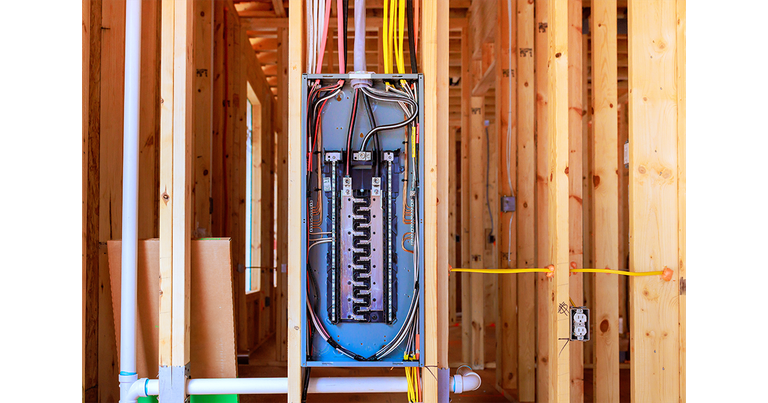
![Guide to the Canadian Electrical Code, Part 1[i], 26th Edition– A Road Map: Section 74 — Airport installations](https://electricalindustry.ca/wp-content/uploads/2026/05/EIN-Stock-Guide-Code-Canada-Map-1200-768x403.png)



![Guide to the Canadian Electrical Code, Part 1[i], 26th Edition– A Road Map: Section 74 — Airport installations](https://electricalindustry.ca/wp-content/uploads/2026/05/EIN-Stock-Guide-Code-Canada-Map-1200.png)