Canada Lighting Industry: Trends, Growth & Future Outlook 2026

The Canada lighting industry is entering a transformative phase driven by sustainability goals, smart infrastructure development, energy-efficiency regulations, and increasing demand for connected technologies.
Lighting is no longer viewed as a basic utility across commercial buildings, industrial facilities, public infrastructure, residential projects and retail environments. Now, it has become a strategic component of modern building ecosystems.
The demand for advanced lighting solutions continues to rise as businesses across sectors prioritise environmental responsibility, operational efficiency, and intelligent infrastructure.
From LED adoption and smart controls to human-centric lighting and integrated automation systems, the evolution of the Canadian lighting market reflects broader shifts in sustainability, technology and urban development.
For distributors, manufacturers, system integrators and solution providers, understanding the trends shaping the industry is essential for long-term B2B growth.
The Growing Significance of the Canadian Lighting Market
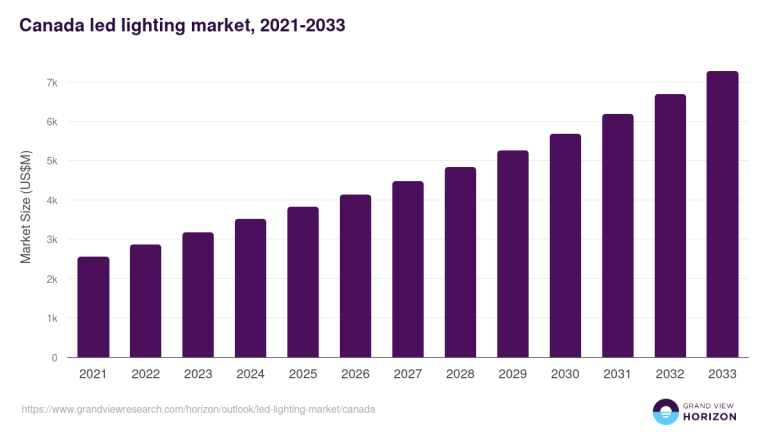
Over the last decade, the Canadian lighting industry has evolved significantly. Government initiatives promoting energy conservation, combined with rising awareness around operational efficiency, have accelerated the adoption of modern lighting technologies across industries.
Commercial real estate developers, infrastructure planners, municipalities, and industrial operators are increasingly investing in lighting systems that support:
● Energy Optimisation
● Enhanced occupant comfort
● Environmental compliance
● Long-term operational performance
● Lower maintenance costs
● Smart Building Integration
This shift is positioning lighting as a key contributor to sustainable infrastructure planning and smart city development across Canada.
The Canadian lighting industry is expected to witness sustained demand from both public and private sectors as infrastructure modernisation and urban expansion continue.
Smart Lighting Driving Industry Transformation
One of the most influential trends reshaping the Canadian lighting market is the rise of smart lighting systems. Businesses and institutions are increasingly adopting connected lighting technologies capable of automation, daylight harvesting, remote management, occupancy sensing, and data-driven energy optimisation.
Smart lighting is becoming especially important across:
● Commercial office spaces
● Educational Institutions
● Hospitality Environments
● Healthcare Facilities
● Smart city infrastructure
● Warehouses and logistics facilities
These systems improve operational efficiency and also support broader building automation strategies. This transition creates opportunities for technology-led differentiation. Manufacturers and solution providers that offer scalability, interoperability, and integration capabilities are increasingly gaining market relevance.
The integration of IoT-enabled lighting systems is expected to remain a defining growth driver within the Canadian lighting sector throughout 2026 and beyond.
Energy Efficiency and Sustainability Remain Core Priorities
Sustainability continues to influence purchasing decisions across Canada’s lighting ecosystem. Businesses are under increasing pressure to reduce carbon emissions, meet ESG objectives, and comply with stricter energy-efficiency standards.
Energy-efficient LED solutions continue to dominate procurement strategies across sectors. Today’s buyers are not just evaluating lighting products based on upfront costs but also considering:
● Energy consumption
● Environmental impact
● Lifecycle performance
● Maintenance Requirements
● Smart control compatibility
The transition from conventional lighting systems to advanced LED technologies has become a central component of the lighting industry’s evolution in Canada.
Municipalities and government agencies are accelerating retrofit projects to modernise public lighting infrastructure, creating long-term opportunities for contractors, manufacturers, and technology providers operating within the sector.
Architectural and Design-Led Lighting Demand
Lighting is increasingly influencing how spaces are designed, experienced, and perceived. Architects, interior designers, and lighting consultants now view lighting as an integral element of spatial planning rather than a secondary installation.
This shift is creating strong demand for:
● Architectural Lighting
● Customised Lighting Experiences
● Decorative Lighting
● Human-Centric Lighting
● Tunable Lighting Systems
Commercial developments, luxury retail spaces, hospitality projects, and mixed-use environments are driving growth within this segment of the Canadian lighting sector.
For suppliers and manufacturers, success depends on balancing aesthetics with technical performance. Buyers are seeking solutions that combine energy efficiency, visual appeal, and smart functionality within a single offering.
Innovation and design flexibility are becoming significant competitive differentiators across the B2B lighting ecosystem.
Infrastructure Modernisation Creating New Opportunities
Canada’s infrastructure modernisation efforts create significant opportunities across the lighting value chain. Public facility improvements, smart city projects, transportation infrastructure upgrades, and commercial construction activities are all contributing to rising demand.
Public-sector investments in:
● Institutional Facilities
● Smart Street Lighting
● Sustainable Public Buildings
● Urban Redevelopment
● Transit Infrastructure
are expected to further strengthen the canada lighting market over the coming years.
Infrastructure projects increasingly require lighting systems capable of delivering:
● Energy Optimisation
● Low Maintenance
● High Durability
● Intelligent Controls
● Real-time monitoring
Participating in such projects requires technical expertise, strong compliance capabilities, technical expertise and long-term support infrastructure.
Evolving Buyer Expectations in the B2B Landscape
The purchasing behaviour within Canada’s lighting ecosystem is also evolving rapidly. Buyers are becoming more research-driven, performance-focused and informed. Contractors, consultants, distributors, developers, and facility managers prioritise suppliers that can demonstrate:
● Certification compliance
● Product reliability
● Technical Expertise
● Innovation Readiness
● Supply Chain Consistency
● Long-term partnership value
B2B purchasing decisions are collaborative, involving multiple stakeholders across design operations, procurement, and sustainability teams.
Businesses operating in Canada’s lighting ecosystem sector must move beyond transactional selling as competition intensifies and focus on solution-oriented engagement strategies. Product demonstrations, technical education, consultative selling and lifecycle value communication are becoming critical components of sales efforts.
The Role of Industry Platforms and Networking
Industry exhibitions continue to play a crucial role in shaping market visibility and business growth within the lighting sector.
As the canada lighting market becomes increasingly innovation-driven, businesses are actively seeking opportunities to:
● Build strategic partnerships
● Generate qualified business leads
● Showcase product capabilities
● Understand buyer expectations
● Explore emerging technologies
Platforms focused on design innovation, lighting technology and smart infrastructure, are helping connect architects, consultants, contractors, distributors, manufacturers, and project owners under one ecosystem.
These interactions are significant in an industry where purchasing decisions involve long sales cycles, technical evaluation, and relationship-based business development.
Future Outlook for Canada Lighting Industry in 2026
The future outlook for the canada lighting industry remains highly promising.
Several long-term factors are expected to continue driving market expansion:
● Continued LED penetration
● Expansion of connected technologies
● Demand for sustainable construction
● Increasing urbanisation
● Infrastructure modernisation
● Rising ESG commitments
● Growth of smart buildings
The industry is expected to move further toward integrated, intelligent, and performance-driven lighting ecosystems. Artificial intelligence, adaptive lighting systems, predictive maintenance and data-enabled infrastructure are also expected to influence the next phase of industry evolution.
Competitiveness will increasingly depend on:
● Customer education
● Innovation capability
● Sustainability positioning
● Regulatory Alignment
● Technology Integration
● Scalable Service Support
Businesses that successfully align with such industry shifts will be better positioned to capture long-term growth opportunities within the evolving canada lighting market.
Final Thoughts
The Canada lighting industry is no longer defined solely by illumination. It is increasingly shaped by connectivity, intelligence, sustainability, and infrastructure transformation.
Lighting will remain central to how modern environments are designed, experienced and managed, as commercial, industrial, institutional, and public-sector projects continue to evolve.
The opportunities within the Canadian lighting sector are expanding rapidly for distributors, industry professionals, technology providers and manufacturers. However, growth will depend on the ability to adapt to changing buyer expectations, embrace innovation responsibly and deliver long-term value through integrated lighting solutions.
Mark your calendar for Canada Light Expo, 18 to 19 November 2026 as the International Centre, Toronto, Canada transforms into the meeting ground for the lighting industry’s next big conversations. As the industry moves into 2026, collaboration, sustainability-led development and technology adoption are expected to define the next chapter of Canada’s lighting ecosystem.
![Guide to the Canadian Electrical Code, Part 1[i], 26th Edition– A Road Map: Section 74 — Airport installations](https://electricalindustry.ca/wp-content/uploads/2026/05/EIN-Stock-Guide-Code-Canada-Map-1200-768x403.png)




![Guide to the Canadian Electrical Code, Part 1[i], 26th Edition– A Road Map: Section 74 — Airport installations](https://electricalindustry.ca/wp-content/uploads/2026/05/EIN-Stock-Guide-Code-Canada-Map-1200.png)