Current Carrying Capacity: How to Determine the Right Conductor Cross-Section

July 31, 2026
Current carrying capacity means the maximum current that a cable can transmit over sustained periods without overheating. Exceeding the permitted current capacity can damage the cable’s insulation and, in the worst case, result in fire.
What determines the current carrying capacity?
Different parameters influence how much electricity a cable can safely transmit. The cross-section of the conductor plays the greatest role. Simply put: the larger the cross-section of a core, the more electricity can flow through it.
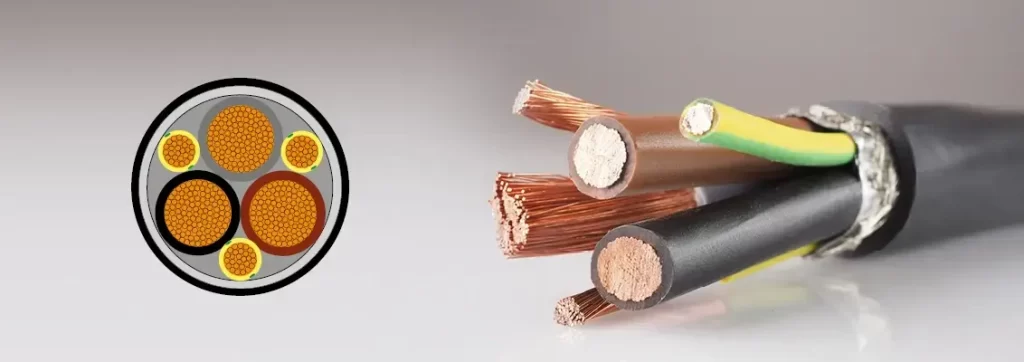
Furthermore, there are also derating factors that should be used when calculating the current carrying capacity for real-world applications. The most important are:
| Factor | Significance |
| Conductor Material | Copper conducts better than aluminium, meaning at the same cross-section, it has a higher current carrying capacity |
| Insulation Material | Determines the maximum permissible operating temperature |
| Environmental Temperature | Higher environmental temperatures reduce the permissible current carrying capacity |
| Installation Method | Open air, inside a pipe, underground—depending on heat dissipation, the cable can endure different loads |
| Number of Loaded Cores | More loaded cores means quicker heating |
What is a current-carrying capacity table used for?
The current carrying capacities of cables and wires are listed in current carrying capacity tables by type and installation method. These tables for cable cross-sections are based on applicable standards and assist in selecting the right cables for your application.
Determining conductor cross sections: How-to
With the help of the current-carrying capacity table, you can calculate the right conductor cross-section for your application in just a few steps. For this, the rated value (actual electricity demand) is required.
Step 1: Utilise the current-carrying capacity table
Use the current-carrying capacity table to find the cable type and corresponding installation method that you need. Then select a conductor cross-section that exhibits an equal or greater current carrying capacity than the operating current in your application.
Step 2: Apply derating factors
Derating factors that are not already included in in the current-carrying capacity table must be factored in when determining the conductor cross-section.
Conclusion: Safety through good planning
Selecting the right conductor cross-section is paramount for ensuring the safe and efficient operation of electrical systems. Calculating too small of a conductor cross-section risks overheating, damage, and fire.
HELU is here to support you in selecting the right cable for your application. In our technical tables, we have current-carrying capacity tables and much more technical information that is easy to digest. Contact our experts for a personal consultation!
![Guide to the Canadian Electrical Code, Part 1[i], 26th Edition– A Road Map: Section 74 — Airport installations](https://electricalindustry.ca/wp-content/uploads/2026/05/EIN-Stock-Guide-Code-Canada-Map-1200-768x403.png)




![Guide to the Canadian Electrical Code, Part 1[i], 26th Edition– A Road Map: Section 74 — Airport installations](https://electricalindustry.ca/wp-content/uploads/2026/05/EIN-Stock-Guide-Code-Canada-Map-1200.png)