“I’m Sorry, I Don’t Know the Answer.”
March 18, 2024
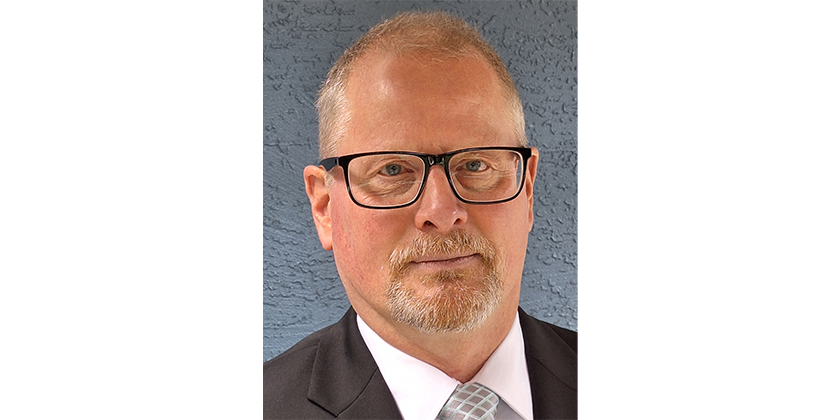
By Keith Sones, seasoned utility industry executive
“I’m sorry, I don’t know the answer.”
The interviewer placed his paper on the table and smiled at me. The expression on his face reminded me of how one might look at a new puppy who had just had an accident on the carpet. Translation – ‘I feel sorry for you because you’re not very competent but I’m still the boss and I’m not very happy with you and there will be consequences’. You may well have been on the receiving end of such a “look” at some point in your life. Perhaps often. It makes you feel small, incapable, and weak.
I felt, at that moment, like the world’s biggest loser. It was 1986 and after a few years in university studying biology and chemistry, I was applying for a summer position at a popular marine scientific research center. The job consisted of working in the lab, conducting some very basic experiments in support of the researchers who were too busy doing important things to perform these tasks. According to my education and my very positive application letter, I was easily qualified for this role; I could execute the daily duties in my sleep and still have time to learn a second language or become a concert pianist. So, when it came time to be asked a few simple science related questions at the second interview, I figured I’d easily skate through.
And I bombed. I mean it was terrible. I couldn’t remember the most elementary equations, the simplest of concepts. To this day, I have no idea why. Perhaps a lack of sleep? Panicking about the interview? The same kind of mental block we all get from time to time, like when you can’t remember your neighbour’s name? I don’t know. What I do know is my confidence crashed like the Hindenburg in New Jersey – rapidly and spectacularly. If I couldn’t answer the most straightforward questions after three years of study, how would I ever succeed in the real world of science when I graduated? It would be me against all of the “real” scientists, the result being my failure while the rest of them laughed.
It wasn’t my best day.
In part, this event was a significant contributor when I finally decided to leave school and take my chances doing something else, somewhere else. I simply couldn’t regain my former enthusiasm for disassembling complex chemical models or searching for answers in a multistage physics question. No matter how hard I studied, I was continually haunted by my experience at the research center. Keith, you’ll freeze. You can’t do this. Everyone else can, just not you. There was an omnipresent spectre lurking over my shoulder, ready to cast a shadow of doubt whenever I felt good about myself.
So, after some soul searching and occupational testing, I agreed that I would never be any good at this “science stuff” and quit. I drifted into a few years of manual labour and factory work, where all I had to do was lift harder or move the truck parts faster to be viewed as a good worker. It was unfulfilling work but at least I wasn’t getting the “look” by someone more intelligent and experienced than I was.
Eventually I returned to school, targeting an education in a very different field but which still required scientific acumen. As classes commenced on the first day, a single thought bounced around my mind – when graduation day rolled around, I would be number one. The idea wasn’t created by arrogance or greed; rather, it was defensive. I wasn’t sure how I’d react to the feeling of being second best, as the phantom was still on my shoulder, waiting for me. I had to fight it off, or…well, whatever might happen wouldn’t be good.
For the next two years there was no let up. Classes, lab time, exams, projects, then repeat it all over. I was intense in my desire to succeed. Whenever I didn’t get top marks in an exam, I doubled down on study time. When a team project was laid on the desk, I’d offer to lead. When it came time to deliver a large complex project as a summary of our learned skills, I did two! Nothing would stop me.
One day, I had a conversation with the program head, a soft spoken and wise leader with decades of industry experience. I was daunted by people like him, and thrilled that he was taking time to talk with me privately. The topics of discussion varied as we recounted our lives to that point in time. As he had walked the earth more than twice as long as I and had loads of professional experience, I valued his time.
I don’t recall how the subject came up, but at some point he mentioned he was divorced. For their own reasons the bond between he and his (ex) wife had come to an end, and it hadn’t made him happy. The look on his face showed his pain as he talked about his loss, the financial damage and the hardship of spending years developing the relationship only to see it crash and burn. We spoke a while longer, then parted ways. Alone with my thoughts, I was struck by a realization.
The person I had put on a pedestal was a real human just like me. He felt pain, had a significant part of his life ripped apart and had regrets. He and I, in spite of our differences, were closer than I’d imagined. I thought about the amazing love my wife and I shared (and still do), how I had something that filled my heart while he had suffered. Of course I knew that divorces happened and people had other problems, but not the people I admired or feared or were intimidated by. Not those people. They were infallible, successful, popular and knew far more than I did. Then the epiphany.
Was that really true?
It’s hard to shake that thought. When you are sitting in your manager’s office, awaiting a performance review, it’s often difficult to see them as anything other than the person that has control over you and your future. They seem to have more knowledge, are better connected, make more money, go on better vacations and have the ability to make your life inspired, mediocre, or a living hell. It’s their choice. So although I had one example of a vulnerable leader that didn’t entirely fit that model, the rest didn’t seem to have a lot of cracks in their armour. For years I cowered in the knowledge that while they were living hassle free lives, I had problems. There was never enough money, I was surrounded by people that were smarter and better at their jobs and I was just generally inadequate.
Over the next several years I had a growing number of discussions that revealed insights similar to the one I had gleaned from that distant conversation with my school program head. Other people also had problems. A supervisor of mine had money troubles stemming from his own divorce. A colleague wasn’t able to get the proper accreditation for a job he needed, so was stuck in his career path. Another had aging parents with dementia that were hard to handle, while yet another had a teenage son who had found his way into drugs and was wreaking havoc on his family.
In fact, everyone had problems. And some had big ones.
I had learned one very valuable lesson about people, but a second one was about to spring itself on me. Working as a utility operations manager, a small group of customers had been experiencing some serious electrical issues. The engineers lined up and with a single voice stated their view on what the problem was. With a few years now under my belt, something didn’t feel right, so we launched an investigation. The cause of the problem was discovered and it turned out to be quite different from the prevailing engineering perspective. In other words, they didn’t know in spite of their brimming confidence. The verdict, assigned before the investigation, had merely been an opinion.
I had no idea when I first sat down for that technical interview at the research center that I was starting a journey that would eventually leave me with a superpower. But it did. I am no longer intimidated by or fearful of anyone. I understand that no one knows everything, and everyone has their own problems. These two facts do not bring me joy; they merely help me to understand that my problems aren’t the worst in world, and that I don’t need to know everything, because that’s impossible.
I’m now very comfortable saying the words “I don’t know” and asking questions of those that might. That lone idea has helped me learn much more about myself and the world around me. When I hear a newscaster, politician, or neighbour claim to have the hard evidence on any subject that comes up, I know they likely suffer from a lack of confidence and are attempting to overcome it by being a know-it-all. When I hear outrageous promises being made by someone that had a track record of not delivering, I expect more failure and plan accordingly.
Why did I write this?
One of my regrets is that I spent so many years worrying about things that didn’t matter and simply weren’t true. I could have been so much more productive and helpful had I arrived at that realization earlier. However, it is what it is. We live in a world of 24 hour internet spin, governments making policies that sound good but won’t work, and everyone telling us how to live better lives if we just do it their way. So what to do?
Breathe deep and relax. Appreciate what you have. Know that if you feel like you’re struggling, so is everyone else. Don’t feel the need to know everything, because you can’t. Ask questions and get into debates with others to hear their points of view. You’ll be better off than you were before. And most of all, don’t be envious of the latest TikTok star. Their life isn’t any better than yours. It just looks that way.