Looking at the Impact of Alberta’s Moratorium on Renewable Projects
September 5, 2023
By Blake Marchand
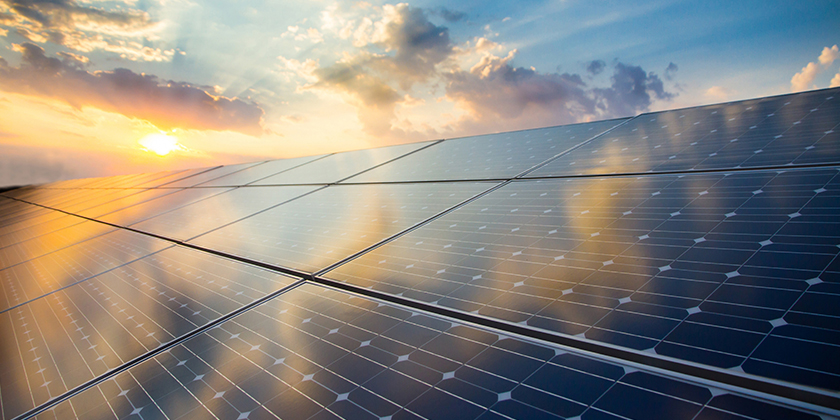
The Alberta Provincial Government announced it will initiate a 7-month moratorium on approvals for new renewable electricity generations projects over one megawatt on August 3rd. The moratorium will be lifted on February 29th, 2024, after a review of policies and procedures. In the first month of the moratorium, the Pembina Institute (as of August 24th) estimates that there are 118 projects impacted comprising 12.7 gigawatts of solar, 5.3 GW of wind, and 1.5 GW of battery energy storage (as part of solar projects).
“The total investments supporting the projects are estimated to be just over $33 billion, with an additional $263 million per year of revenue from municipal taxes and land leases spanning 27 different municipalities,” the Pembina Institute says, “The planning, development, and construction of these projects would generate an estimated 24,000 full-time job-years.”
Alberta has become a hot bed for renewable energy projects and is quickly becoming a leader for renewable energy in Canada. An article by CanREA’s Evan Wilson, titled ‘The Well-Regulated West’, notes that Alberta, “75%—of Canada’s utility-scale wind and solar capacity growth in 2022. And even further expansion is expected in 2023. Alberta’s recent development is beyond anyone’s expectations.”
That spur of investment equates to thousands of jobs as well as millions in tax dollars, and landowner payouts. Pembina Institute notes that since 2009, Alberta has attracted nearly $5 billion in investment, equaling nearly 5,500 jobs.
However, Wilson says, “But make no mistake, this isn’t “the wild west” of renewable energy. Alberta is enjoying well-regulated growth, rooted in strong policies and robust community engagement practices.”
Reasoning Behind the Seven-Month Moratorium
Danielle Smith and her party have not been supportive of the federal government’s net-zero transition strategy. A week following Alberta’s announcement, the federal government released its draft clean electricity regulations. Industry organizations CanREA, Electricity Canada, and the Canadian Climate Institute each voiced their support. Smith responded to the draft regulations with a letter, stating that, “Alberta’s government will protect Albertans from these unconstitutional federal net-zero regulations. They will not be implemented in our province – period.”
A key issue for Smith is that the regulations will make new natural gas generations difficult. The letter says that Alberta will create a working group to work with the federal government on aligning the federal government’s “efforts to decarbonize the economy in line with Alberta’s Emissions Reduction and Energy Development Plan.”
Without ‘alignment’, Alberta will chart its own path, Smith says.
The government press release announcing the moratorium says the action is in response to a letter from the Alberta Utilities Commission surrounding concerns raised by municipalities and landowners. Those concerns are primarily around land-use, how project sites will be handled at their end of life, and how growth in renewables will impact Alberta’s utility grid.
The government said they consulted around 200 individuals before putting the pause in place.
Long Term Impact
The CBC has reported on the opposite side of the story, where landowners don’t want to be on the hook for costly cleanups of large infrastructure from renewable projects once they run their course. Considering how the oil and gas industry has abandoned oil wells that are no longer productive. The difference between oil and renewable energy in this case is that oil wells become less productive when they approach their end of life, while renewable projects continue to be productive.
The moratorium also puts stress on workers in the renewable sector that now face uncertainty in their employment. Alberta has approximately 10,000 workers in renewable installation.
CBC’s Jason Markusoff commented on Front Burner that, typically when Alberta conducts a policy review like this, “they review the policy without pausing approvals in general. The pause was the real shocker in this, and its impact on business will be severe.”
Companies in the Alberta industry, as well as stakeholders, like CanREA have expressed concern regarding the impact the 7-month pause will have on the Alberta industry in terms of discouraging future investment.
“This is a mistake,” said Vittoria Bellissimo, CanREA’s President and CEO via press release, “The Alberta Government, Alberta Utilities Commission and Alberta Electric System Operator need to move quickly to sort out this situation for all Alberta ratepayers, investors and municipalities.”
According to the Globe and Mail, the Alberta Utilities Commission was requesting information from companies impacted by the pause hours before it was announced.
Those impacted companies are in limbo, having spent, in some cases, millions on applications and have financing lined up, now must wait to see if their projects will still meet regulations.
Some in the renewable industry are concerned there could be far reaching impacts, investor confidence may take a hit when it comes to future renewable projects in Alberta. Renewable investment in the rest of the country could also be impacted when it comes to investor confidence. The jobs market may be impacted as workers begin to seek employment in other parts of the country or in other sectors, given the uncertainty created by the moratorium. In 2022, there were approximately 3,000 open positions in the Alberta renewable sector.

![Guide to the Canadian Electrical Code, Part 1[i], 26th Edition– A Road Map: Section 74 — Airport installations](https://electricalindustry.ca/wp-content/uploads/2026/05/EIN-Stock-Guide-Code-Canada-Map-1200-768x403.png)



![Guide to the Canadian Electrical Code, Part 1[i], 26th Edition– A Road Map: Section 74 — Airport installations](https://electricalindustry.ca/wp-content/uploads/2026/05/EIN-Stock-Guide-Code-Canada-Map-1200.png)