Electrical Contractor Median Salary by Province
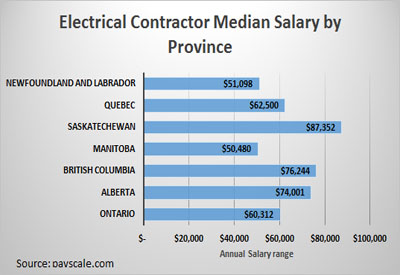
Electrical contractors in Saskatchewan lead Canada with an average salary that is $11,000 more than any other Province



Electrical contractors in Saskatchewan lead Canada with an average salary that is $11,000 more than any other Province
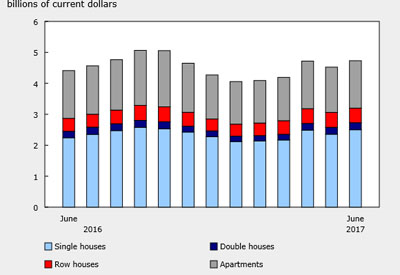
Investment in new housing construction rose 7.2% from June 2016 to $4.7 billion in June. The increase resulted mostly from higher investment in single family dwellings (+$257.9 million). All but one province saw an increase in new housing investment. The largest increase was in Quebec (+$82.6 million), followed by Alberta (+$72.5 million) and British Columbia (+$57.4 million). Newfoundland and Labrador posted a decrease of $7.4 million (-26.2%) compared to June 2016.
Economic reports continue to forecast growth for the remainder of the year. For contractors, this is great news, but it can also present the challenge of scaling up to meet growing demand. Scaling up requires not just hiring more workers and buying more material, but also adjusting your financial strategy to cover increased overhead expenses without hurting cash flow and profits. Here are three financial strategies for successfully scaling up in 2017 and beyond.
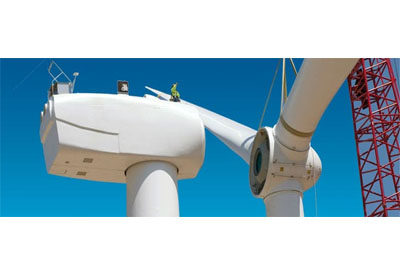
Wind technicians have been working to keep Canada’s turbines turning for a long time now. TransAlta’s Cowley Ridge Wind Farm was one of the first commercial facilities in the country with the original technicians back in 1993 describing their experiences of being “up so high” and that “there was nothing like it.”
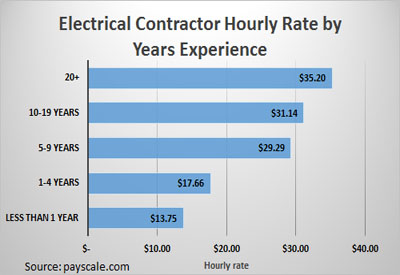
Electrical contractor wages jump significantly after achieveing 5 years of on the job experience.
Smart charging of electric vehicles could substantially decrease the pressure on electrical grids at peak times, according to a future energy scenarios report published by the UK National Grid. According to the report, the peak impact of electric cars in the UK will be equivalent to capacity of six nuclear plants.
With 30 million battery electric vehicles to be in use worldwide by 2025, smart charging solutions have become an enormous investment opportunity. The electric vehicle supply equipment ecosystem will be a global US$2.6 billion market within the next five years, according to a new research report published by ON World.
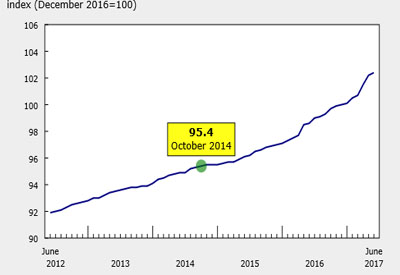
Nationally, new house prices rose 0.2% in June, curbed by a pause in new house price rises in Southern Ontario and down from a 0.8% increase in April and a 0.7% gain in May.
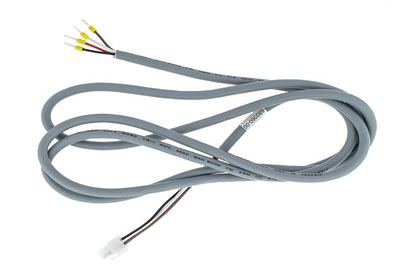
A key component of any electronic or electrical system is the cable assembly/cable harness, yet it typically is one of the last components to be addressed. When designing a system the cable assembly should be addressed as early in the design stage as possible to allow for the best design to be specified for the application at hand. Many components will be involved in the assembly design, and each component will have an impact on the performance of the finished cable assembly or wire harness. If an assembly that is either over-designed or under-designed is used, there will be negative consequences of the performance of the finished system.
In this second of a two-part series, we continue discussing options to consider when designing a cable assembly or wire harness, such as the best materials to use to meet the expectations of the assembly installation, the proper termination method for the type of signal that will be transmitted over the assembly, and what safety certifications the assembly will need to comply with based on the environment. Here in Part 2: conductor twisting/cabling, shielding, outer sheaths, connectors/strain reliefs, and safety certification.
Average wages for experienced Canadian electrical contractors plateau at roughly $80,000 annually.
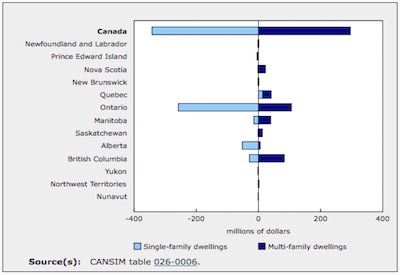
Canadian municipalities issued $8.1 billion worth of building permits in June, up 2.5% from May and the second highest value on record. Higher construction intentions for multi-family dwellings and commercial buildings were mainly responsible for the national increase. All building components reported gains in June, except for single-family dwellings. The total value of building permits rose in six provinces in June, led by Quebec and Manitoba. Month-to-month changes by jurisdiction are captured in the chart.
Mike Marsh, President and CEO of SaskPower, has been a leading figure in Saskatchewan’s electricity industry for almost 25 years. Joining SaskPower in 1991, Mike began his career in engineering and maintenance. He spent the next two decades playing a key role across a number of business functions, taking the helm as President and CEO in 2014. During Electricity Human Resources Canada’s most recent awards ceremony, then-board chair Norm Fraser described Mike as “a great leader with a fair and amicable way of engaging with people, having strong labour relations skills from years of experience at the bargaining table. As a proponent of health and safety, Mike possesses the necessary experience to support and lead the industry forward.” These comments formed the basis of EIN’s conversation with Mike.
Within each of five different job types, the range in hourly rates is consistent. But among the five job types, the maximum rates vary by up to 30%.
Performing electrical work without an electrical contractor’s licence and failing to apply for an electrical inspection has led to a five-day jail sentence and $50,000 in penalties for an Ontario contractor.
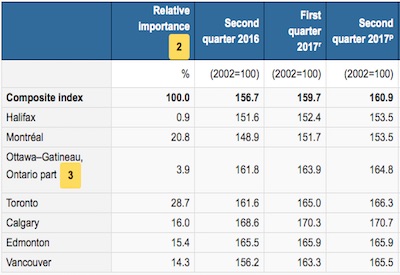
Contractors’ prices for new non-residential building construction rose 0.8% in the second quarter compared with the previous quarter. This was the seventh consecutive quarterly increase.
This project is funded [in part] by the Government of Canada.
Ce projet est financé [en partie] par le gouvernement du Canada.