Guide to the Canadian Electrical Code, Part 1 — Instalment 12
April 6 2016
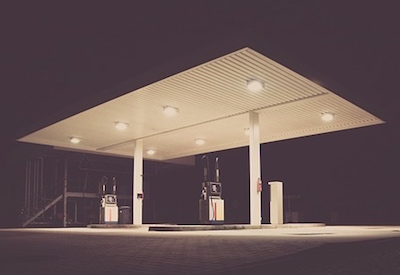
The CE Code is a comprehensive document. Sometimes it can seem daunting to quickly find the information you need. This series of articles provides a guide to help users find their way through this critical document. This is not intended to replace the notes in Appendix B or the explanations of individual requirements contained in the CEC Handbook, but will provide some help in navigating the code. In this article: Section 20 Flammable Liquid And Gasoline Dispensing, Service Stations, Garages, Bulk Storage Plants, Finishing Processes, and Aircraft Hangars.
Scope
Section 20 amends or supplements the general requirements of the code. It provides specific rules for a number of special Class I hazardous locations.
Section 20 uses the Zone classification system, but as with Section 18, additions or modifications to existing systems may use the Division system as in Annex J20 of Appendix J. The special terminology definitions used in Section 18 also apply to Section 20.
This section is divided into seven parts covering
- gasoline dispensing and service stations
- propane dispensing, container filling, and storage
- compressed natural gas refuelling stations, compressors, and storage facilities
- commercial repair garages
- bulk storage plants
- finishing processes
- aircraft hangars
Although requirements are similar for each facility, there are some differences. So, be sure to check the specific part you are considering. Conversely, there are some common rules that are the same for each location.
Hazardous areas
Each part contains a rule outlining the hazardous areas or locations for which that part applies. Wiring and equipment within the hazardous areas as defined in that part shall conform to Section 18 requirements. Some parts have additional requirements, so check the appropriate rule in that part. Notes in Appendix B, Tables 63 and 64, Diagrams 5 and 6, and the CEC Handbook are very helpful in determining the hazardous areas in various parts.
Sealing
Rules 20-012, 20-038, 20-066, 20-108, 20-208, and 20-412 specify that seals are required in accordance with Section 18, and this includes horizontal as well as vertical boundaries of the hazardous locations. Additional sealing requirements may be contained in specific parts.
Bonding
Rules 20-014, 20-042, 20-070, 20-212, 20-314 and 20-422 require that all metal raceways and all non-current-carrying metal portions of fixed or portable equipment, regardless of voltage are to be bonded to ground in accordance with Section 10.
The following provides more information on specific parts of Section 20.
Gasoline dispensing and service stations
Rules 20-002 to 20-014 apply to electrical apparatus and wiring installed in gasoline dispensing and service stations and other locations where gasoline or other similar volatile flammable liquids are dispensed or transferred to the fuel tanks of self-propelled vehicles. Other areas used as lubritoriums, service rooms and repair rooms, and offices, salesrooms, compressor rooms, and similar locations shall, with respect to electrical wiring and equipment, conform to Rules 20-100 to 20-112, which are in the commercial repair garages part.
Propane dispensing, container filling, and storage
Rules 20-032 to 20-042 apply to locations in which propane is dispensed or transferred to the fuel tanks of self-propelled vehicles or to portable containers, and to locations in which propane is stored or transferred from rail cars or tanker vehicles to storage containers.
Compressed gas and natural gas refuelling stations, compressors, and storage facilities
Rules 20-062 to 20-070 apply to locations in which compressed natural gas is dispensed to the fuel tanks of self-propelled vehicles and to associated compressors and storage facilities. These rules, however, do not apply to vehicle refuelling appliances installed in accordance with CSA B149.1 that do not have storage facilities.
Commercial repair garages
Rules 20-102 to 20-112 apply to commercial garages where vehicles powered by gasoline, propane, or other flammable fuels are serviced or repaired.
Bulk storage plants
Rules 20-202 to 20-212 apply to locations where gasoline or other similar volatile flammable liquids are stored in tanks having an aggregate capacity of one carload or more, and from which such products are distributed (usually by tank truck).
Finishing processes
Rules 20-302 to 20-314 apply where paints, lacquers, or other flammable finishes are regularly or frequently applied by spraying, dipping, brushing, or by other means, and where volatile flammable solvents or thinners are used or where readily ignitable deposits or residues from such paints, lacquers, or finishes may occur.
Aircraft hangars
Rules 20-402 to 20-422 apply to locations used for storage or servicing of aircraft in which gasoline, jet fuels or other volatile flammable liquids, or flammable gases are used, but shall not include those locations used exclusively for aircraft that have never contained such liquids or gases, or that have been drained and properly purged.
In the next instalment: Section 22 – Locations in which corrosive liquids, vapours, or excessive moisture are likely to be present.
The source for this series of articles is the Canadian Electrical Code, Part I, published by CSA.
Read the rest of the instalments in the series:
Part 1: Guide to the CE Code, Part I – A Roadmap (Installment 1 in a Series)
Part 2: A Road Map to the CE Code, Part I – Installment 2
Part 3: Guide to the Canadian Electrical Code, Part I – Installment 3
Part 4: A Road Map to the CE Code, Part 1 – Installment 4
Part 5: Guide to the Canadian Electrical Code, Part I — Installment 5
Part 6: Guide to the Canadian Electrical Code, Part I — Installment 6
Part 7: Guide to the Canadian Electrical Code, Part I — Installment 7
Part 8: Guide to the Canadian Electrical Code, Part I — Installment 8
Part 9: Guide to the Canadian Electrical Code, Part I — Installment 9
Part 10: Guide to the Canadian Electrical Code, Part 1 – Installment 10
Part 11: Guide to the Canadian Electrical Code, Part 1 – Installment 11
William (Bill) Burr is the former Chair of the Canadian Advisory Council on Electrical Safety (CACES), former Director of Electrical and Elevator Safety for the Province of BC, and former Director of Electrical and Gas Standards Development and former Director of Conformity Assessment at CSA Group. Bill can be reached at Burr and Associates Consulting billburr@gmail.com.
![Guide to the Canadian Electrical Code, Part 1[i], 26th Edition– A Road Map: Section 74 — Airport installations](https://electricalindustry.ca/wp-content/uploads/2026/05/EIN-Stock-Guide-Code-Canada-Map-1200-768x403.png)



![Guide to the Canadian Electrical Code, Part 1[i], 26th Edition– A Road Map: Section 74 — Airport installations](https://electricalindustry.ca/wp-content/uploads/2026/05/EIN-Stock-Guide-Code-Canada-Map-1200.png)