Quebec Study Examines Sector Hazards and Strategies
Wind Energy Health Safety

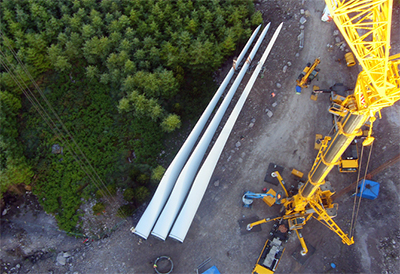
Workers in the wind energy sector face a range of hazards and challenges, according to a new study released by Quebec’s Institut de recherche Robert-Sauvé en santé et en sécurité du travail (IRSST), one of Canada’s leading workplace health and safety research centres. Hazards and challenges include those associated with the mechanical aspects of wind turbines, cardiac risks, and electrical hazards associated with power circuits and control circuits, as well as getting access to company injury prevention plans and timely response from emergency services when performing winter work in isolated locations.

The wind energy sector is an emerging industry across Canada. In Quebec alone, an estimated 1,000 people work full time in the operation and maintenance of Québec wind farms, and another 2,000 are occasionally involved. Work at heights, in confined spaces, isolation, the absence of nearby emergency assistance, the physical requirements to climb towers, work at very low temperatures, and electrocution risks are many of the occupational health and safety challenges in this sector.

This study analyzes the accidents and critical incidents that have occurred in this sector, and injury prevention practices of wind farms located in Quebec and elsewhere in the world. In the process, the researchers created a scientific database on the typical risks to which this sector’s workers are exposed.

To analyze on-site working conditions, the researchers observed technicians performing their operation and maintenance tasks, as well as construction companies and subcontractors during the wind farm construction phase. These observations supplemented the data collection and helped characterize work hazards and procedures.

In many cases, it was noted in the field that only company managers have access toan injury prevention plan.Workers and technicians are aware that a plan exists, and some have read a summary of it, but they have problems getting access to the plan’s detailed guidelines and protocols. In other words, the company can meetgovernment requirements and show that a plan exists, but few workers know its detailed provisions.

The study is believed to be the first to create a health and safety profile of people connected to the industry. Researchers found that injury statistics are fragmentary and injury prevention programs in the industry are “an odd assortment and come in many forms, often simply borrowed from wind turbine manufacturers.” Nor did the researchers find clear, instructive examples of related practices elsewhere in the world. They recommended that companies shift towards implementing adapted prevention plans that comply with Quebec legislation and CSST requirements. In broader terms, the jurisdiction in which the companies are operating.

The project has resulted in a number of changes and advances in workplace accident prevention at several wind energy organizations and companies, the study says.

Find out more: http://www.irsst.qc.ca/en/publications-tools/publication/i/100813/n/wind-sector-safety-risks-prevention-strategies-r-858

 

Related Articles


Latest Articles

  • Winnipeg Information Bulletin: Low-Risk Voice, Data, Video & Security System Installations

    Winnipeg Information Bulletin: Low-Risk Voice, Data, Video & Security System Installations

    September 17, 2026 Certain types of installations may qualify for a low-risk voice, data, video (VDV) and security system electrical permit. For information related to regular VDV/security system installations, see winnipeg.ca/vdvsystems. Applications must be submitted through Permits Online. Electrical permits and inspections are needed for certain installations of security and similar alarm systems. This makes… Read More…

  • What Type of Outdoor Light Do I Need for My Application?

    What Type of Outdoor Light Do I Need for My Application?

    September 17, 2026 By Stanpro The right outdoor light starts with the space you need to illuminate and how that space is used. For commercial projects, parking lots and large exterior areas point toward area lights; entrances and building perimeters toward wall-mounted or security lighting; signs, facades and targeted areas toward flood lights; pathways toward… Read More…

  • Alberta Employers and Tradespeople Share their Perspectives

    Alberta Employers and Tradespeople Share their Perspectives

    September 16, 2026 In Alberta’s skilled trades labour market employers and tradespeople are facing growing pressure from tariffs, rising costs, hiring challenges and labour mobility barriers. CAF-FCA’s new report, Hiring, Mobility and Needed Supports: Alberta Employers and Tradespeople Share Their Perspectives, takes a closer look at what’s happening on the ground. Based on surveys of… Read More…

  • Goal Zero YETI 3000X Power Stations Recalled due to Fire and Burn Hazards

    Goal Zero YETI 3000X Power Stations Recalled due to Fire and Burn Hazards

    September 16, 2026 This recall involves Goal Zero YETI 3000X power stations. The silver and black portable power stations measure about 62 centimetres (24.4 inches) high, 47 centimetres (18.5 inches) wide, 57 centimetres (22.3 inches) deep and weigh approximately 42 kilograms (92 pounds). The power stations have yellow handles and a digital display at the… Read More…


Changing Scene

  • LEDVANCE Canada Marks 10 Years of Innovation and Growth and Looks Ahead to Its Next Chapter in the Canadian Market

    LEDVANCE Canada Marks 10 Years of Innovation and Growth and Looks Ahead to Its Next Chapter in the Canadian Market

    September 25, 2026 From legacy lighting leader to solutions partner, LEDVANCE is entering its next decade with a clear focus on Canadian customers, communities, and market needs LEDVANCE Canada is marking the 10th anniversary of LEDVANCE as an independent brand by celebrating a decade of growth, customer partnerships, and continued investment in solutions designed around… Read More…

  • EFC Welcomes Patrick McManus as Incoming President & CEO

    EFC Welcomes Patrick McManus as Incoming President & CEO

    September 25, 2026 Electro-Federation Canada (EFC) is pleased to announce the appointment of Patrick McManus as President & CEO, effective October 13, 2026. McManus will succeed Carol McGlogan, who is retiring following 10 years with EFC. McGlogan will remain with the organization through the end of 2026 to support a smooth leadership transition. McManus is… Read More…

  • Innovair Solutions Acquires TRM Heating Cables

    Innovair Solutions Acquires TRM Heating Cables

    September 18, 2026 Innovair Solutions has announced the acquisition of TRM Heating Cables, a Toronto-based Canadian company specializing in heating cables for commercial and industrial applications. Founded in 2001, TRM has built strong technical expertise in the sale and installation of specialized products, including self-regulating cables, mineral-insulated cables and electric floor heating systems. The company… Read More…

  • Electrical Safety Authority Honours Leaders Helping Build a Safer, More Electrified Future

    Electrical Safety Authority Honours Leaders Helping Build a Safer, More Electrified Future

    September 17, 2026 From preparing the next generation of skilled workers to supporting one of the world’s largest sporting events, this year’s recipients demonstrate how electrical safety supports Ontario’s future As Ontario electrifies homes, transportation and industry, the Electrical Safety Authority (ESA) has recognized the organizations and individuals helping ensure safety keeps pace with that… Read More…