Calculating the Payback of a New Industrial Lighting System
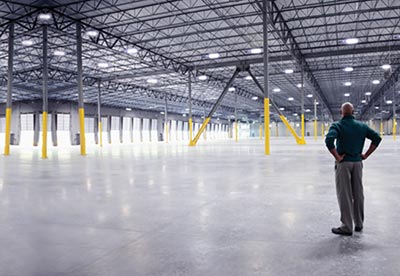
Calculating the return on investment is an important part of any lighting replacement effort. This walk-through will help you determine the total return on your investment.
Please keep in mind that this calculation is intended as a general one. You may have additional expenses or benefits above and beyond those listed here, and should exercise good judgment when deciding whether or not to add those factors to the equation.
The equation
The equation for calculating payback is actually quite simple: it’s determining the variables that provides the real challenge, and so each variable is discussed in detail below. Otherwise:
(A + B + C + D) – (E + F + G) = Total Payback on Investment
A: Reduced energy bills
A modern lighting system should be able to provide a predictable reduction in your current energy bills.A lighting audit will let you know how often lights should be used in each area, and from there you’ll need to examine your current costs, then compare those costs to what you’ll see each month in savings from your new lamps.
This calculation should reflect the full expected lifetime of two installations of your new lamps, but notreplacements past that point. Taken far enough, you could theoretically achieve infinite savings, but the goal of this equation is to limit things to a practical level.
Don’t forget to take other bills (such as lowered use of cooling systems because of the reduction in heat generation) into account.
B: Benefits and subsidies
Many utility companies — and occasionally the government — offer incentives for switching over to new, more efficient lamps.These could include tax breaks, rebates, free lamps, or a number of other rewards.
Either way, you’ll need to pay attention to your options and be sure to maximize these as much as you can. The total amount is likely to be much less than the value of A, but it’s worth considering.
C: Improved health and efficiency
Proper illumination has a demonstrated effect on employee health and morale.This is a variable that’s very difficult to quantify. Talk to a lighting replacement expert about their past observances and accept that this will, at best, be an estimate.
D: Reduced maintenance costs
You’ll still be paying for maintenance, but modern lighting arrays cost far less to maintain than outdated ones.Be sure to add the savings you’ll see (from maintenance visits that never happen) to the calculation of your ultimate payback.
E: Up-front installation costs
This will be one of the biggest expenses of the replacement plan.It includes parts, labour, and your loss of productivity while workers are busy switching things out. If this number turns out to be higher than A — or even anywhere close to A — then look for ways to decrease the primary costs and make the installation plan more affordable. This shouldn’t be an issue if you had a professional estimate done.
Include the second set of lamps in this category, since they’re being used in this equation.
F: Interest and fees
If you took out a loan to pay for the installation, then you’ll need to pay interest on that amount until it’s paid off.Add in the estimated amount of interest for the lifetime of the loan, as you’ll need to subtract this from the final total.
G: Waste from previous system
Removing old lighting arrays before they’ve completely burned out means receiving less than 100% use from them, and that’s an outright loss for your company.This cost will be relatively small, but you will be losing at least a small percent (and possibly a much larger one) of the money paid for the current lighting arrays. Factor this into the ultimate payback on your investment.
Final considerations
Finally, one last thing to consider before you run this equation: LED lamps and other new lamps have a drastically longer lifespan than all other types of lamps currently used in your business.
Offering a 100,000 hours lifespan or more, this can translate to over 10 years of service in an industrial setting, or even more if the lamps won’t be on at all times.
You may want to run the calculation with just one installation of lamps if you know the new lighting system you require, and if not you can focus on a 10-year payback period instead, with however many alternative lamps will be needed to reach that point.
Both are viable ways of running this calculation for your new industrial lighting system.
Adam Hicks is Eriks UK’s industrial lighting design expert. This article first appeared as a blog at http://knowhow.eriks.co.uk/calculating-the-payback-of-an-new-industrial-lighting-system.
![Guide to the Canadian Electrical Code, Part 1[i], 26th Edition– A Road Map: Section 74 — Airport installations](https://electricalindustry.ca/wp-content/uploads/2026/05/EIN-Stock-Guide-Code-Canada-Map-1200-768x403.png)




![Guide to the Canadian Electrical Code, Part 1[i], 26th Edition– A Road Map: Section 74 — Airport installations](https://electricalindustry.ca/wp-content/uploads/2026/05/EIN-Stock-Guide-Code-Canada-Map-1200.png)