How Technology is Reshaping Lighting Design: Augmented Reality, Sustainability, Smart Lighting, and 3D Printing

March 10, 2025
By Kaitlin Burke, Lead System Engineer at Cooper Lighting Solutions & Rajat Bhayana, Lighting Product Manager at Cooper Lighting Solutions
Technology is rapidly reshaping the lighting design industry, offering new ways to streamline workflows, enhance aesthetics, and optimize energy efficiency. In 2025, lighting professionals will have more tools than ever to balance creativity, functionality, budgets, and project timelines.
Among the most exciting advancements are augmented reality (AR) applications, which address common design challenges by bringing visualization and precision to the forefront. Alongside AR, other transformative trends—including sustainable lighting solutions, smart lighting systems, and 3D printing—are redefining the possibilities for lighting design.
Augmented Reality in Lighting Design
Augmented reality is revolutionizing how designers conceptualize and execute lighting plans. Platforms like Light ARchitect take advantage of this shift, providing an innovative tool that eliminates guesswork and enhances decision-making. By enabling real-time visualization of lighting solutions in actual spaces, this technology saves time, reduces costs, and allows for more accurate project planning.
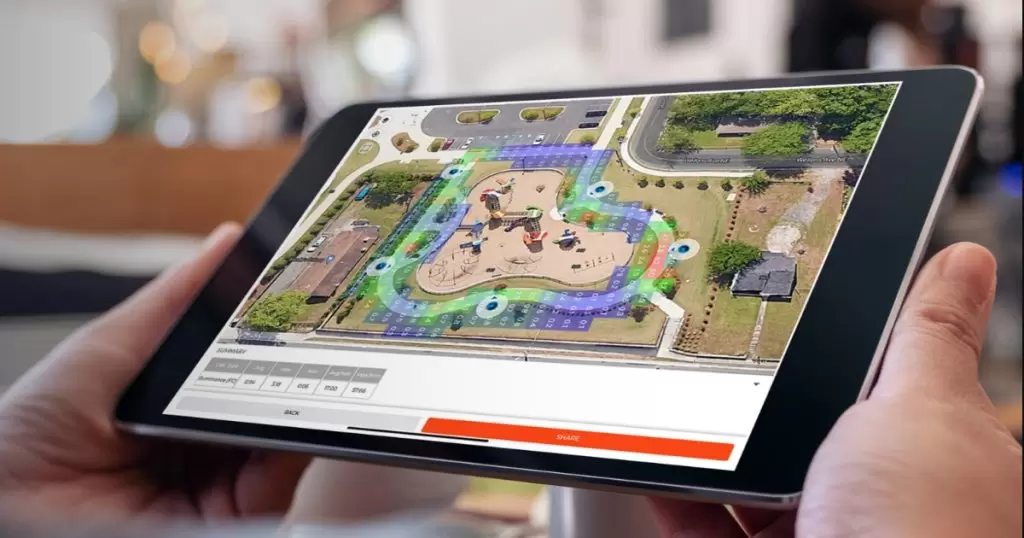
Key features of Light ARchitect include real-time AR visualization, allowing users to see how different lighting solutions will look and perform within a space before installation. To ensure designs align with project requirements, the app integrates real-world lighting calculations, producing valuable photometric data. Light ARchitect also helps users optimize budgets and efficiency by allowing designers to quickly compare various lighting solutions to find the best fit for both aesthetics and functionality.
AR tools like Light ARchitect are particularly useful for architects and designers working within tight deadlines and budgets, providing them with immediate insights into fixture placement, light distribution, and overall design impact. By streamlining decision-making and reducing costly revisions, AR technology is set to become a cornerstone of lighting design in 2025 and beyond.
Sustainable Lighting Solutions
Sustainability continues to be a driving force across industries and lighting design is no exception. The demand for energy-efficient and environmentally friendly solutions is increasing, prompting manufacturers to develop innovative materials and systems that minimize carbon footprints.
Some of the more popular sustainable trends include using today’s LED technology to offer even greater energy efficiency and longevity, reducing both energy consumption and maintenance costs. In lighting fixtures, the use of eco-friendly materials that biodegrade or can be recycled is on the rise. Using human-centric lighting that prioritizes circadian rhythms and well-being contributes to both sustainability and occupant comfort.
Smart Lighting Systems
The integration of IoT (Internet of Things) in lighting systems is transforming how spaces are illuminated. Smart lighting solutions offer enhanced control, automation, and energy savings, making them increasingly popular in commercial, industrial, and residential applications.
Look out for several emerging trends in smart lighting, such as lighting control systems that use remote and voice-activated control to improve both convenience and efficiency; adaptive lighting fixtures that adjust brightness and color temperature based on occupancy and natural light conditions; and connected ecosystems that integrate with smart building management systems for seamless automation and data-driven optimizations.
In addition to improving energy efficiency, smart lighting systems are also enhancing user experiences by providing customized lighting environments tailored to specific needs and preferences.
3D Printing for Custom and Sustainable Luminaires
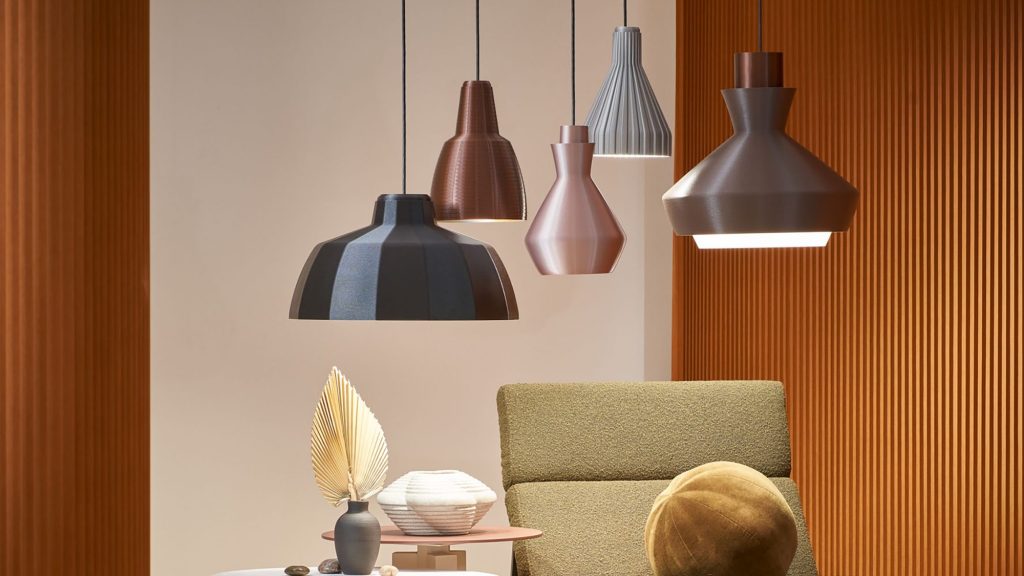
3D printing on an industrial scale (also known as additive manufacturing) is revolutionizing the way lighting fixtures are designed and manufactured. This technology allows for greater personalization, sustainability, and cost-effectiveness, offering endless possibilities for unique and lighting solutions. One standout innovation in this field is PrentaLux, a brand leveraging 3D printing to create high-performing, custom luminaires using sustainable materials.
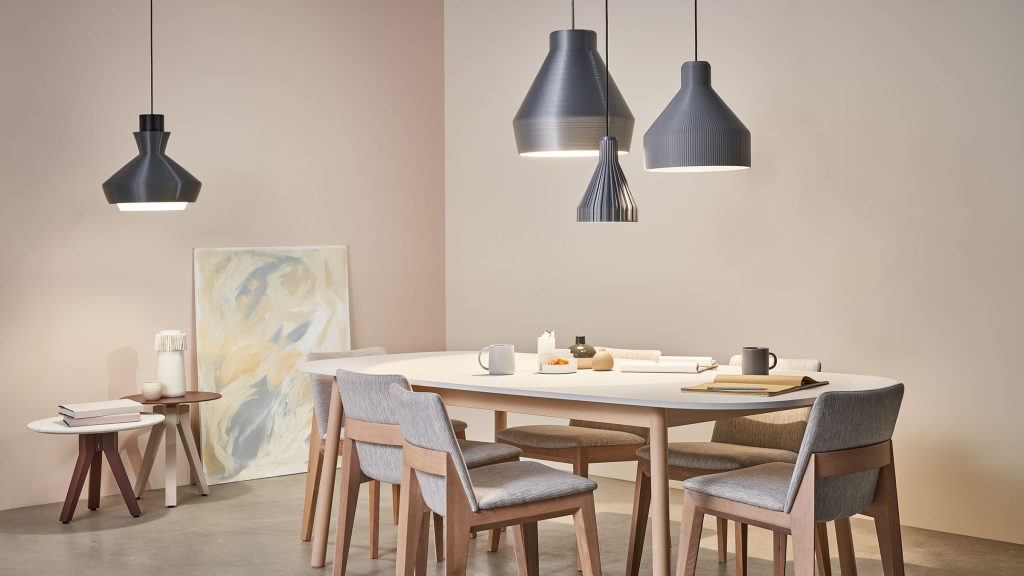
PrentaLux uses advanced automation and durable materials to reduce carbon emissions while ensuring high-volume production. With on-demand production capabilities, waste and excess inventory are reduced. 3D printing can support sustainability initiatives by using eco-friendly materials such as bio-circular plastics as well. Thanks to innovations in 3D printing, designers and manufacturers can push the boundaries of creativity and functionality while maintaining a commitment to environmental responsibility.
The Benefits of Embracing Emerging Lighting Technologies
The lighting industry is already undergoing an exciting transformation this year, driven by innovations that enhance efficiency, aesthetics, and sustainability. Tools like Light ARchitect demonstrate how AR can simplify the design process, while advancements in smart lighting, sustainable materials, and 3D printing are paving the way for more intelligent and eco-friendly solutions.
By adopting these technologies, lighting professionals can save time and reduce costs by streamlining the design process and minimizing costly revisions, enhance client satisfaction by delivering more precise and visually appealing solutions, and leverage cutting-edge tools to push the boundaries of lighting design to remain competitive in a rapidly evolving industry
As 2025 unfolds, lighting designers, architects, and engineers who embrace these trends will be better equipped to create innovative, sustainable, and functional lighting solutions for the future.
![Guide to the Canadian Electrical Code, Part 1[i], 26th Edition– A Road Map: Section 74 — Airport installations](https://electricalindustry.ca/wp-content/uploads/2026/05/EIN-Stock-Guide-Code-Canada-Map-1200-768x403.png)




![Guide to the Canadian Electrical Code, Part 1[i], 26th Edition– A Road Map: Section 74 — Airport installations](https://electricalindustry.ca/wp-content/uploads/2026/05/EIN-Stock-Guide-Code-Canada-Map-1200.png)