How to Choose the Right Emergency Lighting for Your Project

May 14, 2026
By CSC LED
Emergency lighting is often overlooked until it’s needed most. In reality, selecting the right system comes down to thoughtful planning. The best solution depends on code requirements, the layout of the space, and how much emergency illumination is required.
If you’re evaluating battery units, exit signs, and remote heads, the process becomes much simpler when you break it down into a few key considerations.
What does the code require?
The first step is understanding the applicable building and fire code requirements. These codes determine how emergency lighting must perform during a power failure.
Most projects require emergency lighting to:
- Illuminate the path of egress
- Maintain minimum light levels in corridors, stairwells, and exit routes
- Operate for a minimum emergency duration (commonly 30 minutes)
Exit signage must also clearly mark exits so occupants can safely leave during an emergency.
Most codes require approximately 1 footcandle on average along the path of egress (always verify local code).
Because these requirements are code-driven, product selection should always ensure the system can deliver the required illumination and runtime.
What type of space is it?
The installation environment often determines which housing type makes the most sense. Some spaces demand durability, while others prioritize appearance or cost efficiency.
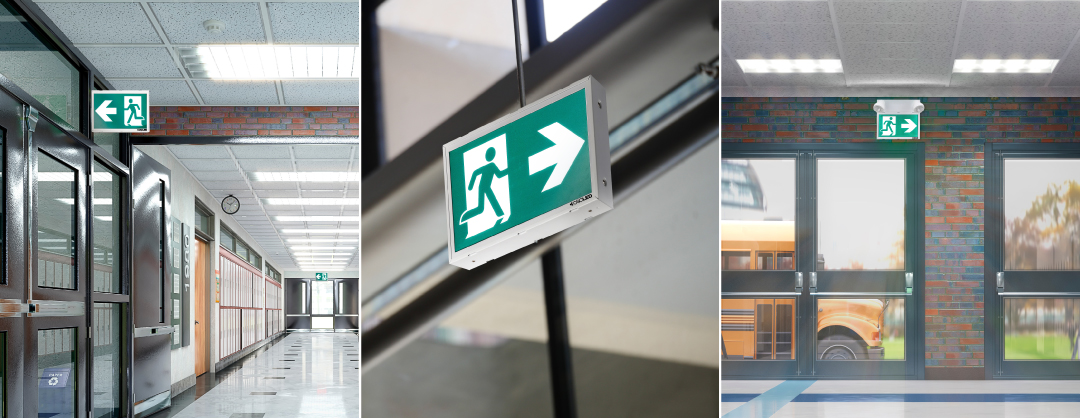
Steel housings are typically used in more demanding environments such as:
- Warehouses
- Industrial facilities
- Mechanical rooms
- Schools and institutional buildings
These areas experience more wear and tear, making metal construction the preferred choice.
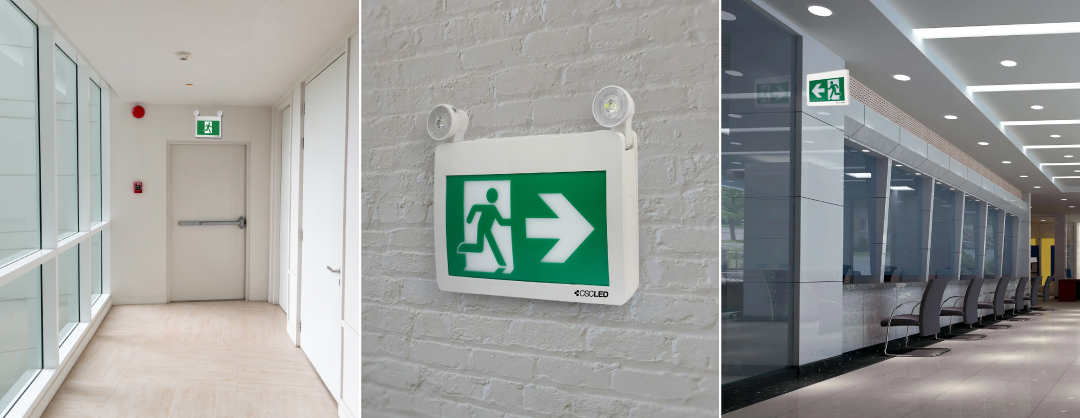
Thermoplastic housings are common in lighter commercial environments such as:
- Offices
- Retail spaces
- Small commercial buildings
They provide a clean appearance and are often the most economical solution for standard applications.
How much coverage do you need?
Emergency lighting must provide enough illumination to safely guide occupants along exit paths.
Coverage requirements depend on factors such as:
- Corridor length
- Room size
- Ceiling height
- Fixture spacing
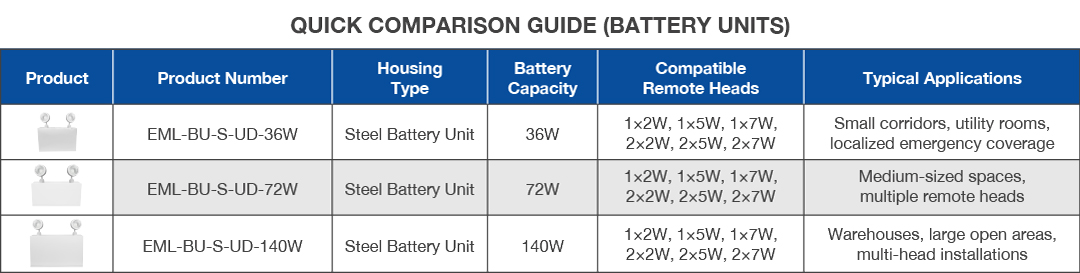
Battery units come in different capacities to support varying lighting loads. Larger units can power more remote heads or higher wattages, allowing coverage of larger areas.
Typical sizing guidelines:
- 36W units: smaller spaces or localized coverage
- 72W units: medium areas or multiple heads
- 140W units: large spaces or multi-head installations
Selecting the right capacity ensures the system maintains required runtime while supporting the connected load.
Final fixture spacing should always be verified using photometric layouts.
Do you need remote heads?
In many buildings, emergency illumination must reach areas beyond the battery unit location. Remote heads make this possible.
They connect to a battery unit and distribute light across a wider area. Common configurations include:
Single-head:
- 1×2W
- 1×5W
- 1×7W
Dual-head:
- 2×2W
- 2×5W
- 2×7W
The number and wattage of remote heads determine the total load on the battery unit. Larger battery units support more heads, making them ideal for wider coverage.
For smaller spaces, a self-contained unit with integrated heads may provide sufficient coverage.
Does appearance matter in this space?
While emergency lighting is primarily functional, aesthetics can matter in visible areas such as:
- Office lobbies
- Retail environments
- Public corridors
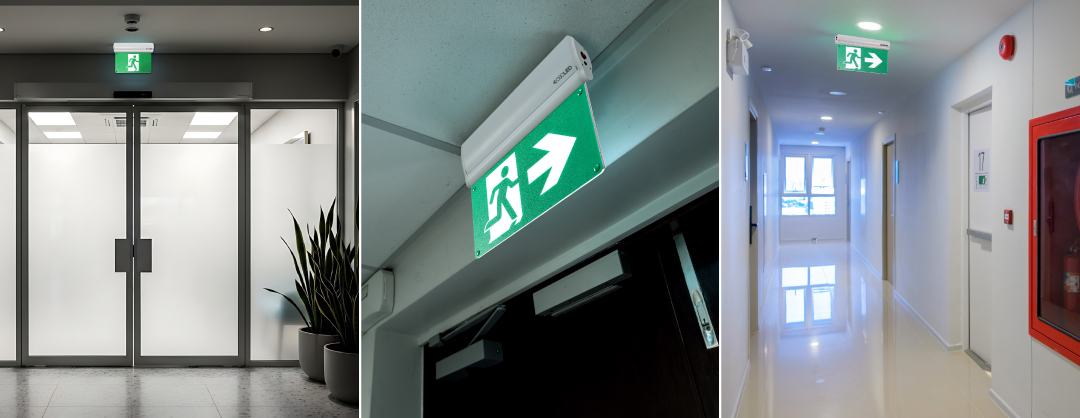
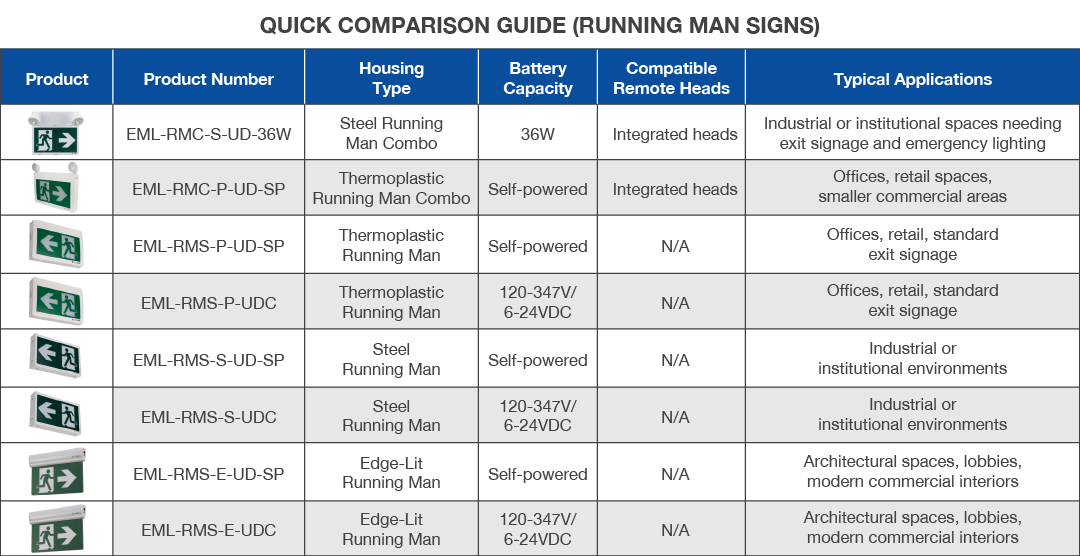
For example, Edge-Lit Running Man Signs are often selected for architectural spaces because of their clean, modern look. In more utilitarian environments, durability and function typically take priority.
Choosing the right style ensures the equipment blends with the space while still meeting safety requirements.
Quick Selection Path
Use this quick guide to narrow down the right solution for your application:
- Need exit marking only = Running Man Sign
- Need emergency illumination = Battery Unit
- Need wider coverage = Add Remote Heads
- High-abuse environment = Steel housing
- Clean commercial space = Thermoplastic
This simple framework helps streamline product selection early in the design process
Final Thoughts
Choosing the right emergency lighting solution comes down to understanding the building’s needs. By evaluating code requirements, environment, coverage, and system layout, it becomes much easier to select the right combination of battery units, exit signs, and remote heads.
When planned correctly, emergency lighting becomes a reliable, code-compliant safety system that performs exactly when it’s needed.
Need Help Confirming Your Layout?
CSC LED’s team can assist with emergency lighting layouts and product selection to help ensure your project meets code requirements the first time.
Contact them at info@csc-led.com for lighting layouts and general information about your project.
![Guide to the Canadian Electrical Code, Part 1[i], 26th Edition– A Road Map: Section 74 — Airport installations](https://electricalindustry.ca/wp-content/uploads/2026/05/EIN-Stock-Guide-Code-Canada-Map-1200-768x403.png)




![Guide to the Canadian Electrical Code, Part 1[i], 26th Edition– A Road Map: Section 74 — Airport installations](https://electricalindustry.ca/wp-content/uploads/2026/05/EIN-Stock-Guide-Code-Canada-Map-1200.png)