The Importance of Integrating New Graduates into the Workforce for Schneider Electric
July 11, 2023
By Blake Marchand
Schneider Electric has a commitment to double the opportunities for interns, apprentices, and fresh graduates between 2021 and 2025, and train 1-million people in energy management.
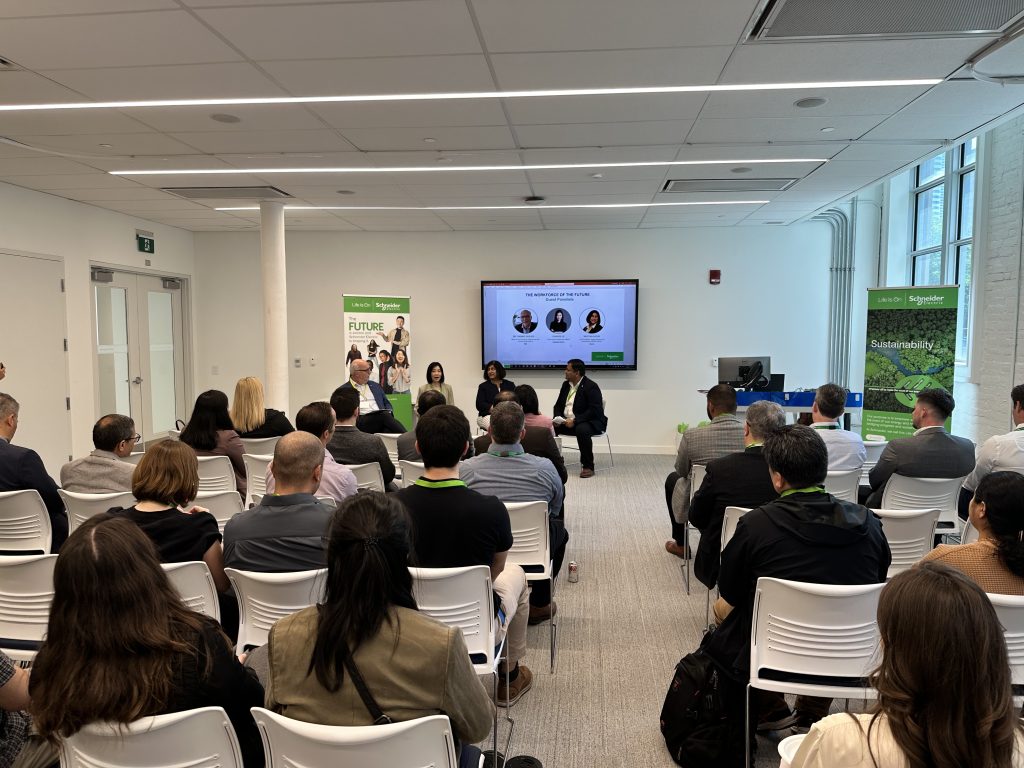
On May 29th, the company hosted an event at Toronto Metropolitan University to showcase their commitment to bringing younger generations into the workforce.
The event included an industry panel and a tour of the Schneider Electric Microgrid Lab at TMU – providing real-world success stories from their rotational program that cycles new graduates through different segments to gain experience in multiple facets of the company, as well as how the Smart Grid Lab supports start-ups like Elocity who used the Lab to develop their EV charging technology.
The panel portion of the event featured Charise Le, Chief Human Resources Officer, Schneider Electric, Thomas Duever, Dean of the Faculty of Engineering and Architectural Science, TMU, and Neetika Sathe, Vice President, Green Energy and Technology (GRE&T) Centre, Alectra.
EIN spoke to Charise Le following the panel to get her perspective on the challenges of integrating interns, new graduates, and apprentices into the workforce.
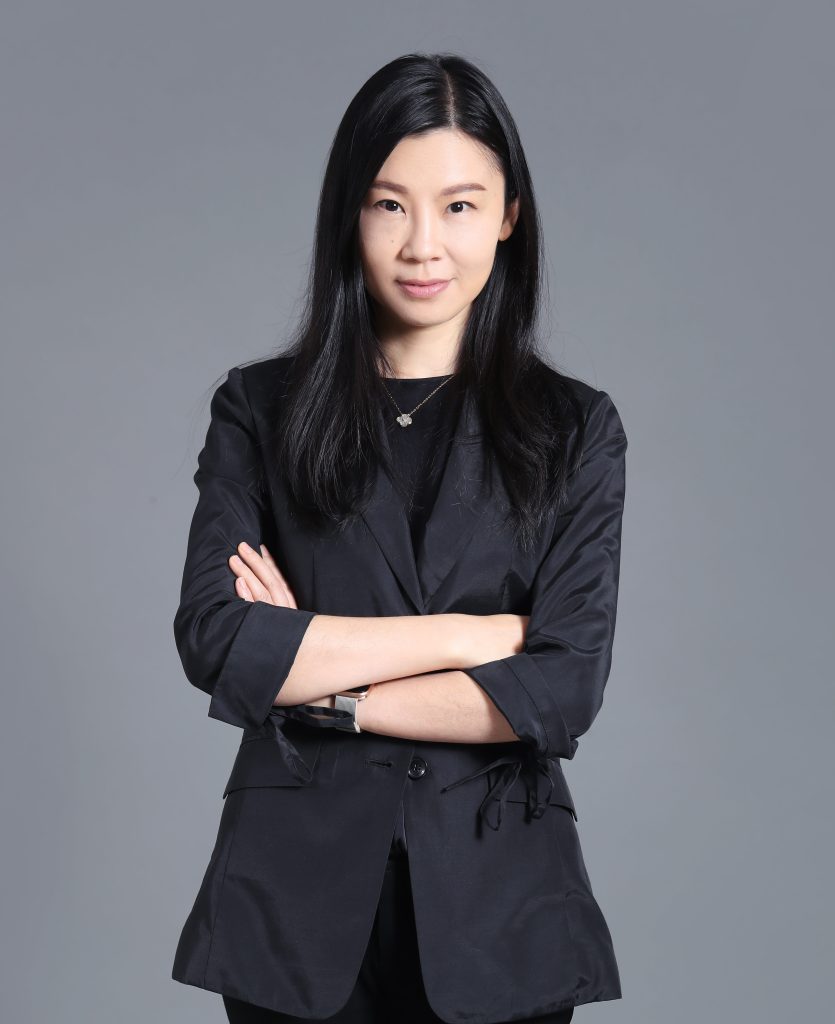
When it comes to hiring students out of university, interns, and apprentices, Charise said that it’s important for the company to honour the commitment they have made to bring youth out of school and into the workforce, despite the challenges associated with training and development.
“You just have to say, ‘this is Schneider Electric, this is what we do, this is our values, this is our commitment, and we have to do it,” she said. “But I don’t want to make it just a commitment on paper, we need to engage the team, the territories,” said Charise.
The challenge for managers is that they still have to deliver results and hit targets in the day-to-day business of their role. From that perspective, it’s easier to hire an experienced professional rather than train and develop internal talent. However, the company and the industry require the influx of new generations to maintain sustainability into the future. The benefit of integrating new generations with older generations is a two-way learning curve.
The transfer of knowledge between young professionals and experience professionals is a key aspect of a sustainable workforce, it also supports innovation. Experienced professionals have a wealth of knowledge to impart on newcomers to the industry, but recent graduates also have a knowledge base, skill set, and outlook on the industry that experienced industry members can benefit from.
When the commitment was launched in 2021, Charise said there was a need to encourage their managers to make a concerted effort in hiring young people out of internships, apprenticeships, and university – however, a few years into the initiative and that extra push is no longer needed.
“They see the value in it because the students bring different perspectives, fresh eyes, they bring innovation.”
“All of us, we were young, there was someone to give us an opportunity to join their company, to learn. As one of the most sustainable companies, we feel we have this responsibility,” she explained.
“It’s not only about hiring them and joining the company, it’s also about helping them to be successful.”
An example of that is Schneider’s rotation programs that gives young professionals experience in multiple areas of the company, not only to diversify their experience but also to give them insight into what interests them in the industry.
“To learn holistically what the company does and choose where area that you are interested in and passionate about, so you can continue to grow. Then we provide mentorships to help the students to be successful.”
Another piece is creating an inclusive environment. You can’t just hire a few students each year, you need to create an environment, systemically, that allows people to feel included in the progress of the company.
Not only are new hires connected with senior mentors, but they are also able to learn and be mentored by their peers who understand the challenges of breaking into the industry.
Another important aspect to Schneider’s company culture is reverse mentoring.
“It’s not only the senior mentoring the junior it can be the other way around. I was mentored by an early career professional,” Charise noted.
Through that program, Charise was eager to learn about their processes, the tools they use on a day-to-day basis, how they connect, what they find as the most effective ways to learn and engage with the industry.
Reverse mentoring is a useful tool to gain insight into how young professionals view the industry and get a better sense of the values that important to them, “because we are building a company culture for the future workforce,” Charise said. The goal is to create a multi-generational workforce.
Schneider isn’t able to hire every student that goes through its rotational program, although Schneider is a member of Electro-Federation Canada (EFC), which can help bridge the gap in terms of bringing recruits to the industry more broadly. Organizations like EFC highlight the community within the electrical industry, and they have a vested interest in growing and diversifying the workforce as we transition through electrification and the demand for quality labour continues.