Sustainable Business Practices are an Obligation to Future Generations
February 23, 2023
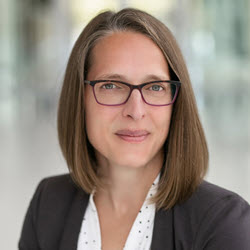
By Ariane Authier – Vice President of Trilliant Engineering, Hardware and Firmware
The energy industry is experiencing a transition, and a major part of this is for greater sustainability. It’s an important pillar in our society’s desire to keep the planet a safe place for future generations. It’s also become a critical part of our company’s mission to deliver products that are sustainable as well as economically viable.
This intent to make products and services, like smart meters and sensors, more sustainable comes from many sources: our own wish for more responsible business practices, but also it comes from customers, and ultimately, their customers.
Utility customers are demanding more accountability in how electricity is generated, transported, and delivered. They also expect the products used for this to be sourced and made responsibly. Customers in all industries expect this, and they want to make better choices about sustainable products. To do this, they need better information.
That’s why utilities and cities are asking for sustainable information from their vendors. They want to know their vendors and suppliers are exhibiting social responsibility as a corporation.
So how does the energy transition help with sustainable products? Utilities no longer drive and read meters at customer sites. With smart meters and smart communication networks, customer data is safely transmitted with very low emissions, and it’s much more accurate.
Putting words into action
As with any business or industry, saying you support sustainability is easy. It’s much harder for companies to take those extra steps that truly make a difference.
There’s also a social expectation for sustainability. This expectation not only comes from customers, but can also come from employees who desire a more environmentally friendly business process. In our case, our senior leadership team responded by identifying sustainability as a key pillar for our business practices.
Trilliant was recently recertified to be in compliance with ISO 9001 and 14001 standards by a DEKRA audit. This certification ensures that a company is continuously using products and services that meet customers’ high standards. It also ensures a company’s methods for environmental sustainability are applied across the entire value chain.
We also recently received an important Fonds Ecoleader grant that will help our company scientifically determine our carbon footprint and define science-based targets for emission reductions. With the assistance of sustainability experts, we are moving faster toward our sustainability initiatives.
Additionally, Trilliant moved several of our product assembly locations closer to their final destinations for customer usage. By locating assembly facilities closer to our customers, we “shorten the loop,” and greatly reduce emissions by transporting products a shorter distance.
Taking these extra steps to source parts and products that are environmentally sustainable makes an impact for our employees, and our business. We look at all aspects of our value chain, including how our parts and products are made, transported, packaged and disposed of at the end of the product life. These extra steps are important not only to customers, but also contribute to employee retention.
That’s why I believe the human element of sustainability is so important. After all, the reason we’re so focused on sustainability is not only for the ability to create what we need to live and work, but for us to give something to the next generation, so our descendants have what they need to live.
All businesses must make money, but it’s more imperative than ever that we’re all making decisions that are economically sustainable. This reminds me of the British author John Elkington who developed the idea of the triple bottom line: people, planet, and profit. For sustainability to work, we need all three of these bottom-line factors to work together.
Sustainability practices must do more than make us feel good – they need to have a significant impact on all three of these bottom-line issues. Granted, in the past claiming sustainable and environmental issues may have felt more like a cause to ease our concerns about pollution or climate change, but now it’s more than a cause – it’s an obligation to the future.
Ariane Authier is the Vice President of Trilliant Engineering, Hardware and Firmware. She is based in Granby, Quebec.