Seven Surprising Realities Behind The Transition to Renewable Energy
The global transition to clean, renewable energy and away from nuclear and fossils is well under way, with remarkable developments happening every day. The Great Transition by Lester Brown, Janet Larsen, Matt Roney, and Emily Adams lays out a tremendous range of these developments. Here are seven that may surprise you.
1. Solar is now so cheap that global adoption appears unstoppable
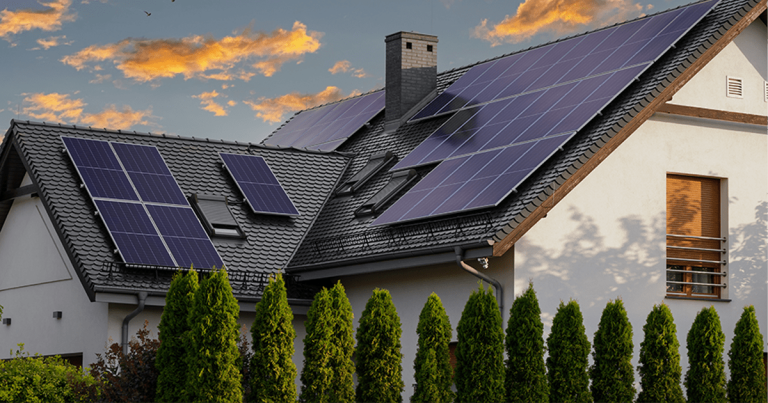
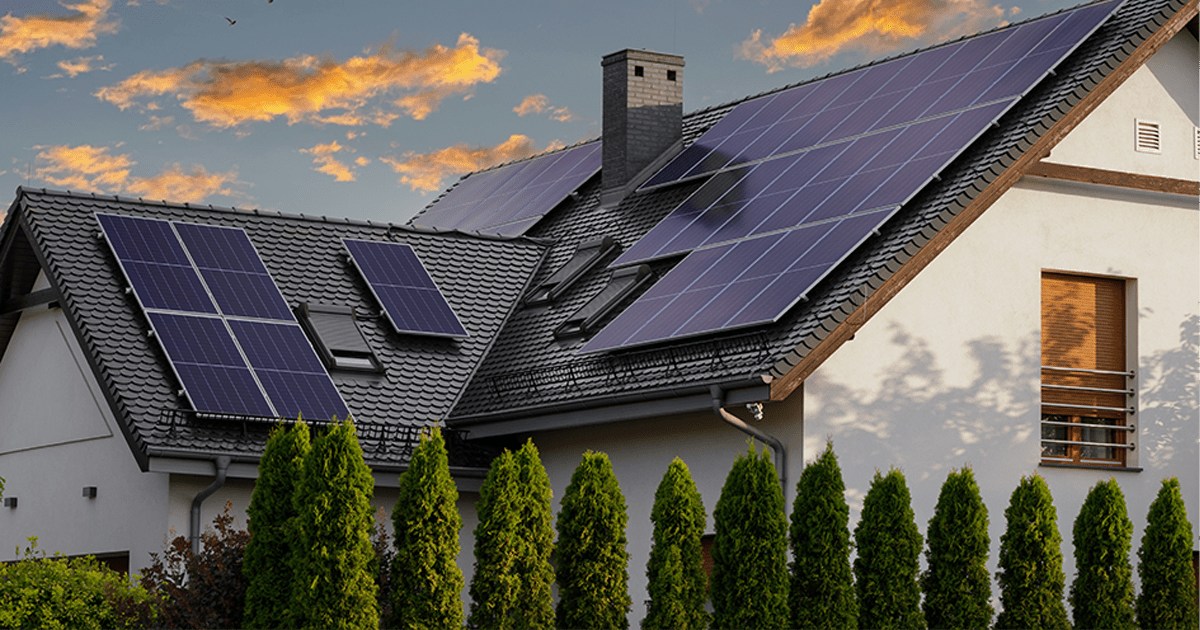
• The price of solar photovoltaic panels has declined 99% over the last four decades, from $74 a watt in 1972 to less than 70 cents a watt in 2014.
• Between 2009 and 2014, solar panel prices dropped by three fourths, helping global PV installations grow 50% per year.
• Deutsche Bank notes that as of early 2014, solar PV was already competitive with average residential, commercial or industrial electricity rates in 14 countries, and in California — even without subsidies.
• By late 2014 there were nearly 600,000 individual PV systems in the United States, almost twice as many as in 2012. This number may well pass 1 million in 2016.
• In 2013, just 12% of U.S homebuilders offered solar panels as an option for new single-family homes. More than half of them anticipate doing so by 2016. Four of the top five U.S. home construction firms — DR Horton, Lennar Corp, PulteGroup and KB Home — now automatically include solar panels on every new house in certain markets.
• In 2007 there were only 8,000 rooftop solar installations in coal-heavy Australia; now there are over a million.
• Saudi Arabia has 41,000 megawatts of solar PV operating, under construction and planned — enough to generate up to two thirds of the country’s electricity.
• For the roughly 1.3 billion people without access to electricity, it is now often cheaper and more efficient simply to install solar panels rooftop-by-rooftop than to build a central power plant and transmission infrastructure.
2. Wind power adoption is rapidly altering energy portfolios around the world
• Over the past decade, world wind power capacity grew more than 20% a year, its increase driven by its many attractive features, by public policies supporting its expansion, and by falling costs.
• By the end of 2014, global wind generating capacity totaled 369,000 megawatts, enough to power more than 90 million U.S. homes. Wind currently has a big lead on solar PV, which has enough worldwide capacity to power roughly 30 million U.S. homes.
• China is now generating more electricity from wind farms than from nuclear plants, and should have little trouble meeting its official 2020 wind power goal of 200,000 megawatts. For perspective, that would be enough to satisfy the annual electricity needs of Brazil.
• In 9 U.S. states, wind provides at least 12% of electricity. Iowa and South Dakota are each generating more than one quarter of their electricity from wind.
• In the midwestern United States, contracts for wind power are being signed at a price of 2.5¢ per kilowatt-hour (kWh), which compares with the nationwide average grid price of 10–12¢ per kWh.
• Although a wind farm can cover many square miles, turbines occupy little land. Coupled with access roads and other permanent features, a wind farm’s footprint typically comes to just over 1% of the total land area covered by the project.
• Wind energy yield per acre is off the charts. For example, a farmer in northern Iowa could plant an acre in corn that would yield enough grain to produce roughly $1,000 worth of fuel-grade ethanol per year, or the farmer could put on that same acre a turbine that generates $300,000 worth of electricity per year. Farmers typically receive $3,000 to $10,000 per turbine each year in royalties. As wind farms spread across the U.S. Great Plains, wind royalties for many ranchers will exceed their earnings from cattle sales.
3. National and subnational energy policies are promoting renewables, and many geographies are considering a price on carbon
• Unfortunately, governments worldwide still subsidized the fossil fuel industry with over $600 billion, giving this aging industry 5 times the subsidy that went to renewables.
• But by the start of 2014, some 70 countries, including many in Europe, were using feed-in tariffs to encourage investment in renewables.
• Renewable portfolio standards (RPS) or quotas are in place at the national level in some two dozen countries. More than 50 states and provinces in various parts of the world have them as well, including 15 states in India and 29 states plus the District of Columbia in the United States.
• Some 37 countries, including the U.S., have national production or investment tax credits for renewable energy.
• Some 40 countries have either implemented or are planning national carbon pricing mechanisms. A May 2014 World Bank report counted a further 23 subnational jurisdictions pricing carbon. Seven regional cap-and-trade pilot programs are already under way in China, for example. When China rolls out its planned national cap-and-trade program in 2016, roughly a quarter of global carbon emissions will then be priced.
4. The financial sector is embracing renewables – and starting to turn against fossils and nuclear
• The financial services firm Barclays downgraded the entire U.S. electricity sector in 2014, in part because in its view U.S. utilities are generally unprepared for the challenges posed by distributed solar power and battery storage.
• In January 2013, Warren Buffett gave solar energy a huge financial boost when his MidAmerican Energy Holdings Company announced an investment of up to $2.5 billion in California in what is now known as the Solar Star project. At 580 megawatts, it will become the world’s largest PV project when complete in late 2015. MidAmerican had earlier bought the Topaz solar farm in California, now tied with Desert Sunlight, another California project, as the world’s largest at 550 megawatts. As of its completion in late 2014, Topaz can generate enough electricity to power 180,000 California homes.
• Ted Turner has teamed up with Southern Power, a utility serving 8 states from California to North Carolina, to acquire seven solar plants approaching a combined 300 megawatts. The largest is a 140-megawatt solar park in Imperial County, California that began operating in October 2013.
• Large investment institutions, such as Morgan Stanley and Goldman Sachs, are channeling tens of billions of dollars into renewable energy. Stuart Bernstein, who coordinates Goldman’s investment in this area, talks about “a transformational moment in time” as renewable energy takes off. Thinking long-term by investing in the transition to a cleaner energy future, he says, “will be important from a societal perspective, and it will be good business for us and our clients.”
5. Coal use is in decline in the U.S. and will likely fall at the global level far sooner than once thought possible
• U.S. coal use is dropping — it fell 21% between 2007 and 2014 — and more than one-third of the nation’s coal plants have already closed or announced plans for future closure in the last five years.
• Major U.S. coal producers, such as Peabody Energy and Arch Coal, have seen their market values drop by 61% and 94%, respectively, as of September 2014.
• The Stowe Global Coal Index — a composite index of companies from around the world whose principal business involves coal — dropped 70% between April 2011 and September 2014.
• China still consumes more coal than the rest of the world combined, but usage fell in 2014, possibly signaling a peak in usage.
• While India has not committed to cap or reduce its coal use, it recently doubled its tax on coal mined domestically or imported into the country — a revenue transfer that simultaneously discourages the use of coal and provides investment capital for solar generation.
6. Transportation will move away from oil as electric vehicle fleets expand rapidly and bike- and car-sharing spreads
• Bike-sharing programs have sprung up worldwide in recent years. More than 800 cities in 56 countries now have fully operational bike-share programs, with over 1 million bikes. In the U.S., by the end of 2012 some 21 cities had 8,500 bikes in bike-share racks. By the end of 2016, this is expected to climb to over 70 cities with close to 40,000 bikes.
• The share of carless households increased in 84 out of 100 U.S. urban areas surveyed between 2006 and 2011. And as urbanization increases, this share will only rise.
• Car fleets are plateauing or have begun to shrink in most major car markets, including the U.S., Europe and Japan.
• Car-sharing programs are expanding rapidly. The Frost and Sullivan research group projects that the 3.5 million drivers enrolled in car-share programs worldwide in 2013 will soar to 26 million by 2020.
• Bloomberg New Energy Finance projected worldwide electric car sales would hit 300,000 in 2014, and while this is less than 1% of total auto sales, the industry is “in the process of passing through the credibility barrier.”
• Ultimately EVs and PHEVs will challenge the dominance of traditional gasoline- and diesel-powered vehicles, and this may happen sooner than most people realize.
• The global financial services firm UBS projects that by 2020 battery costs will be slashed in half, making electric vehicles cost-competitive with traditional cars. With annual savings of up to $2,400 expected on fuel costs, the electric car becomes the obvious choice.
• About 80% of the remaining oil reserves are held by national oil companies — not by private oil majors like ExxonMobil and BP, meaning that remaining access to oil will have geopolitical implications perhaps even beyond what we’ve seen to date.
7. Nuclear is on the rocks thanks to rising costs and widespread safety concerns
• For the world as a whole, nuclear power generation peaked in 2006, and dropped by nearly 14% by 2014.
• In the U.S., the country with the most reactors, nuclear generation peaked in 2010 and is now also on the decline.
• U.S. nuclear power is becoming too costly to use, as the cost of operating aging U.S. plants is rising 5% per year.
• The world fleet of nuclear power plants averages 28 years in age, begging the question of whether to repair older plants or simply close them.
• Four U.S. reactors were retired in 2013 because it did not make economic sense to continue operations.
• As of late 2014, some 31 countries were still operating nuclear power plants, but scarcely half as many — mostly countries with centrally planned economies — were building new ones.
For more information on The Great Transition, visit http://www.earth-policy.org/books/tgt.