Safety Checklist: 10 Dumb Things Smart People Do When Testing Electricity, Part 2
Safety Fluke

Mar 18, 2017

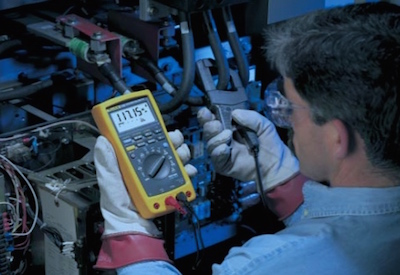
People who make their living by working with electricity quickly develop a healthy respect for anything with even a remote chance of being “live.” Yet the pressures of the getting a job done on time or getting a mission-critical piece of equipment back on line can result in carelessness and uncharacteristic mistakes by even the most seasoned electrician. Here in Part 2 are the final five quick reminders of what not to do when taking electrical measurements.

DO NOT:

6. Work on a live circuit. De-energize the circuit whenever possible, and verify it’s de-energized before starting work. If you have to work on a live circuit, make sure an arc flash risk assessment has been completed, use the appropriate PPE, and verify the operation of your test tool by testing a known voltage source first.

7. Fail to follow lockout/tagout procedures. Lockout/tagout procedures exist to protect you from potentially fatal electric shock. Don’t risk someone re-energizing your work environment. Review a sample lockout/tagout procedure from the Environmental Safety and Health Group of OSHA at www.shosha.gov.

8. Multi-task while measuring. When working with live circuits, try not to hold the meter in one hand while testing with the other. In a transient situation, that could create a path to ground through your heart. Hang or rest the meter or use a wireless read-out to get the meter out of your hands and the readings at eye level, and use an alligator clip for your ground, so that that you’re only using one hand to probe the energized conductor.

9. Neglect test leads. Test leads are a critical component of DMM safety. Make sure your leads match the CAT level of your job. Look for test leads with double insulation, shrouded input connectors, and test probes with finger guards and a non-slip surface. Test the leads with a known voltage before using. Consider leads with adjustable shrouds. There are even probes with built in fuses!

10. Hang onto an old test tool forever. Today’s test tools contain safety features unheard of even a few years ago. These features are worth the cost of an equipment upgrade and a lot less expensive than an emergency room visit. For example, new standards restrict the length of metal in the tip of a test probe to 4mm or less in CATIII/IV environments.

Read Part 1 here: http://electricalindustry.ca/latest-news/2884-safety-checklist-10-dumb-things-smart-people-do-when-testing-electricity-part-1. This article was first published by Fluke Corporation; http://content.fluke.com/platforms/wpcf/downloads/10_common_mistakes_EN.pdf.


 

Related Articles


Latest Articles

  • Guide to the Canadian Electrical Code, Part 1[i], 26th Edition– A Road Map: Section 56

    Guide to the Canadian Electrical Code, Part 1[i], 26th Edition– A Road Map: Section 56

    February 6, 2026 The Code is a comprehensive document. Sometimes it can seem quite daunting to quickly find the information you need. This series of articles provides a guide to help users find their way through this critical document. This is not intended to replace the notes in Appendix B or the explanations of individual Read More…

  • 3D Printing: Inside Lighting’s Next Revolution

    February 5, 2026 While 3D printing in mass production was once a dream, advancements in the technology have moved it more into the mainstream. The technique, which is also referred to as additive manufacturing, has rapidly evolved from a niche prototyping tool into a transformative production method for many sectors, including the lighting industry. As Read More…

  • Microgrids & Power Quality: Designing Resilient, Clean Facility Power

    Microgrids & Power Quality: Designing Resilient, Clean Facility Power

    February 5, 2026 In an era of extreme weather, aging infrastructure, and ever‑rising energy demands, many facility managers are rethinking their relationship with the grid. Microgrids offer a way to take control and operate autonomously when necessary. A microgrid is more than just backup, when designed properly, it becomes a platform for resiliency, efficiency, and Read More…

  • ITC 101: Understanding NEMA Ratings for Electrical Enclosures

    ITC 101: Understanding NEMA Ratings for Electrical Enclosures

    February 5, 2026 Understanding NEMA Ratings for Electrical Enclosures NEMA Ratings are an essential classification system used across North America to define the environmental and mechanical protection provided by electrical enclosures. Developed by the National Electrical Manufacturers Association (NEMA), these ratings help engineers, installers, and specifiers identify the appropriate enclosure type for industrial, commercial, and outdoor Read More…


Changing Scene

  • Lighting What’s Next: Stanpro Celebrates 65 Years

    Lighting What’s Next: Stanpro Celebrates 65 Years

    February 6, 2026 “We didn’t get here by standing still. For 65 years, we’ve shaped how we think, how we design, and what responsibility means,” the company said in a LinkedIn post. “Today, that thinking takes a new form. Not to change who we are, but to express our evolution more clearly. This is Stanpro, Read More…

  • Housing Priorities on Track in New Brunswick, but More Work to do: Hickey

    Housing Priorities on Track in New Brunswick, but More Work to do: Hickey

    February 6, 2026 Efforts to support the creation of new affordable housing and reduce chronic homelessness are on track, but there is still lots of work to do, according to David Hickey, the minister responsible for the New Brunswick Housing Corporation. New data indicates progress has been made on three key government priorities related to Read More…

  • BJ Electric is now Bernie’s Electric Supplies Ltd

    BJ Electric is now Bernie’s Electric Supplies Ltd

    February 6, 2026 BJ Electric has announced the company has rebranded as Bernie’s Electric Supplies Ltd, a nod to their founder. “BJ Electric Supplies is now Bernie’s Electric Supplies—in honor of our founder, Bernard Joseph Thompson, and the values that have guided the company for nearly 50 years. As we grow and evolve, this name Read More…

  • The Government of Canada Introduces the Build Canada Homes Act

    The Government of Canada Introduces the Build Canada Homes Act

    February 6, 2026 The Government of Canada has introduced the Build Canada Homes Act, legislation that will establish Build Canada Homes as a Crown corporation whose mandate will be dedicated to building affordable housing in communities across the country. As Canada’s affordable housing builder, this legislation will equip Build Canada Homes with the necessary tools to Read More…