How Homebuilding Incentives Can Pay Off for Cities, Homeowners and Local Economies: New Concordia Study
December 1, 2025
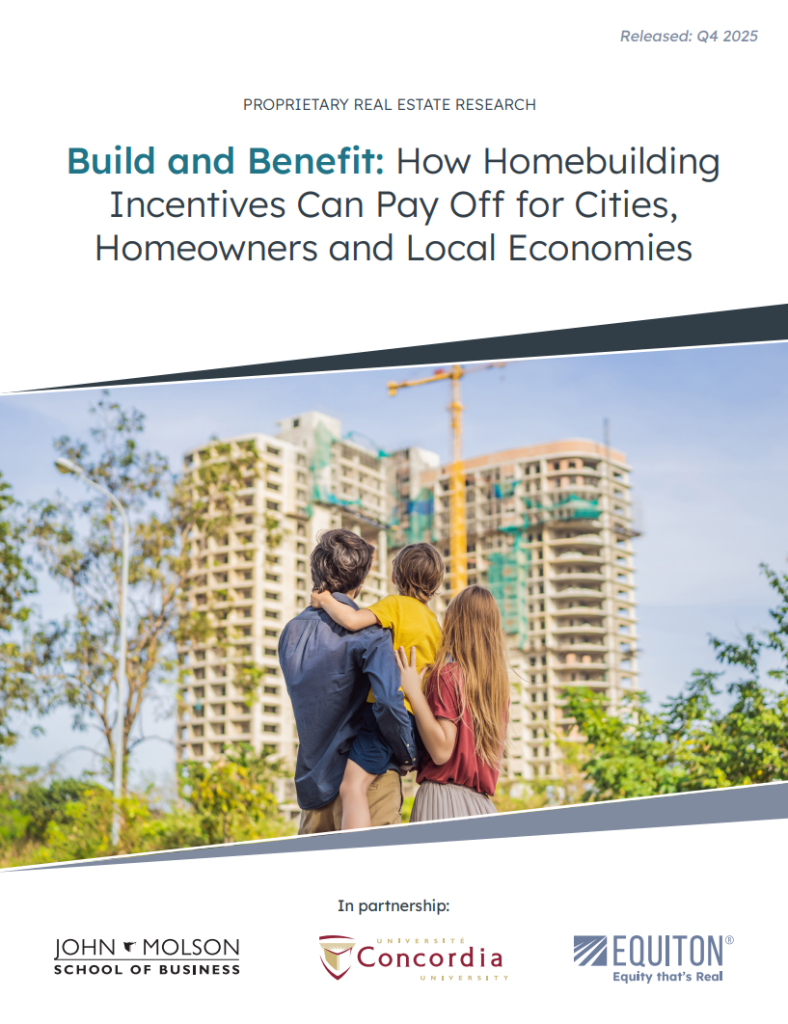
A new study from Concordia University’s John Molson School of Business finds that improving housing affordability isn’t just a social good — it’s an economic growth opportunity.
Build and Benefit: How Homebuilding Incentives Can Pay Off for Cities, Homeowners and Local Economies reframes housing policy reform as a sustainable fiscal growth strategy, demonstrating meaningful returns on investment in markets where governments work to accelerate homebuilding.
“Affordability is not just a social issue, it’s really an economic one, too,” said Dr. Erkan Yönder, Associate Professor of Real Estate and Finance. “High housing costs affect the entire economy, everything from family finances to business productivity and municipal budgets. With the growing pressures in the Canadian economy, it is important to do everything we can.”
Key Takeaways
- Canada needs to more than double 2024’s annual rate of building to 3.5-4% of existing supply before affordability begins to improve. For substantial progress, we need much more.
- Doubling last year’s elevated pace of construction is especially daunting in major cities. Toronto would need to complete 96,000 more units annually. Meanwhile, Montreal, Vancouver, and Calgary would need 77,000, 44,000, and 24,000, respectively.
- Public investments in homebuilding can help reshape the affordability picture. Using the Mortgage Pressure Index, a fresh approach to measuring affordability, the study finds a 20% reduction in approval delays could mean a 17% improvement in affordability.
- Greater affordability can fuel business activity and local revenue growth as households experience greater levels of disposable income.
- Improving affordability in Canada’s major cities could also benefit surrounding regions. A 20% improvement against 2024 affordability levels in some of Canada’s largest cities could reduce median home prices in peripheral areas by 5-15%.
Homebuilding has long been a struggle in Canada, but Yönder’s earlier research found that streamlining approval frameworks and reducing input costs could serve as an accessible, quickly implemented first step toward meaningful housing improvements.

![Guide to the Canadian Electrical Code, Part 1[i], 26th Edition– A Road Map: Section 74 — Airport installations](https://electricalindustry.ca/wp-content/uploads/2026/05/EIN-Stock-Guide-Code-Canada-Map-1200-768x403.png)





![Guide to the Canadian Electrical Code, Part 1[i], 26th Edition– A Road Map: Section 74 — Airport installations](https://electricalindustry.ca/wp-content/uploads/2026/05/EIN-Stock-Guide-Code-Canada-Map-1200.png)