The Road Behind and the Road Ahead
August 23, 2017
By Phil McKay
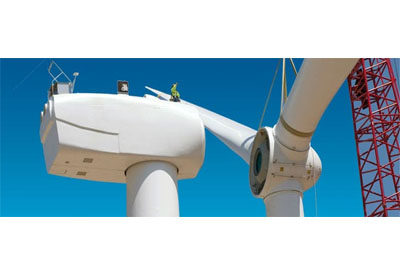
Wind technicians have been working to keep Canada’s turbines turning for a long time now.
TransAlta’s Cowley Ridge Wind Farm was one of the first commercial facilities in the country with the original technicians back in 1993 describing their experiences of being “up so high” and that “there was nothing like it.”
Sitting on 25 meter tall lattice work towers, these machines were less than a third of the height of most tubular wind turbine towers today. However, many of the same skills learned on these first sites are still relevant today even though the technology has certainly progressed.
For example, the thought of dropping a tool from 25 meters isn’t much better than dropping one from 80 meters. When it sinks in how much damage that wrench could do it sticks with you for a long time. In the same way working around cables transferring 300 kW of electricity has a similar sobering effect as one running at 3,000 kW. So, for the past two decades, training institutions and employers have worked to transfer this knowledge from one generation of technicians to the next with safety being at the core of formal instruction.
As various manufacturers began to have success with sales of bigger and better wind turbines and sub-stations grew to accommodate hundreds of megawatts, the skills needed to keep wind farms running also grew.
To highlight some of the diverse jobs on a wind farm here’s a list of some of the main roles we see today:
- wind turbine technician — both electrical and mechanical skills
- electrician — high and low voltage
- supervision/management — for one or multiple wind farms
- admin/logistics/compliance — general administration, supply chain, stock room, regulation compliance, etc.
- forecasting/dispatch — wind power forecasting and grid dispatch response
- major component replacement — manufacturer or independent service provider for large repairs such as gearbox replacement
- blade/composites technician — specialized fibreglass/carbon fibre repairs at heights
- electrical/project engineering
- land remediation — repair damaged crops/vegetation, service road repairs, etc.
To keep up with this changing landscape, technical colleges formed programs to prepare individuals to become certified wind turbine technicians. They established advisory boards composed of employers in the industry to develop their programs and produce well-rounded graduates. While some hiring managers chose to employ graduates to develop their workforce, for others it made more sense to hire a licensed tradesperson for their credentialed experience. They would rather give them a crash course in wind energy on their site than work with a recent wind technician graduate who had minimal practical experience.
As job seekers attempted to navigate the precise needs of the industry, the distinction between construction crews, manufacturer service teams, independent service companies and farm owner/operators became critical. For example, if you were willing to travel anywhere and work on a construction site the opportunities came quickly and the compensation was very attractive, while also providing a great life experience. Other more stable positions, like those found on established wind farms already in the operations phase, were often more limited in a region, making it hard to find a job.
Living in a hotel for extended periods of time isn’t for everyone, however, a trend towards wind turbine construction workers settling down in the area of their last job emerged over time. This trend has had a significant impact on the job market in Canada. It opened a unique opportunity for owners and service providers to hire skilled techs locally who had extensive experience from wind turbine installations.
The wind industry has been led primarily by large, well established, European-based organizations. These wind energy companies have proven internal training programs for installation and service. Over many hours of experience, under expert supervision the knowledge base grows. It is transferred to other employees coming from Colleges or outside industries during the day-to-day operations of the site.
So what does the future look like for wind technician training in Canada?
Employers are looking for people who want to be there and have a desire to learn.
The wind industry has already shown that they are willing to fill in the knowledge gaps with on-site training. New employees from colleges, other industries and wind turbine construction teams are valid candidates for the job if they have the right attitude to be developed in the areas that are needed.
However, as an industry, we can’t simply sit back and expect everything to be taken care of organically.
The Canadian Wind Energy Association (CanWEA) will be working with the American Wind Energy Association (AWEA) to lay out a core competency standard for wind turbine technicians in North America. This will be a critical piece of work to keep the expectations for techs at the right level so that their work is compliant with relevant North American requirements. The wind industry needs to continue to be represented by the best.
By establishing core competencies, we can assist colleges and employers in targeting the key areas of training that are required for a safe and efficient operation. If we do not provide these indicators to the ones responsible for equipping Canada’s workforce, we leave colleges speculating on what employers are looking for. In addition, we can be exposed to issues that arise from employers conducting training in isolation, and potentially missing essential skills.
Finally, I believe that by focusing on what is required to be the best in Canada will mean that we continue to have a leading edge workforce that will be well positioned to export our expertise and safe work culture to the global industry.
Phil McKay is Operations and Maintenance Program Director at the Canadian Wind Energy Association (CanWEA). This article first appeared as a CanWEA blog post: http://canwea.ca/blog/2017/06/09/wind-turbine-technician-training-road-behind-road-ahead/.