How One Hospital Is Improving Patient Care with Advanced Analytics
September 13, 2017
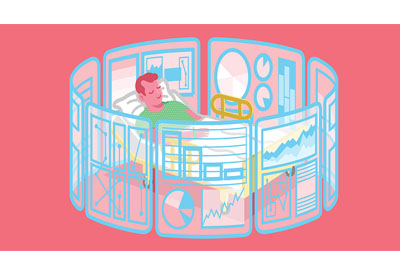
Demand for healthcare is outstripping capacity, but Toronto’s Humber River Hospital has a solution: a digital Command Centre powered by GE’s Wall of Analytics.
As populations grow and age, many hospitals are being stretched past their limits. Rather than apply temporary or partial fixes to address the challenges that underlie this busy, acute care hospital, Toronto’s Humber River Hospital has chosen to implement a holistic, state-of-the-art hospital command centre that will enable it to achieve radical gains in quality and efficiency.
The hospital partnered with GE Healthcare Partners to conceive, design and build the new 4,500 square-foot command centre, a cornerstone of which will be GE’s Wall of Analytics that processes real-time data from multiple source systems across the hospital. Using complex algorithms, predictive analytics and cutting-edge engineering, the hospital intends to do two seemingly contradictory things: improve quality of care and patient access while at the same time reducing costs.
That may sound like an out-sized ambition, but there’s a good precedent for such a radical increase in efficiency: airports. Air traffic control technology was a guiding inspiration as GE designed a better way to extend reliable healthcare to meet the needs of more patients.
Blue-sky thinking
The introduction of air traffic control technology in the 1960s allowed airports to swiftly transition from scheduling a few hundred flights a day to managing thousands. Whereas the volumes of aircraft and flights have increased tenfold, they all vie for the same space. Many airports now see millions of passengers pass through every day.
Despite the vast complexity of such a logistical challenge, the airline industry became significantly safer and more efficient in the process. So it’s no surprise that when GE Healthcare began developing a comprehensive approach to enable hospitals to better manage congestion, they modelled their solution on air traffic control.
Adding a digital command centre was a natural fit for Humber River Hospital, not only because it’s recognized as North America’s first fully digital hospital, but also because the busy facility must serve a region representing more than 850,000 people.
The extremely high demand became quickly apparent. After construction of the new hospital was completed in 2015, the hospital was slated to reach full capacity in five years. Instead, they reached that point in just five months.
“We’re at full capacity and we’re only going to see more and more patients through our front door. How are we going to deal with that?” asks Peter Bak, the hospital’s CIO. “We can’t just say, ‘Sorry, you’re going to wait longer.’ That’s not acceptable.”
Powered by digital
Bak and his team have overseen the implementation of the many tools that earned the hospital its high-tech repute, from software that empowers patients to review their own health records, to fully automated robotic systems for delivering supplies and dispensing medication.
These digital systems offer incredible efficiency, quality and safety benefits. For example, a doctor at Humber River Hospital can expect the results from a lab test in under 60 minutes, guaranteed. In a traditional hospital, the same manual process can take up to four hours and is prone to labelling errors and other defects.
But even though Humber River Hospital’s digital approach has yielded great results, it has not yet been fully harnessed. What the command centre will do is amplify the impact generated from digitized processes, work flow and information flow by offering a holistic real-time view of how the hospital is operating.
Seeing the big picture
“People work in their focus area, and so they don’t see the big picture,” Bak explains. “They’re not seeing what’s happening at the other end of the hospital, and how what they do might have a bearing on what’s happening somewhere else.”
The aim of the command centre is to empower a team of co-located staff to monitor, prioritize and expedite activities with the goal of driving far greater efficiencies. At Humber River Hospital, those efficiencies are anticipated to enable the hospital to deliver care to more patients with the same number of beds it operates today, and avoid a projected shortfall of 40 or 50 medicine beds by the year 2021.
Increased capacity isn’t the only outcome that the hospital is anticipating from its new command centre. Another is improved reliability. “We need to drive hospitals to a point where they don’t make errors,” says Bak. “The command centre acts as a second set of eyes and allows us to reduce the potential for mistakes.” By integrating systems and applying analytics a small team can observe the “outliers” and intervene, ensuring that delays will not go unidentified, resources will not go under-utilized,and patient care actions are taken accordingly.
The command centre will also enable much better integration across levels of care. “We want the hospital to be the hub of an ecosystem that drives health for the 850,000 people in our community,” Bak explains. “Instead of patients having to physically go to the hospital to access specialty services for diagnosing and monitoring a condition, in many instances the patient can remain in the community and be serviced remotely with the use of technology.” Someone in the command centre will be monitoring, intercepting risk and expediting action when it is required, using analytics powerful enough to monitor the status of thousands of people, and not just the ones in the physical building.
“There are plenty of digital tools to make healthcare better, but they’re less effective when they are working independently of one another,” explains Bak. “Humber River Hospital’s new command centre provides the much-needed synthesis to make all those systems work together.” The outcome? Reliable, high-quality care for more people.
This article was first published online by GE Reports: http://gereports.ca/innovative-hospital-toronto-turning-advanced-analytics-improve-patient-care-2/.