Banner Wireless Node Enables Remote Monitoring of Machine Vibration and Current Draw
May 30, 2019
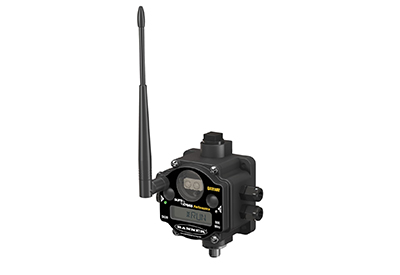
Monitor electric equipment on two critical indicators of performance and health without the hassle and expense of installing, altering, or expanding wired infrastructure to connect devices. The CM Series condition monitoring node comes preconfigured to work with a QM42 vibration sensor and a clamp style current sensor. It communicates vibration and current draw data to a Performance Series Gateway or DXM controller over a Sure Cross wireless network.
ACCESS MORE HEALTH AND PERFORMANCE DATA
A single CM Series condition monitoring node will connect a QM42 vibration sensor and a clamp style current sensor to robust Sure Cross wireless network, making it easy to access critical equipment data. The QM42 measures RMS velocity, an indicator of general machine health, as well as high frequency RMS acceleration which can be an early sign of bearing wear on motors. The current sensor monitors current draw, making it easy to track power use and identify surges, which can be indicative of bad windings, failing brushes, or an excessive load.
A single CM Series condition monitoring node can connect a split core current transformer and a QM42 vibration and temperature sensor to a Sure Cross wireless network. This eliminates the need for IT infrastructure to connect devices. Users can collect data from a single machine or multiple machines .
Users can identify early sign of bearing wear on motors. The current sensor monitors current draw, making it easy to track power use and identify surges, which can be indicative of bad windings, failing brushes, or an excessive load.
monitor any asset with rotating motion so that problems can be detected before they become too severe and cause additional damage or result in unplanned downtime. Paired with
MONITOR ONE OR MULTIPLE MACHINES
The CM Series node utilizes a proprietary communication protocol that is unique to Sure Cross devices and will only communicate with other Sure Cross devices within the network. The Time Division Multiple Access (TDMA) control architecture combined with Frequency Hopping Spread Spectrum (FHSS) technology ensures reliable data delivery between devices in the network, even in busy environments where many other wireless devices are present.
SECURE, RELIABLE COMMUNICATION
The CM Series node utilizes a proprietary communication protocol that is unique to Sure Cross devices and will only communicate with other Sure Cross devices within the network. The Time Division Multiple Access (TDMA) control architecture combined with Frequency Hopping Spread Spectrum (FHSS) technology ensures reliable data delivery between devices in the network, even in busy environments where many other wireless devices are present.
BENEFIT STATEMENT
Create an end-to-end IIoT solution using condition monitoring nodes, a DXM Series wireless controller, and our Connected Data Solutions cloud software. This web-based platform allows users to access and analyze data from each node in the network using an internet-connected device. The on-demand access to data, visualization tools, and real-time alerts make it easy to identify issues, solve problems, and make better decisions.
Go HERE for more information