The Never-Ending Waves of Racism, Part 1: Reflections
June 29, 2021
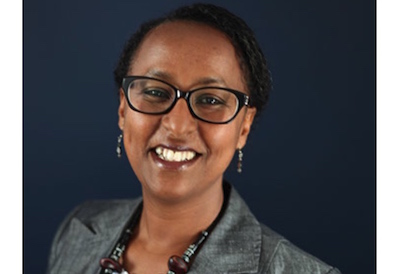
By Merertu Mogga Frissa
Someone once asked me why we struggle with diversity and inclusion in Canada. My response was that we have never taken the time to discuss the value of both as a society. While Canada identifies itself as a multicultural country, the diverse make-up of the population itself is made to exist in a vacuum and outside of what multiculturalism seeks to achieve. This oversight forces the discussion about racism to exist within the limits of communities impacted by it while completely removing it from conversations at social and institutional levels.
When racism is brought up as a risk factor to social, economic, and political equality, it is often dismissed. People distance themselves from it or altogether deny it. In learning opportunities about diversity and inclusion, people tiptoe around the topic of race. It is often blanketed under topics like awareness in the workplace, managing cultural differences, unconscious bias, managing difficult conversations, etc. Individuals who express that their race puts them at a disadvantage are silenced under the pretext of “overreacting,” “playing the race card,” or “being difficult to work with.” In the face of unfair treatment outside of workplace settings, experiences are dismissed as “must have done something.” The outcome of these reactions and interactions is generations of missed opportunities for removing systems that perpetuate racism and continued protection of individuals that should have been accountable for their actions.
When the early COVID-19 lockdown forced us to slow down, people found the time to consume what was on the news, including the murder of George Floyd in the United States. As the impact of his murder was felt by many in Canada, the topic of racism resurfaced in full force. For Black people who regularly experience racism, his death triggered many emotions and unpacked many experiences. It was a reminder of the unfair treatment they received from authorities, the seemingly small incidents that dehumanized them, the times they contemplated whether to report an incident, and the frustration they felt when they were asked to provide evidence even when someone lost their lives.
So today, I want to share my reflections on a few issues that are often overlooked when addressing racism in our workplaces and beyond.
Subtle racism
It is a natural human reaction to be outraged about something as tragic as death, especially when such brutality is witnessed. However, modern-day racism does not always take this crude and violent form, particularly in Canada. Racism in Canada is often subtle and is very well embedded in our institutions and systems: healthcare, housing, justice, education, political, financial, etc. — this subtle racism is as damaging as the overt racism that people rant about.
For instance, while the physical effects of the pandemic are felt similarly by everyone, reports show the disproportionate harm of COVID-19 on Indigenous and racialized communities due to a lower level of access to social and health services[1]. This finding is not surprising for those who have been raising the alarm and advocating for reforms to exclusionary socio-economic systems for so long.
At the individual level, subtle racism takes the form of internalized negative stereotypes and prejudices that are manifested in a variety of ways. Examples include associating people’s race to their competency, rationalizing that people are hired to just meet representation requirements, rationalizing away people’s racism experiences as unique individual incidents, equating the frustration of racism with “having an attitude” or being “too sensitive,” or getting defensive when people express their frustration, etc. All of these are highly exclusionary in nature. Clearly, every individual needs to rethink and re-evaluate subtle racism and examine the manners in which they are sustaining it.
Impacts of subtle racism
The economic and health impact of subtle racism is immense. I often wonder if people truly comprehend its impact on the communities experiencing it. A review of the lack of employment opportunities and exclusionary workplace practices can shed light on forms of institutionalized racism. According to recent data by BCG and CivicAction[2], Black university graduates earn only 80 cents for every dollar earned by white university graduates, even though they have the same credentials. Black employees are also twice likely as white employees to report experiencing racial discrimination in major decisions at workplaces. A report by Catalyst identifies that 52% of Indigenous people who responded to the survey indicated being regularly on guard against experiences of bias and experiencing low levels of psychological safety[3]. Subtle racism is rampant in Canada and it takes so many forms — not enough time to list them in this blog. People need to truly look for opportunities to understand its impact and work towards removing it.
Removing racism
The fight against racism does not start or end with supporting tributes, attending protests or a hashtag. While these are all important steps to highlighting the reality and removing racism, more work that corresponds with the perspective of communities affected by it is required. The focus should then be on recognizing the position of those in our society who continue to experience racism daily, rather than about how far the country has come simply because we experienced some unprecedented public outcry.
This brings me to my next area of concern. I often wonder if the outcry against racism will ever be successfully turned into practical solutions if people continue to reward themselves for how much support they have shown. I also have a genuine concern about anti-racism turning into a passing trend, especially in a social media society that enjoys a repost, loves buzzwords and is quick to jump onto the next big topic. We cannot afford to address racism casually through rhetoric — people must get real.
Taking action
It is my observation that the decision to act is often delayed until our interests converge with others. This attitude towards change is one of my biggest concerns. One main reason that organizations have not been keen on diversity, equity and inclusion is because often decision-makers have not identified them as critical issues that relate to their experience. Sadly, the delay or hesitation to challenging racism also owes itself to this reasoning. To address and work against racism successfully, removing such narrow approaches, especially those motivated by “what’s in it for me” or “the business case” is critical. Assessing efforts and intentions based on financial gain and not as a responsibility to fix this deeply engrained social problem is what has sustained racism for this long. I want to emphasize that, unless people and organizations adopt a broader and more inclusive approach that focuses on opportunities to transform experiences, we will not see progress against racism.
Race is a human invention created to categorize people and groups. It was applied as a colonial tool to set up systems of domination and oppression. What this means is that no one is born racist, racism is learned. Removing racism then requires intentionally unlearning the application of race-based categorization and evaluation of people’s place in society and our workplaces. Recognizing the role of race in how attitudes are developed, institutions and organizations are structured is an important step to move beyond futile rhetoric and symbolic gestures. Extremely diligent work that pushes every level of society and organizational structure towards drastic change is desperately needed. In this case, subtle racism which is rampant in our systems needs a unique consideration. Its existence is irrefutable.
Merertu Mogga Frissa is Program Manager of Diversity, Equity and Inclusion at Electricity Human Resources Canada (EHRC).
Notes
1. Indigenous Services Canada.
2. Nan Dasgupta, Vinay Shandal, Daniel Shadd, Andrew Segal, and in conjunction with CivicAction. (2020, December 14). The Pervasive Reality of Anti-Black Racism in Canada. Retrieved from The Reality of Anti-Black Racism in Canada | BCG; www.bcg.com/en-ca/publications/2020/reality-of-anti-black-racism-in-canada
3. Thorpe-Moscon, J. & Ohm, J. (2021). Building inclusion for Indigenous Peoples in Canadian workplaces. Catalyst.