Lighting an Industrial Facility: Designing for Safety, Productivity & Performance

July 30, 2026
By CSC LED
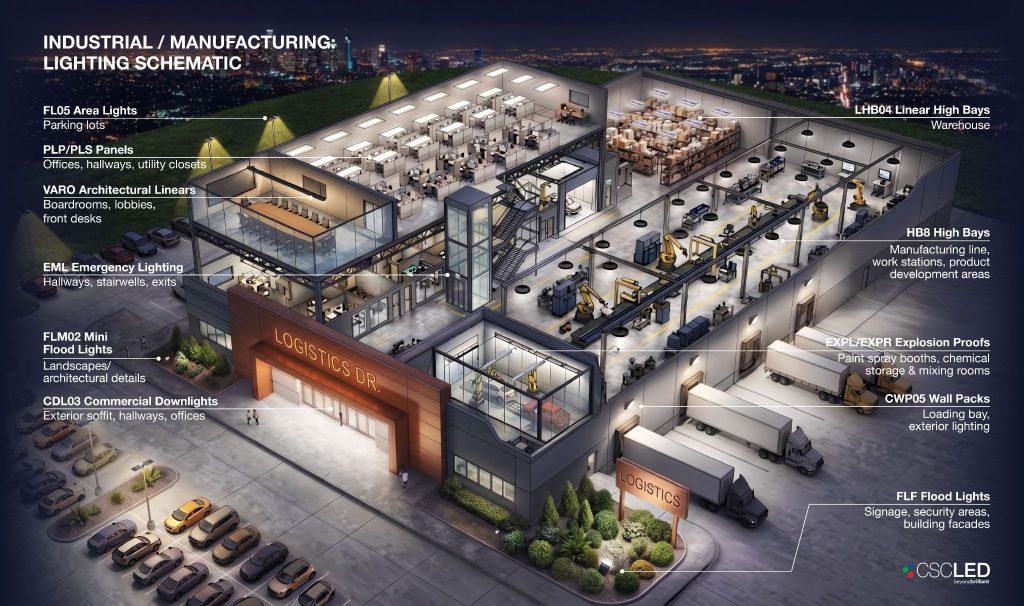
When planning an industrial facility, lighting is often discussed by fixture type—high bays, wall packs, flood lights, emergency lighting, and so on. In reality, successful lighting design starts by understanding how each space is used.
Every area of an industrial property has different visual requirements. A parking lot prioritizes safety and security, loading docks require reliable task lighting, manufacturing spaces demand high visibility for precision work, and hazardous areas must meet strict safety requirements.
Effective industrial lighting combines purpose-built solutions that work together to support the building as a whole.
1. Site Lighting
Before employees reach the front entrance, lighting is already performing one of its most important jobs.
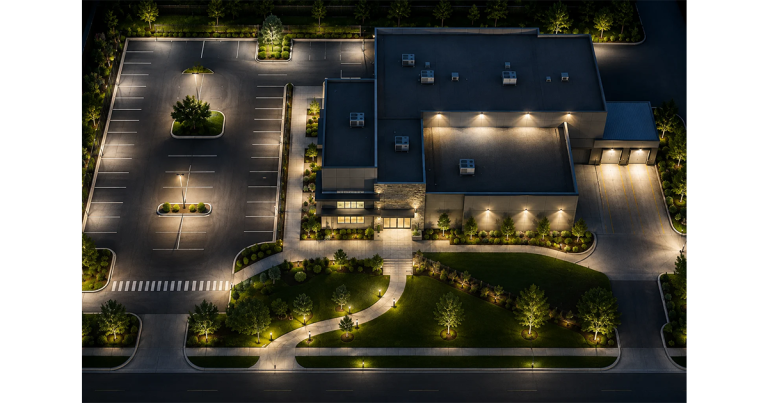
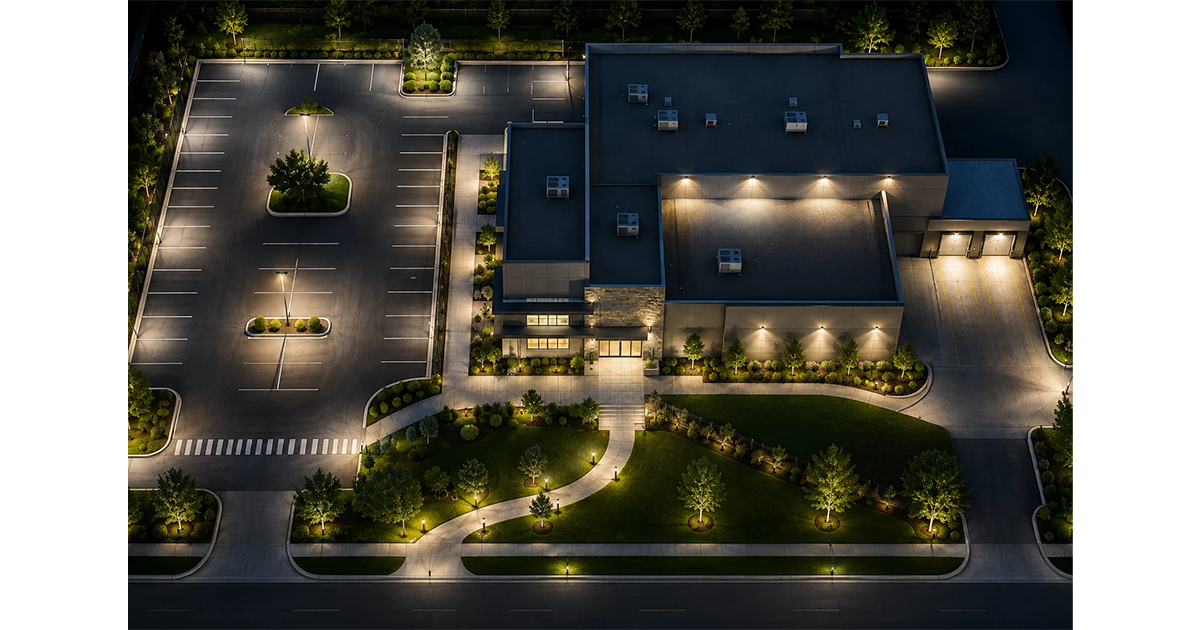
Parking lots, drive lanes, truck routes, and pedestrian walkways need sufficient illumination that allows drivers and pedestrians to navigate confidently while helping security cameras capture clear images.
Uniform lighting also reduces harsh shadows, making the site feel safer during shift changes that occur before sunrise or after sunset.
Design Considerations
- Uniform illumination
- Reduced dark spots
- Pedestrian visibility
- Vehicle navigation
- Security
Suggested Lighting Solutions
2. Building Entrances
Industrial building entrances are high-traffic transition zones that must remain safe and clearly identifiable in all conditions. Effective entrance lighting improves visibility, defines access points, and creates a seamless transition between exterior and interior spaces. For covered entrances, uniform illumination and glare control help maintain comfort and visibility beneath soffits and canopies.
Design Considerations
- Visibility
- Weather protection
- Wayfinding
- First impressions
Suggested Lighting Solutions
3. Office and Administrative Lighting
Industrial facilities extend well beyond the warehouse floor. Offices, boardrooms, and reception areas require lighting that promotes comfort, productivity, and collaboration while creating a professional environment for employees and visitors.
General office spaces benefit from uniform, glare-controlled illumination that supports computer-based work, while boardrooms and reception areas often incorporate architectural lighting to enhance the overall appearance of the space and reinforce the building’s design.
Design Considerations
- Glare-controlled illumination
- Employee comfort and productivity
- Professional appearance
- Architectural integration
Suggested Lighting Solutions
- Panel Lights – Offices and administrative spaces
- ALV Architectural Linears – Boardrooms, reception areas, and collaborative spaces
4. Loading Docks
Unlike hospitality or retail settings, industrial facilities often operate around the clock.
Loading docks experience continuous movement from transport trucks, forklifts, employees, and shipping personnel. Poor lighting can make reversing trailers more difficult, increase hazards, and reduce visibility around equipment.
Bright, uniform illumination helps these critical operations continue safely regardless of the time of day.
Design Considerations
- Vehicle movement
- Forklift traffic
- Worker safety
- Continuous operation
Suggested Lighting Solutions
3. Office and Administrative Lighting
Industrial facilities extend well beyond the warehouse floor. Offices, boardrooms, and reception areas require lighting that promotes comfort, productivity, and collaboration while creating a professional environment for employees and visitors.
General office spaces benefit from uniform, glare-controlled illumination that supports computer-based work, while boardrooms and reception areas often incorporate architectural lighting to enhance the overall appearance of the space and reinforce the building’s design.
Design Considerations
- Glare-controlled illumination
- Employee comfort and productivity
- Professional appearance
- Architectural integration
Suggested Lighting Solutions
- Panel Lights – Offices and administrative spaces
- ALV Architectural Linears – Boardrooms, reception areas, and collaborative spaces
4. Loading Docks
Unlike hospitality or retail settings, industrial facilities often operate around the clock.
Loading docks experience continuous movement from transport trucks, forklifts, employees, and shipping personnel. Poor lighting can make reversing trailers more difficult, increase hazards, and reduce visibility around equipment.
Bright, uniform illumination helps these critical operations continue safely regardless of the time of day.
Design Considerations
- Vehicle movement
- Forklift traffic
- Worker safety
- Continuous operation