Why Contractors Are Rethinking the Total Cost of Their Toolbelt

By Greg Anliker, End User Experience Manager at IDEAL Electrical
Many electricians have faced the choice at the counter: one product is more affordable but may need replacing in a few months, whereas the other is an investment but earns its value back in reliability and the quality of work it supports.
The price on the shelf is only the initial cost of a tool. The real costs show up later: in the hours a slow tester adds to a service call, the callback triggered by a false reading, the second trip because a fault was never really located or the backup meter you had to buy because the first one wasn’t reliable enough for the job.
The modern jobsite leaves little room for inefficiency with condensed timelines, smaller teams and tighter budgets. When additional hours and labor aren’t easily available, the tool belt becomes the next lever to pull, which is why evaluating tools on their sticker price alone can be a costly habit.
As contractors and electricians evaluate their tool belt, it’s imperative to consider what the right tool, not necessarily the most affordable one, can save in terms of time, safety and future investment.
The Hidden Costs Of The Wrong Tool
It’s easy to overlook the hidden costs of choosing the wrong tool, since they often don’t make themselves known until a project is further along. So, what does choosing the wrong tool actually cost electricians and contractors?
- Time. The average electrician spends up to two hours on a single troubleshooting task, often several times a week. When the average electrician completes five to six service calls in a day, having a tool that shaves precious minutes off diagnosing and fixing problems can save significant time, allowing electricians to complete more jobs effectively.
- Rework, callbacks and reputational risk. A missed or misdiagnosed issue can trigger a domino effect of callbacks to the site or additional labor to reopen walls, outlets or junction boxes that were already closed. Callbacks carry both a monetary and reputational cost, so a tool that locates problems accurately the first time has significant potential to save time and resources. IDEAL Electrical estimates that giving a single electrician just two hours of their time back twice a week adds up to roughly $17,680 (24,756 CAD) in recovered labor value.
- Safety. An unreliable reading can cause electricians to chase a fault that isn’t there or let their guard down on a circuit that isn’t truly dead. Those missteps carry real consequences that could injure electricians and put them out of work. Beyond physical risks, safety risks can pause progress on a job or trigger insurance exposure and liability that extends far past the cost of any tool. When the wrong tool contributes to an unsafe condition, a lower sticker price isn’t worth the risk.
- Replacement costs. A low-cost, single-function tool can quickly become more costly if electricians need to purchase additional instruments to complete the same task. Poorly built tools also create recurring replacement costs when they fail under jobsite conditions, while adding unnecessary weight and complexity to the tool pouch. Over time, repeatedly replacing damaged tools or buying multiple products to compensate for limited functionality can cost far more than the original purchase price.
How to Evaluate Tool Costs Beyond the Price Tag
Electricians should consider the total cost of ownership when choosing tools. This doesn’t necessarily mean buying the most expensive option. Rather, it means weighing what the work actually demands and picking the tool best suited to do it safely and efficiently. Here are some factors to consider when choosing the tools to invest in:
- Ratings: A meter’s category and voltage ratings need to match both the current work and where the jobsite and an electrician’s career is heading. For example, a CAT III meter belongs in commercial and three-phase distribution work, while CAT IV is built for the higher energy of industrial and utility applications. Buying for where you’re going, not just where you are, is how a tool stays useful for years instead of being outgrown in one. A meter like IDEAL’s 1000V Auto-Range Multimeter, dual-rated CAT IV 600V and CAT III 1000V, is built to cover that range rather than box a technician into a single setting.
- Accuracy: A meter is only as good as the reading it gives you, and a lower-end model can hand back a number that’s wrong or pick up a phantom “ghost voltage” that makes a dead wire look live. Chasing a fault that was never there or having to respond to a callback wastes time and resources. Quality meters are built to prevent this problem. IDEAL’s 1000V Auto-Range Multimeter uses True RMS accuracy to read the irregular power common in real-world systems and a low-impedance setting to filter out ghost voltage to identify problems up front or avoid chasing problems that aren’t there.
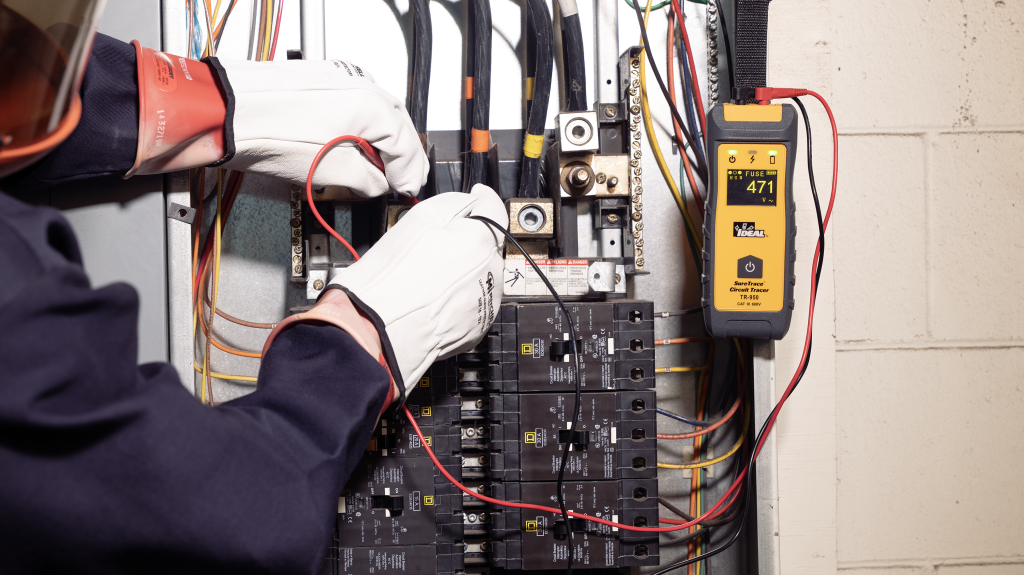
- Consolidation: Buying two or three less expensive tools for one task will likely end up costing more in the long run as each tool needs to be replaced independently. IDEAL’s SureTrace Pro Circuit Tracer was built with this logic in mind. Rather than being just a single-function tracer, it brings breaker and conductor tracing, voltage measurement across AC and DC ranges, continuity checks, receptacle testing and contactless amperage sensing into one platform, replacing the extra testers a technician would otherwise have to purchase and carry around with them.
Finally, electricians should evaluate how a tool’s durability, usability, safety features and performance will affect its value over the course of its working life. It’s important to ask questions like:
- Is it built to survive a two-meter drop and certified by a third party?
- How’s the battery life?
- Can it do multiple jobs so tools don’t ned to be alternated while in a tight panel?
- Will it reduce rework, and will it help uphold safety on the jobsite?
A tool that answers those questions well might have a higher up-front price tag, but will pay off in the long run.
Measuring the True Cost
What a tool costs to buy is different from what it costs to own. The numbers that matter show up over its lifetime: the hours it saves, the callbacks it prevents and the increased profitability thanks to efficient execution.
The question electricians should be asking instead of “what does this tool cost” is actually “what would the wrong tool cost me?” When considering tool choices through that lens, the right tool becomes the obvious one. In an industry that’s only moving faster each year, that’s how the best crews stay ahead.