Why Does My AFCI Breaker Keep Tripping? Causes, Fixes & Troubleshooting

October 19, 2026
By EB Horsman & Son
Arc Fault Circuit Interrupter (AFCI) breakers play an important role in protecting homes from electrical fires, but repeated tripping can be frustrating for homeowners and contractors alike. While many people assume a tripping AFCI breaker is defective, the cause is often related to wiring conditions, connected devices, circuit loading, or the breaker detecting a potential hazard. In this guide, we’ll explain what causes AFCI nuisance tripping, how to troubleshoot common issues, and when a breaker replacement may be necessary. Whether you’re diagnosing a service call or sourcing replacement circuit protection, understanding the root cause can help save time and avoid unnecessary costs.
EB Horsman & Son supplies AFCI breakers, panel solutions, and electrical products from trusted manufacturers, helping contractors and facility professionals across Western Canada find the right solution for their application.
What Is AFCI Nuisance Tripping?
AFCI nuisance tripping occurs when an Arc Fault Circuit Interrupter disconnects power even though no dangerous arc fault exists. Common causes include appliance-generated electrical noise, overloaded circuits, loose connections, and compatibility issues between newer AFCI technology and older electrical devices
Why Do AFCI Breakers Experience Nuisance Tripping?
AFCI (Arc Fault Circuit Interrupter) breakers can occasionally trip when no obvious electrical problem is present. This is commonly referred to as nuisance tripping and can occur with AFCI breakers from all manufacturers. It’s important to understand that nuisance tripping does not automatically indicate a defective breaker. In many cases, the breaker is responding to conditions on the circuit that resemble the electrical signature of an arc fault.
The Three Most Common Causes of AFCI Tripping
1. A Detected Arc Fault
AFCI breakers are designed to identify dangerous arcing conditions caused by issues such as damaged wiring, loose connections, or deteriorating electrical components. When an arc fault is detected, the breaker trips to help reduce the risk of electrical fires.
2. Circuit Overload (Overcurrent)
Like standard circuit breakers, AFCIs provide overcurrent protection. If appliances or equipment draw more current than the circuit is rated for, the breaker will trip to protect the electrical system.
3. Electrical Noise from Connected Devices
Some appliances and electronics can produce electrical waveforms during normal operation that resemble the signature of an arc fault. In these situations, the AFCI breaker may interpret the signal as a potential hazard and disconnect power.
Can Appliances Cause AFCI Nuisance Tripping?
Not all electrical devices interact with AFCI technology in the same way. Certain appliances and electronic equipment can generate electrical noise or waveform patterns that closely resemble an arc fault.
In some cases:
- The appliance itself may create signals similar to electrical arcing during normal operation.
- Electrical noise from other devices connected to the home’s electrical system may be detected by the AFCI breaker.
- The breaker may respond to these signals as a precautionary safety measure.
What is the Difference Between AFCI Breakers vs Standard Breakers
AFCI vs Standard Circuit Breaker: Your new home may differ from your previous home, in that your new home has arc fault breakers. Arc Fault breakers are required in homes built after 2015 and may react differently causing tripping where they hadn’t in your previous home. This new incompatibility is due to the differences in the breakers functionality and the protection they provide.
- Conventional circuit breakers only respond to overloads and short circuits, therefore they do not protect against arcing conditions.
- An Arc Fault Circuit Breaker (AFCI) is a circuit breaker that breaks the circuit when it detects electronic arc signals. Those signals are a signs of loose connections or damaged wires in a home. Loose connections, which can develop over time, and damaged wires or cords can become hot enough to ignite house fires. AFCI’s are devices designed to protect against fires caused by arcing faults in the home electrical wiring. The AFCI circuitry continuously monitors the current to detect unwanted arcing conditions. Once detected, the AFCI opens its internal contacts, thus de-energizing the circuit and reducing the potential for a fire to occur.
| Feature | Standard Breaker | AFCI Breaker |
|---|---|---|
| Overload Protection | Yes | Yes |
| Short Circuit Protection | Yes | Yes |
| Arc Fault Detection | No | Yes |
| Fire Prevention | Limited | Enhanced |
| Required in Modern Homes | No | Often Required by Code |
| Detects Loose Wiring | No | Yes |
What Are the Best Ways to Troubleshoot AFCI Nuisance Tripping?
What are the Best Practices:
- Beware that the circuit is not overloaded with an excessive amount of electronics (load or current). The breaker is only able to support a specified amount of wattage, and if exceeded, the breaker will trip.
- All electronics purchased should be CSA listed, or equivalent, and comply with CSA standard C22.2 No. 270, or they may cause unnecessary tripping.
- Make sure furniture is not on or pushing against electrical wires.
- If any blackened plugs, very damaged wires, or noisy circuit breakers are discovered, an electrical problem has occurred and the homeowner should call an electrician.
- Check that all connections between a light socket and a light bulb base are tight including garage door openers. An arc can occur in a loose connection, which will cause the AFCI breaker to trip.
What are the Best Practices for Electrical Contractors?
- Ensure wires are secure on receptacles, recommended that wires are secured with the screw, friction fit backstabbing is not recommended.
- 20amp arc faults on Microwave circuits. This reduces nuisance tripping due to microwave overcurrent.
- Separate HRV and Hot water tanks onto separate circuits.
- Separate lighting and switches onto non-arc fault circuits.
- Route wires in strategic areas so homeowners and other trades are less likely to pierce through a wire.
- If possible, perform work after the other trades, i.e. HVAC and plumbing, have completed.
- Ensure properly maintained tools are used, i.e. sharp blades.
What Are the Recommended Ways to Handle Recurring AFCI Nuisance Tripping?
1. A Dual Function breaker has been proven to hold on circuits where Arc Fault breaker nuisance tripping is occurring
CAUTION – we do not recommend using the Dual Function breaker on all circuits. It has proven to be an effective alternative on circuits where the current appliances are not compatible with Arc Fault technology and are causing nuisance tripping.
2. Re-test your breakers before resorting to the Dual Function breaker as a solution
3. Visit Electro Federation Canada for more information about Arc Fault Circuit Interrupters (AFCIs)\
Statement regarding Siemens AFCI Breakers:
“Siemens is committed to providing an AFCI breaker that meets the required codes and customer expectations and is continually updating and improving our product. As technology changes and new appliances and equipment are introduced, some appliances may not be compatible with ArcFault technology.”
Why Choose Siemens Tandem AFCI Circuit Breakers
The Siemens Tandem AFCI Circuit Breakers, available through EB Horsman & Son, offer enhanced flexibility and safety features specifically for breaker boxes and electrical panels. These breakers allow two separate circuits to be fed from a single breaker position, replacing the need for individual breakers. This space-saving design is ideal when replacing or upgrading breakers in electrical panels.
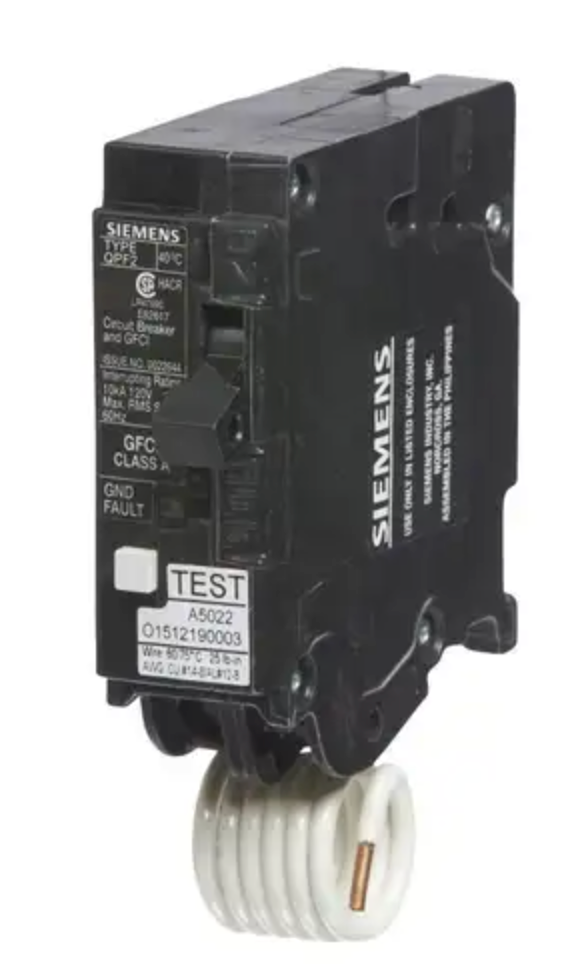
Benefits of Siemens Tandem AFCI Circuit Breakers:
- Space-Saving Solution: With the ability to feed two circuits from a single breaker position, the Tandem AFCI Circuit Breakers minimize the need for additional breakers in the electrical panel or breaker box. This is particularly advantageous in situations where space is limited.
- Enhanced Safety Measures: Siemens has incorporated connection indicators into their Tandem AFCI Circuit Breakers, providing clear visual confirmation when load wires are correctly inserted. This helps reduce the risk of improper installations and ensures safer electrical systems in breaker boxes.
- Versatile Installation Options: Contractors can choose between the Pig Tail and Plug-On Neutral versions of the Tandem AFCI Circuit Breakers, depending on the specific requirements of the breaker box or electrical panel. This flexibility allows for seamless integration into various electrical systems.
- Convenient Availability: To provide easy accessibility to customers, Siemens Tandem AFCI Circuit Breakers can be purchased online through our website. Additionally, customers can visit any of the EBH branches to acquire these breakers, ensuring a quick and hassle-free procurement process. Whether you are replacing a circuit breaker or performing a circuit breaker replacement as part of a renovation or upgrade, Siemens Tandem AFCI Circuit Breakers are readily available.
Statement regarding Siemens AFCI Breakers:
“Siemens is committed to providing an AFCI breaker that meets the required codes and customer expectations and is continually updating and improving our product. As technology changes and new appliances and equipment are introduced, some appliances may not be compatible with ArcFault technology.”
Looking for AFCI Breakers and Circuit Protection Products?
EB Horsman & Son supports electrical contractors across Western Canada with access to AFCI breakers, dual-function breakers, panel solutions, and manufacturer-backed product expertise. Whether you’re working on a service call, renovation, or new construction project, our team can help you find the right solution for your application.
Visit your local EB Horsman branch or contact us below today.