EV Charger Installations and Service Capacity: What Electrical Contractors Need to Check Before Installation

By Amir Allameh
The demand for residential EV charging continues to grow, but installing an EV charger is not simply a matter of adding a breaker and running a cable. One of the most important parts of the job is determining whether the existing electrical service and distribution equipment can support the additional load.
For electrical contractors, the quality of the installation often depends on what is identified before the work begins.
Start With the Service Capacity
The first step is to confirm the rating of the electrical service and evaluate the existing connected load.
A 200-amp service does not automatically mean there is enough capacity for a 48-amp EV charger, and a 100-amp service does not automatically mean an EV charger cannot be installed.
The service and feeder loading should be assessed in accordance with the applicable Ontario Electrical Safety Code requirements. Major loads such as electric heating, air conditioning, ranges, dryers, hot tubs, and other large equipment can significantly affect the result.
This is why a proper load assessment is one of the most important parts of the initial site review.
EVSE Circuit Sizing
EVSE branch-circuit conductors and overcurrent protection must be sized in accordance with the Ontario Electrical Safety Code, the equipment rating, and the manufacturer’s installation instructions.
For example, a fixed-in-place EVSE limited to 48 A may be installed on a 60 A branch circuit where the applicable requirements for the equipment and its adjustable output setting are met.
Contractors should also confirm whether the EVSE allows the charging current to be reduced when full output is not necessary.
In some cases, configuring a charger for 32 or 40 amps can avoid unnecessary service or panel upgrades while still providing more than enough charging capacity for the homeowner’s daily needs.
Check the Panel, Not Just the Main Service
Service capacity is only one part of the assessment.
The distribution panel should also be inspected for available breaker space, bus rating, main breaker rating, equipment condition, approved breaker types, conductor termination capacity, and any existing deficiencies.
Older panels can create additional challenges.
Even when the service load calculation is acceptable, the existing panel may not be suitable for a new high-current EV circuit because of equipment condition, breaker availability, or physical limitations.
These issues should be identified before pricing and scheduling the installation.
Hardwired vs. Receptacle Installations
For higher-current residential EV chargers, hardwired installations are often the more practical option.
Hardwiring eliminates the receptacle and plug connection and reduces the number of connection points in the circuit.
When a receptacle installation is used, contractors need to pay particular attention to the receptacle rating, termination quality, enclosure, location, and any additional code requirements that apply.
The installation method should be selected based on the equipment, site conditions, applicable code requirements, and how the homeowner intends to use the charger.
When the Service Does Not Have Enough Capacity
A load assessment that shows insufficient capacity does not necessarily mean the customer needs a complete service upgrade.
This is where an EV energy management system can be useful.
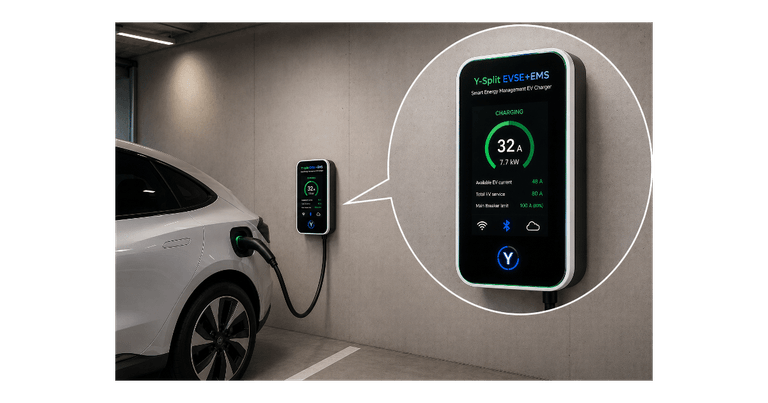
An EVEMS can monitor electrical demand and control the EV charging load so that the service, feeder, or branch circuit is not overloaded. When the building demand increases, charging can be reduced or interrupted. When the demand drops, charging can resume.
For some homes, this can make it possible to install EV charging equipment without replacing the electrical service, provided the selected equipment and installation method comply with the applicable requirements.
From a contractor’s perspective, this option should be considered before recommending a major upgrade where it is technically appropriate.
Site Conditions Matter
Cable routing can significantly affect the final installation.
Before quoting the project, the contractor should determine the distance between the electrical panel and charger, whether the cable will be run through finished areas, whether conduit or armoured cable will be required, whether the route passes outdoors or underground, whether trenching is required, and where the charger can be mounted safely.
A straightforward installation beside the electrical panel is very different from a charger installed in a detached garage or on the opposite side of a finished home.
These details should be identified during the site visit whenever possible.
Permits and Inspection
In Ontario, EV charger installations require an ESA notification of work before installation begins.
The work should be completed in accordance with the Ontario Electrical Safety Code, the manufacturer’s instructions, and the requirements for approved electrical equipment. EVSE installed in Ontario should be approved for use in Canada.
Treating the permit and inspection process as part of the job from the beginning helps protect the customer and gives both the contractor and homeowner clear documentation that the installation was completed properly.
Common Problems Found During EV Charger Assessments
In the field, EV charger assessments often reveal existing electrical issues that were unrelated to the charger itself.
Examples can include damaged panel components, improper breaker installations, overcrowded panels, questionable previous modifications, and insufficient service capacity.
Identifying these problems before beginning the EV installation helps avoid delays and unexpected costs.
It also gives the contractor an opportunity to clearly explain the difference between work that is required for the EV charger and separate electrical deficiencies that should be corrected.
Final Thoughts
A reliable EV charger installation begins with the assessment, not with the charger.
Before selecting the breaker or pulling cable, contractors should understand the service capacity, panel limitations, equipment requirements, cable route, charging needs, and inspection requirements.
In many cases, the best solution is not necessarily the largest charger or the most expensive service upgrade.
The best solution is the one that provides safe, reliable charging while working within the actual electrical capacity of the property.
About the Author
Amir Allameh, Owner & Master Electrician at ElectroVoltage Inc.
Amir Allameh is a licensed electrical contractor with ElectroVoltage Inc., serving residential, commercial, and industrial clients across the Greater Toronto Area. His field experience includes EV charging systems, electrical service and panel upgrades, distribution equipment, troubleshooting, generators, lighting, and electrical maintenance.