AddÉnergie Launches FLO, Canada’s Largest and Most Reliable Electric Vehicle Charging Network

AddÉnergie Launches FLO, Canada’s Largest and Most Reliable Electric Vehicle Charging Network

July 7, 2016

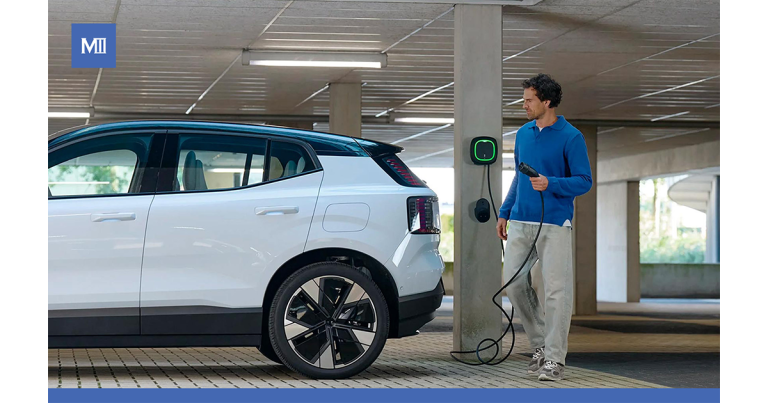
AddÉnergie has launched its cross-Canada FLO network, allowing EV drivers to recharge their vehicles wherever they are — at home, at work, or on the go. The company has also introduced FLO Home, a new service for residential charging.

The FLO network connects members to nearly 2,000 charging stations in BC, Ontario, Québec, New Brunswick and Nova Scotia, along with interoperability capabilities that can extend the network to systems in other provinces. FLO unifies existing networks in Quebec (RéseauVER) and other Canadian provinces (VERnetwork) to offer more than 20,000 Canadian EV drivers a consistent range of charging services on a single reliable network.

The launch of FLO follows the recent investment of $12.8M in AddÉnergie by the Caisse de dépôt et placement du Québec and Investissement Québec to support its deployment plan. Network build-out plans call for an additional 8,000 more stations in Canada over the next five years (not including home stations).

FLO Home Unveiled at EVS29

A new FLO Home charging station targeting the residential segment was introduced to the public at the 29th World Electric Vehicle Symposium and Exhibition (EVS29), which took place June 19 to 22 in Montreal. Manufactured entirely in Quebec, the new intelligent station has been specifically designed to withstand the rigours of the Canadian winter. Highly secure, it is also equipped with features to protect both itself and a connected EV against fluctuations in the electrical grid. The FLO Home service will be available in early fall 2016. EV drivers in Quebec will benefit from a government rebate of $350 for home chargers.

AddÉnergie is the supplier and operator of Canada’s two largest charging station networks, Electric Circuit in Québec and VERnetwork (now FLO). The company has over 50 employees spread among its headquarters in Quebec City, PQ, a manufacturing plant in Shawinigan PQ, and its office in Mississauga, PQ. Find out more: www.addenergie.ca et www.flo.ca.


Related Articles


Latest Articles


Changing Scene

  • ABB Chosen to Supply Technology for BC Ferries’ New Major Vessels

    ABB Chosen to Supply Technology for BC Ferries’ New Major Vessels

    January 12, 2026 ABB will supply a complete package of power, propulsion and control technology for four new double-ended passenger and car ferries operated by British Columbia Ferry Services (BC Ferries). One of the largest ferry operators in the world, BC Ferries provides year-round vehicle and passenger service on 25 routes to 47 terminals, carrying Read More…

  • Federal Government Invests in Four Ontario Steel Companies

    Federal Government Invests in Four Ontario Steel Companies

    January 12, 2026 Through targeted investments, the Government of Canada is committed to providing support to help businesses in all sectors, including steel and automotive, to respond, adapt and compete amid shifting market conditions. Evan Solomon, Minister of Artificial Intelligence and Digital Innovation and Minister responsible for the Federal Economic Development Agency for Southern Ontario Read More…

  • Craftsman V20 150W Power Inverter Recalled Due to Fire Hazard

    Craftsman V20 150W Power Inverter Recalled Due to Fire Hazard

    January 12, 2026 This recall involves the Craftsman V20 150W Power Inverter (Model number: CMCB1150B). The product has a rectangular prism shape with dimensions of 8.13 x 7.62 x 11.68 cm. It is red and black and weighs 320 grams. It has three charging ports for Type-C, Type-A, and AC connections. It contains an LED Read More…

  • 2025 National Model Codes Now Available

    2025 National Model Codes Now Available

    January 12, 2026 New model codes introduce updates that advance the harmonization of building design and construction requirements across Canada, expand the range of compliance options available to code users, incorporate forward-looking climatic data in building design to help prepare buildings for future climate conditions while reducing the construction sector’s contribution to climate change, and Read More…