


Guide to the Canadian Electrical Code, Part I — Instalment 7
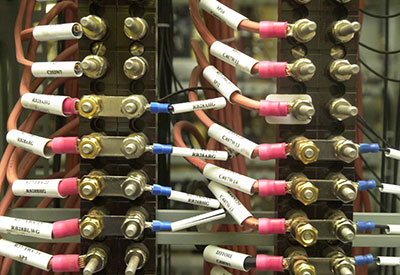
The CE Code is a comprehensive document. Sometimes it can seem quite daunting to quickly find the information you need. This series of articles provides a guide to help users find their way through this critical document. This is not intended to replace the notes in Appendix B or the explanations of individual requirements contained in the CEC Handbook, but will hopefully provide some help in navigating the code.In this article: Section 12 — Wiring Methods.
It should be noted that while many other sections of the code are commonly used by designers, installers and regulators, Section 12 is mostly used byelectricians, who must clearly understand all aspects of wiring, and by electrical inspectors, who audit compliance of the wiring methods with the code requirements. Electrical inspection authorities must always be consulted on specific issues related to wiring methods.
Section 12 is a general section and applies to all wiring installations except for
• Class 2 circuits
• community antenna distribution and radio and television circuits
• opticalfibre cables
• communication circuit conductors
• conductors integral to factory-built equipment
That is, unless specified in the respective code sections covering those type of installations. We will discuss this later when dealing with Sections 16, 54, 56, and 60in future instalments.
The rules of this section may also be modified by the provisions of Section 32 — Fire alarm systems, Section 36 — High voltage installations or Section 45 — Emergency power supply, unit equipment exit signs and life safety systems.
Section 12 of the Code is divided into six parts:
• General Requirements
• Conductors
• Raceways
• Cablebus
• Manufactured wiring systems
• Installation of boxes, cabinets, outlets and terminal fittings
Generally the definitions in Section 0 apply throughout, but there are some special terminology definitions in the sub-section rules covering flat conductor cable type FCC.
In the General Requirements part, rules 12-010 to 12-020 apply specifically to locations where fire, mechanical, moisture or other environmental issues must be considered or locations where wiring may be prohibited, such as ducts and plenum chambers, underground installations, hoistways, lightning down conductors, entry of raceways and cables into buildings, and wiring under raised floors for data processing.
The Conductors part includes the rules applying to the installation of all types of conductors.It is divided into a general subdivision and individual subdivisions for each type of conductor.
In the General subdivision of Conductors,Rule 12-100 establishes that types of conductors must be chosen for their location with respect to moisture, corrosive action, temperature, degree of enclosure and mechanical protection as set out in Table 19. The Appendix B notes offer additional specifications on choosing the appropriate type of conductor.
Rules 12-102 to 12-120 provide general considerations for the installation of all conductors, such as:
• the treatment of insulated conductors
• flame test coverings
• multi- and single-conductor cables
• conductors in parallel
• radii of bends in conductors
• conductor joints and splices
• treatment of the ends of insulated conductors
• termination of conductors
• termination and splicing of aluminum conductors
• supporting of conductors
You will find, again, that extensive notes in Appendix B provide additional helpful information, including a diagram outlining configurations for installing parallel conductors.
The rest of the Conductor subdivision deals with the rules for specific types of conductors:
• open wiring Rules 12-200 to 12-224 apply to single conductors run as open wiring (colloquially referred to as “knob and tube wiring”)
• exposed wiring on exteriors of buildings and between buildings on the same premises —Rules 12-302 to 12-318
• barebusbars and risers —Rules 12-400
• non-metallic-sheathed-cable: Rules 12-500 to 12-526 (NMSC)
• armoured cable —Rules 12-600 to 12-618
• mineral-insulated cable, aluminum-sheathed cable, and copper-sheathed cable —Rules 12-700 to 12-716
• flat conductor cable Type FCC —Rules 12-800 to 12-824
The third part, Raceways, includes the rules applying to the installation of all types of raceways.It is divided into a general subdivision and subdivisions for each type of raceway.
The General subdivision,Rules 12-902 to 12-944, governs the installation of all
• raceways and conductors run in raceways
• types of conductors and cable suitable for use in raceways as per Table 19
• conductors in raceways
• protection of conductors at the ends of raceways
• inserting conductors in raceways
• conductors, in conduit and tubing
• joints or splices within raceways
• stranding of conductors, electrical continuity of raceways
• mechanical continuity of raceways
• junction of open wiring and raceways
• entry of underground conduits into buildings
• raceways installed underground or where moisture may accumulate
• metal raceways in plaster
• protection for raceways installed in concrete, cinder concrete, and cinder fill
• raceways completely installed before conductors are installed
• capping of unused raceways
• maximum number of bends in raceways
• metal raceways embedded in slabs, pavement or roadbeds
The rest of the Raceways part documents the rules for specific types of raceways:
• rigid and flexible metal conduit:Rules 12-1000 to 12-1014
• rigid PVC conduit: Rules 12-1100 to 12-1124
• rigid types EB1 and DB2/ES2 PVC conduit: Rules 12-1150 to 12-1166
• rigid RTRC conduit: Rules 12-1200 to 12-1220
• liquid-tight flexible conduit: Rules 12-1300 to 12-1308
• electrical metallic tubing: Rules 12-1400 to 12-1414
• electrical non-metallic tubing: Rules 12-1500 to 12-1514
• surface raceways: Rules 12-1600 to 12-1614
• underfloor raceways: Rules 12-1700 to 12-1718
• cellular floors: Rules 12-1800 to 12-1820
• auxiliary gutters: Rules 12-1900 to 12-1904
• busways and splitters: Rules 12-2000 to 12-2020
• wireways: Rules 12-2100 to 12-2112
• cable trays: Rules 12-2200 to 12-2210
The fourth part, Cablebus, includes the rules applying to the installation of cablebus as a complete system.Rules 12-2252 to 12-2260 include:
• the use of Cablebus
• methods of installation
• connection to other wiring methods
• provisions for bonding
• ampacities of conductors in cablebus
The fifth part, Manufactured wiring systems, includes Rules 12-2500 and 12-2502 specifying the uses permitted, and Installation of Manufactured wiring systems
The sixth sub-section, Installations of boxes, cabinets, outlets, and terminals, includes Rules 12-3000 to 12-3036 that cover
• outlet boxes
• outlet box covers
• terminal fittings
• terminal fittings behind switchboards
• boxes in concrete construction
• outlet box supports, boxes, cabinets and fitting supports
• accessibility of junction boxes, outlet boxes, cabinets and fittings
• outlet boxes attached to existing plaster work
• outlet boxes, etc., in damp places
• entrance of conductors into boxes, cabinets and fittings
• unused openings in boxes, cabinets, and fittings
• extensions from existing outlets
• multi-outlet assemblies
• conductors in boxes, cabinets or fittings
• wiring space in enclosures
• maximum number of conductors in a box,
• pull box or junction box sizes
In the next installment we will be discussing Section 14 — Protection and control.
* The source for this series of articles is the Canadian Electrical Code, Part I, published by CSA
Read the rest of the instalments in the series:
Part 1: Guide to the CE Code, Part I – A Roadmap (Installment 1 in a Series)
Part 2: A Road Map to the CE Code, Part I – Installment 2
Part 3: Guide to the Canadian Electrical Code, Part I – Installment 3
Part 4: A Road Map to the CE Code, Part 1 – Installment 4
Part 5: Guide to the Canadian Electrical Code, Part I — Installment 5
Part 6: Guide to the Canadian Electrical Code, Part I — Installment 6
Part 7: Guide to the Canadian Electrical Code, Part I — Installment 7
Part 8: Guide to the Canadian Electrical Code, Part I — Installment 8
Part 9: Guide to the Canadian Electrical Code, Part I — Installment 9
Part 10: Guide to the Canadian Electrical Code, Part 1 – Installment 10
Part 11: Guide to the Canadian Electrical Code, Part 1 – Installment 11
William (Bill) Burr is the former Chair of the Canadian Advisory Council on Electrical Safety (CACES), former Director of Electrical and Elevator Safety for the Province of BC, and former Director of Electrical and Gas Standards Development and former Director of Conformity Assessment at CSA Group. Bill can be reached at Burr and Associates Consulting billburr@gmail.com.

![Guide to the Canadian Electrical Code, Part 1[i], 26th Edition– A Road Map: Section 74 — Airport installations](https://electricalindustry.ca/wp-content/uploads/2026/05/EIN-Stock-Guide-Code-Canada-Map-1200-768x403.png)



![Guide to the Canadian Electrical Code, Part 1[i], 26th Edition– A Road Map: Section 74 — Airport installations](https://electricalindustry.ca/wp-content/uploads/2026/05/EIN-Stock-Guide-Code-Canada-Map-1200.png)






