Distributed Low Voltage Infrastructures and Their Impact on Controls

July 22, 2019
By Kevin Willmorth
While the majority of installations today are distributed high voltage (between 110V and 347V), the emergence of solid-state lighting technology has brought into question whether this is the most practical and efficient way to feed future lighting systems. The majority of conventional lighting products operate at power levels between 60W and 500W. Solid-state lighting products tend to operate at far lower levels of between 6W and 95W, operating at light source voltages of between 12V and 38V. At these lower demand levels, distributing high voltage to be converted to low voltage at every luminaire location is called into question.
In addition to the reduced operating voltage of luminaires themselves, photo-voltaic (PV) energy sources now being deployed to reduce grid connected loads, generating DC voltages of between 10VDC and 350VDC. This is well suited to modern solid-state lighting technology. Rather than employing inverters to convert PV panel voltages to AC line voltage, then re-converting that back to DC low voltage at every luminaire, distributing DC voltage directly to every luminaire eliminates two conversions, increasing total system efficiency. Converting PV system DC voltage to 24VDC, for example, is far more efficient than the conversion from DC to high-voltage AC, then back to low-voltage DC.
While there are several luminaires that operate from remote low voltage power sources, such as linear strip lighting for accent and cove lighting, these are not generally used for general illumination. In general illumination application, there are currently two core approaches to operating luminaires directly from low voltage DC power. Emerge Alliance 24VDC distributed, and Power over Ethernet (PoE). The two approaches employ distinctly different control approaches.
Emerge Alliance establishes a uniform standard for low voltage DC micro-grids, founded on distributing 24VDC directly into occupied spaces, for use in powering luminaires (and other similar local loads). Lighting loads to be connected include luminaires and sensors, which are connected to 24VDC buses, generally within ceiling grid systems. On-off control of these luminaires can be accomplished with conventional wired low-voltage switches or low-voltage sensors, either independent of the luminaire or integral to it, for operation of individual loads, or grid sections.
Wireless controls provide a greater level of flexibility in connecting individual loads to specific controls and sensors. Dimming presents a few coordination challenges that must be addressed. Line voltage dimming is not an option, nor are there any available in-line low voltage dimmers for the purpose. Many luminaires available for connection to distributed 24VDC grids can be dimmed using conventional 0-10V dimming controls, either directly to the luminaire driver (similar to line voltage systems), or through accessory modules that integrate wiring of sensors, controls (dimming and switching), and wireless control interface features. Further, several luminaire manufacturers offer proprietary dimmer/control interfaces for control of 24VDC connected products. The use of DALI control is also available for luminaires installed in 24VDC distributed systems. At this time, DMX control is not yet available for products integrated with other Emerge Alliance compliant luminaires.
The second low voltage distributed architecture, Power over Ethernet (PoE), distributes low voltage power to luminaires connected through CAT6 cabling. What differentiates PoE from other low voltage distribution architectures is the integration of a data interface. Luminaires designed to connected to these systems operate at between 12VDC and 54VDC. Line voltage luminaires can also be integrated into PoE networks, through use of relays and interfaces.
Luminaires, sensors and manual controls are then connected directly, or through PoE gateways to the UPoE network, which is then controlled through user interfaces, which can include desktop or laptop computers, smart devices (phones/tablets), wireless controls, and wired control interfaces attached to the building. Fully integrate luminaires include 2-way data communication to report status and integral sensor response. Connections between controls and luminaires being controlled, sensors and responses to sensor input, are all managed through a centralized software interface.
The advantage of PoE architecture is the simplicity of wiring, combined with the simplicity of commissioning and load/sensor assignment. Further, the capacity to collect and transmit data to and from connected components, delivers opportunities to integrate logical operations into systems that respond to multiple inputs to produce a desired response. For example, integration of occupancy sensors can extend beyond simple lighting load shedding, to deliver input to security systems, eliminating redundant sensor components. Further, remote access to the central controlling software allows building managers to monitor system operation and performance, continuously. Changes in assignment of load to control interfaces are made through software assignment, facilitating updates to suit changing occupant needs simple, without any changes to wiring, or the associated disruptions of work caused by re-working hard wired connections.
As efficacy of solid-state lighting increases, the loads they generate on building power will continue to drop. With this, the cost in hardware and installation of line voltage power to control these loads will produce increased interest in the less costly, more efficient approaches of low voltage distribution. Further, the growth in demand for control, control flexibility, individual user control, extended service life of solid-state products, and continually changing work environment – all point to abandoning conventional hard wiring. Because of this, wireless and low voltage control of low voltage lighting loads is the future of lighting systems in general illumination.
This article was first published online by the Lighting Controls Association: lightingcontrolsassociation.org/2018/09/24/kevin-willmorth-on-distributed-low-voltage-infrastructures-and-their-impact-on-controls/.
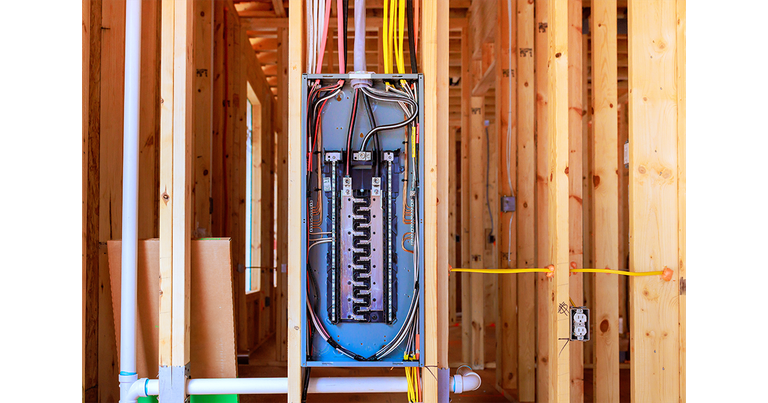
Photo source: Eaton Lighting, www.cooperindustries.com/content/public/en/lighting/resources/LightingStories/Distributed-Low-Voltage-Power-System.html.
Kevin Willmorth has been involved with lighting since 1981. His experience includes electrical system design, lighting design consulting, product design, marketing, business strategy, and editorial writing. His past positions include positions include owner of a lighting design consultancy, VP of Design and Marketing for Kim, Winona, and Visa Lighting, VP and Director of Product Management Renaissance Lighting, and VP of Design – Lighting for Atlandia Design. He currently owns Lumenique, LLC, offering product design, prototype development, testing, and strategic consulting to manufacturers, application design and technology evaluation for building owners, and Tasca, a small industrial task lighting manufacturing firm. He is also Editor for SSL content in all Construction business media publications including Architectural SSL, Architectural Products, NZB, and Illuminate; kwillmorth@lumenique.com; www.lumenique.com.