The Importance of Making Decisions and Learning from Failure: Charles Harte of LEDVANCE on His Approach as a Leader
January 5, 2021
By Blake Marchand
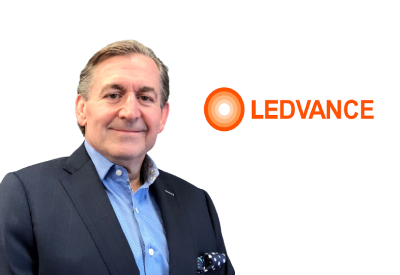
Charlie Harte is the Canadian President & CEO for LEDVANCE LLC, as well as holding the role of VP of Marketing & Customer Experience for the U.S. and Canada region. Harte was named as the Canadian President in February 2020 and not long after was also named as the VP of Marketing and Customer Experience. Our interview centered around his experience joining LEDVANCE right before the pandemic, how he approaches leadership, where LEDVANCE wants to find success, and his perspective on the broader industry.
Harte spent 30 years working for some top brands in the building materials industry where he honed a strong skill set in sales, marketing, strategic planning, business development, and leadership. He joined the organization a month before the global pandemic which provided a unique scenario. “You’re starting to lead an organization with whom you almost have no connection,” he noted. Given the travel restrictions he wasn’t able to meet the full team in person, but as many did, they adapted and moved forward. Ultimately, he said, “I was delighted – delighted is an understatement – by the amount of leadership shown from a tenured LEDVANCE team who had undergone dramatic changes.”
The approach that he took, and the conclusion he came to about how to address the various challenges of an uncertain situation, was that “provided the opportunity was given to them, the folks within the team – even though I didn’t know them or didn’t know them well – would have an opportunity to demonstrate leadership. I’m very proud of how the team rose to the challenges.”
“I was really impressed with our long serving Canadian team members stepping up each and every day, during what was really challenging times,” he said adding that, “We’re very lucky that at LEDVANCE we invested heavily in our digital support for our customer base, so we were able to get online with a number of new customers quite quickly and support the people who were new to it very aggressively.”
Moving past the initial uncertainty of the pandemic, Harte said, “We were able to engage our customer base across the country well during the period. Obviously, because of the pandemic, sales were impacted, but the team at LEDVANCE didn’t curl up and wait for the world to end. They went out and chased business and did what they could from their basement or their kitchen or their living room or wherever it was.”
Harte joined the company at an uncertain, challenging time but the team responded to that uncertainty the right way. “My experience of running the Canadian team has been fantastic. The team has stepped up and really got the job done in what was, and still are, trying times.”
Working from home was a challenge for Harte himself, who is an extroverted person and someone who sees real value in face-to-face communication and collaboration.
Value Chain
I asked Harte why it was important for him to take on the additional role of VP of Marketing and Customer Experience. “I felt I could add to how we meet the needs of our customers,” he said. “I think that identifying the customer experience is important for companies and focusing on it is vital.”
Harte saw an opportunity to pay more attention to the whole scope of the value chain more effectively to give LEDVANCE an advantage over their competitors. As he notes above, his approach to business is one that prioritizes customer experience.
For Harte, value chain is anyone from architect to the end-user and everyone in between. The installers, electrical engineers, the specifiers, the distributors/wholesalers, even the general contractor. “There’s a whole host of people that have the opportunity to say, ‘no’. I think the lighting business has taken the customer experience out of it because we’ve all raced to commodity status on a lot of things, and in doing so we haven’t realized the value we have in our business and what we can bring to the table. The customer experience helps encapsulate that.”
“It doesn’t matter where you sit in the value chain, you have to add value. And if you add value, you can charge for it.”
Whether it’s the wholesaler, salesperson, or the CEO, “Everybody needs to figure out what value they’re adding and how they can continue to make it so. The value you added yesterday may not be the same as what you need to do tomorrow, so you have to keep learning. If you can’t keep learning, that’s problematic, because the world keeps changing.”
He explains further: “A product that performs to the specifications and the way it was designed is only a part of the equation. It includes having the product priced right, appear on time, shipped to the job site in full, packaged in a way that’s environmentally friendly, work as effectively as possible and as it was designed to do, and then be covered off by an industry recognized warranty.”
“That means if you’re covering a product for 72,000 hours, it works for 72,000 hours, and if it doesn’t work for the 72,000 hours, we do something about that.”
Ultimately, Harte said, “People do business with people they like. If everything else is equal, they’ll choose the person they like. If they’ve recognized you’re working hard to service their needs, you may actually be able to charge a little more for the product because you’re providing something they don’t have. This could include service, knowledge, breadth of line, or meeting a new application. There will be something in there that will set you apart.”
LEDVANCE operates in the retrofit, renovate, and repair space, which makes customer experience that much more important, and that’s why Harte saw the opportunity for LEDVANCE to pursue a robust customer experience aggressively.
Leadership
Harte’s leadership philosophy revolves around facilitation, setting goals, and accountability. This is how he explained it:
“Leadership for me is about facilitation. It’s about making the team successful, Its also about understanding that I’m not asking them to do anything I’m not willing to do, and I don’t expect them to do all the things that I do. But I do expect to win. The definition of winning can be different everyday of the week, though. I like to have very clear goals for everyone – some people will say those goals are a little exciting or maybe a bit of a stretch, but you don’t climb Everest by not planning on climbing Everest, so let’s get out there and have at it.”
I also asked Harte how he views mentorship:
“I think mentorship can be vital. I benefitted early in my career from two individuals who helped me talk through challenges that I was having. One of whom I didn’t quite believe quite as much as I should have, because he turned out to be 100% correct and I may not have taken his advice rightly the first time. But having that ability to have a conversation with someone you value in a safe environment around subjects that can be challenging is vital for learner. I’ve benefited from it, and I have a couple of folks that I talk to in different industries. I try to be a mentor for others, so they can benefit like I have in the past from my mentors. In the process, those I try to mentor also help me see things differently and grow.”
Communication & Decision Making
Regarding communications, a core challenge for Harte is finding ways to effectively communicate with people from different generations who have different communication habits.
Harte has observed a difference between how people from various generations prefer to communicate. Often the younger generations prefer to communicate via text or email, while older generations that didn’t grow up with cell phones, don’t have a problem with communicating over the phone.
“That’s a personal challenge for me because I have to figure out how to communicate with those folks [that prefer to communicate via text and email], because guess what? They make up more of the work force.”
Overall communication is a priority for Harte. The protocol he’s established with his team is, “if you don’t hear form me, make the decision. Because even if you make the wrong decision, you’re going to learn something. And if you make the right decision, you didn’t need me in the first place. That’s part of the process.”
I asked Harte about his advice for team members that come to him with a particular challenge:
“I’m on record as saying – and I stole this form Joe Galli, who runs TTI but launched DeWalt [Harte spent time with DeWalt earlier in his career] – I want everyone to make 100 decisions a day and I’m quite happy if they get 11 of them wrong, versus the person who makes 10 decisions a day and gets 9 of them right. The person that works for me is 79 decisions ahead, and they’ll have learned something by the 11 wrong. I want those people to make decisions. If they’re not hearing from me, its probably because I want them to make the decision.”
Harte admits, “that can cause a little anxiety, at times. But we’re in the lighting business, we’re not in rocket science or brain surgery – so the first thing that happens is you learn something.”
“The second part is, if you’re going to bring me a problem, I want your top three solutions and I want the one that you would choose to do first. And then we’ll walk through it. I’m going to ask you to defend why you chose the one you did, and ultimately, I will support your decision even if its not the way I would do it.”
Harte added that, even if he thinks that particular decision will make things tougher on them, they’ll learn something because of it.
“The idea is that work should be entertaining and educational. I want people to have fun and be exhilarated and energized by coming to work for LEDVANCE. In doing that, you’ve got to listen to them. How are they going to develop if they don’t get a chance to make a mistake? Making a mistake is perfectly acceptable. Not learning from that mistake would be problematic and making the decision in the first place is absolutely the right action.”