Federal Government Accelerates Investments in Clean Electricity
November 25, 2016
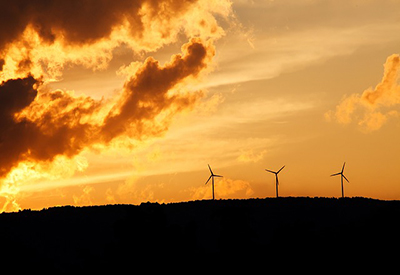
Phasing out traditional coal-fired electricity by 2030 — an important part of the federal government’s vision of a clean-growth economy — will attract new investments in clean power across the country, grow our economy, create middle-class jobs, and improve air quality for the health of Canadians, the government says.
This and other regulatory actions announced last week will put Canada on a path to move from 80% towards 90% non-emitting sources by 2030. Clean electricity will power cars, businesses, and homes across the country. Building a smart, integrated, clean-electricity system, the government says, will deliver reliable and affordable power where it’s needed.
Clean, non-emitting energy is one of the fastest growing energy sectors. In the past decade, wind capacity has increased 20 times and solar capacity 125 times, according to the National Energy Board.
Canada already ranks fourth in the world in renewable power generation. Hydro is the dominant source of electricity in Canada, accounting for nearly 60% of installed capacity and generation.
This fall, the federal government announced an additional $21.9 billion investment over 11 years for green infrastructure. The government of Canada will use the Canada Infrastructure Bank to finance projects such as commercially viable clean energy and modern electricity systems between provinces and territories.
“Connecting provinces with a clean and modern electricity system is a nation-building effort that positions us to compete for significant global investments in our power sector and puts more Canadians to work,” says Dominic Barton, Chair of the Advisory Council on Economic Growth.
How we’re generating power now
Five provinces and territories generated the vast majority of their electricity from hydro in 2015, reports the National Energy Board in a new report, Canada’s Renewable Power Landscape — Energy Market Analysis. The share of electricity production from hydro reached 86% in British Columbia (BC), 97% in Manitoba, 95% in Quebec, 95% in Newfoundland and Labrador, and 94% in Yukon.
Four provinces and territories rely on various combinations of nuclear, coal, gas, oil, and renewables. In 2015, the share of renewables in total generation reached
- 34% in Ontario
- 28% in New Brunswick
- 24% in Nova Scotia
- 38% in Northwest Territories (NWT)
Three provinces and territories relied primarily on fossil fuels for electricity in 2015:
- Alberta (90% of generation from coal and natural gas)
- Saskatchewan (83% of generation from coal and natural gas)
- Nunavut (100% of generation from oil)
Nearly all of the power generated in PEI is from wind, but PEI also relies on power imported from nearby provinces to meet its total demand.
A decade ago, wind, solar, biomass, and other non-hydro renewables comprised just 2% of total Canadian capacity. Growth over the last decade has been very impressive, especially with wind capacity growing 1,900% and solar growing an astounding 12,500%. However, the total share of these technologies in 2015 was just 11% of capacity, and because solar and wind are intermittent non-hydro renewables accounted for just 7% of generation.
Ontario and Nova Scotia have seen the largest gains in renewable power production over the last decade. Renewable power generation in Ontario increased from 23% to 34%. In Nova Scotia, the renewable generation share increased from 12% to 24%.
Find out more. Read Canada’s Renewable Power Landscape – Energy Market Analysis online: www.neb-one.gc.ca/nrg/sttstc/lctrct/rprt/2016cndrnwblpwr/index-eng.html.

![Guide to the Canadian Electrical Code, Part 1 – 26th Edition[i] – A Road Map: Section 54](https://electricalindustry.ca/wp-content/uploads/2022/11/Guide-CE-Code-2-768x432.png)




![Guide to the Canadian Electrical Code, Part 1 – 26th Edition[i] – A Road Map: Section 54](https://electricalindustry.ca/wp-content/uploads/2022/11/Guide-CE-Code-2.png)