Key Factors to Maintaining Arc Flash Safety, Part 2
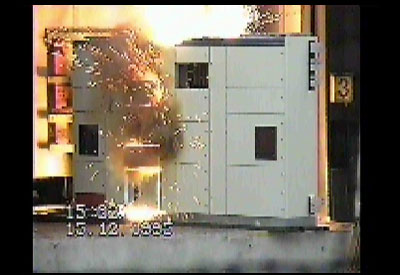
When an arc fault occurs, the result is a massive electrical explosion. The light and heat emitted by the explosion is known as the arc flash, and the pressure wave is known as the arc blast. An arc flash releases hot gases and concentrated radiant energy up to four times the temperature of the sun’s surface, which can melt metal and cause severe radiation burns, damage eyesight, and result in fatalities. The accompanying pressure waves can damage hearing or brain function and send loose equipment, tools, machinery, and debris flying to cause further injuries. Even if an arc blast doesn’t injure a person, it will damage equipment and cause downtime.
Part 1 of this article looked at four of seven arc flash safety measures:
1. train on safe work practices
2. de-energize equipment before accessing
3. perform regular preventive maintenance
4. wear arc rated PPE within arc flash danger zone
Part 2 continues, with three more arc flash safety measures.
5. Select test tools rated for the environment
Test tools, test probes, flexible clamps, and other accessories are considered part of personal protective equipment (PPE) and must meet safety requirements established by such organizations as ANSI, the Canadian Standards Association (CSA), and the International Electro-Technical Commission (IEC). Make sure your meter and accessories have the appropriate CAT and voltage rating for the electrical environment in which you will use them.
It is important to consider both the CAT and voltage ratings. For example, a CAT III 1000 V meter offers superior protection to a CAT III 600 V rated meter, but a CAT II 1000 V rated meter is not superior to a CAT III 600 V rated meter. That is because in calculating the voltage-withstand ratings, IEC 61010-1 test procedures take into account steady-state voltage, peak impulse transient voltage, and source impedance. The following chart shows those values in context of the top three CAT ratings.

CAT II 208 V/120 V
CAT III 208 V/120 V
CAT III 240 V VFD
CAT III Fixed mount load
CAT IV Utility supply
6. Extend your safety zone with non-contact or wireless test tools
Non-contact test tools allow you to take readings on an energized part without making contact. Wireless test tools enable you to attach the probes or clamp to the measurement target and remove yourself from the arc blast zone to read the results. Full PPE is still required whenever making contact with the energized system; however, non-contact tools may allow you to reduce the amount of PPE required while reading the measurement from a distance.
Here are some of the most common non-contact and wireless tools for electrical inspections:
¥ Non-contact voltage detectors allow you to detect voltage during quick power checks without making contact with an energized part. Keep in mind that voltage detectors will only indicate power on the ungrounded side of the circuit; not on the grounded or neutral conductor side.
¥ Infrared thermometers measure temperature from up to several feet away. Just point the tool’s laser beam at the target and read the results on the display. This saves having to climb ladders, reach around hot, rotating equipment or reach into of live panels. Infrared thermometers are available a range of temperatures and accuracy levels.
¥ Visual infrared thermometers combine the convenience of a spot thermometer with the visual benefits of an infrared camera, providing accurate temperature readings at safe distances well beyond shock and arc flash boundaries. In addition to the standard IR thermometer features, visual thermometers provide an infrared heat map that blends with a standard digital image for quick identification of overheated conductors and terminations that could indicate pending equipment failures and possible arc flash issues.
¥ Infrared cameras capture thermal images of electrical components from beyond the arc flash boundary that can be used to readily distinguish temperature differences of components within the image (some degree of PPE is still required, see NFPA 70E). This helps operators quickly determine if corrective action is needed, and even how soon. According to the International Electrical Testing Association (NETA) a temperature difference between similar components under similar load between 4 °C and 15 °C indicates a problem with the higher temperature component, which should be repaired when possible. A temperature difference of greater than 15 °C, indicates the need for immediate repairs.
• Laser distance meters can be used to measure the lengths of conductor runs between equipment when conducting an arc flash study. This allows many distance measurements to be taken safely from the floor by just one person.
• Remote display multimeters allow technicians to attach the meter and probes (or clamp) at the measurement point and remove the display unit to a safe distance—or a better angle—to read the results. This allows you to close the door on a motor control centre or stand at a safe distance as you measure motor inrush current.
• Wireless tools provide the most advanced technology for enhancing safety. With Fluke Connect-enabled test tools you can set up multiple remote modules at the equipment and read the results on a digital multimeter up to 20 meters away or on a smart phone (iOS and Android). With the free Fluke Connect mobile app downloaded to your smart phone you can read results from any of more than 20 different Fluke test tools (up to 10 at a time) and quickly identify and diagnose problems on energized equipment from a safe distance, well outside of electrical shock or arc flash boundaries. This can reduce the need for cumbersome PPE.
7. Install IR windows in panels
Installing properly certified infrared (IR) windows allows technicians to inspect electrical equipment without removing the panel cover. That makes it easier for companies to comply with NFPA 70E when inspecting switchgear and motors. In selecting IR windows, look for
• High visibility for thermal and visual inspections
• Certification for the highest arc blast test ratings—IEEE C37.20.7: 63 kA arc tested at KEMA
• Grounding to the metal enclosure to avoid the release of static electricity
• Easy to open covers that are easy to keep track of and reduce the technician’s time within the hazard area
By installing IR windows that match these requirements you can significantly reduce work permit and NFPA 70E requirements for switchgear inspection.
Conclusion
Arc flash and arc blast are very real dangers in today’s industrial electrical environment. By following best practices, using the proper equipment, and staying as far away from energized components as possible you can reduce your risk of those events and work smarter and safer.
Source: Fluke Digital Library @ www.fluke.com/library.