The Path to Net Zero with Smart Building Technologies from ABB
March 1, 2024
By Krystie Johnston
Industries can reduce emissions today; navigating your way to net zero starts with digitalization solutions such as ABB Ability
Building operations account for 30% of global final energy consumption and 26% of global energy-related emissions. This sector, if entirely net zero, would contribute a significant percentage to reduced CO2 emissions worldwide1. In fact, technologies exist already to help buildings reach net zero today. Robert Palajsa, Territory manager for the smart power and smart buildings division for southern Ontario at ABB Canada discusses what ABB has to offer and how companies and industries can expedite their path to net zero, starting right now.
Many companies and industries are feeling the pressure to reduce CO2 emissions. November 30th to December 12th was the 28th United Nations Climate Change Conference, and the world came together again to agree on ways to address the climate crisis and achieve net zero by 2050. The fact is, there are many ways to reduce CO2 emissions – and reduce energy consumption and costs at the same time. Palajsa has seen first-hand what smart buildings have to offer their owners, and knows that oftentimes, the most difficult part, is getting started.
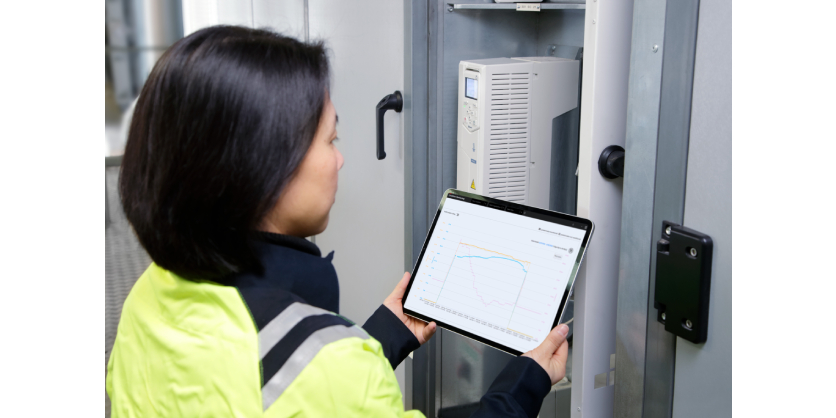
To help, ABB has an Energy Efficiency Playbook. Step one is to conduct an energy and asset audit. Palajsa says an energy audit helps to establish a baseline of what your consumption is by asking “Where is your plant? What types of machines are you running?? What types of systems are being used ? What are your energy consumption levels ? How much power is being used and when? What is the power factor?”
In addition to looking at the energy consumption in a building or facility, an asset audit looks at the appropriate size of the assets and processes therein.
“If you require X amount of energy to run an air handling system, is this asset properly sized? Is it oversized? Under sized? Working too hard? Is it running as efficiently as it should be?” Palasja asks. “By using ABB’s Energy and Asset Manager, we can right-size the amount of energy applied to and consumed by an asset.”
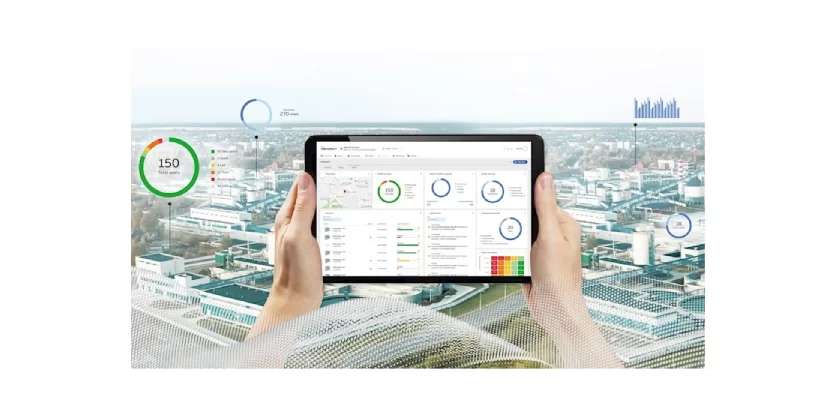
The Energy and Asset Manager sits on the ABB Ability™ Platform, the company’s industry-leading digital solutions offering. Launched in 2017, it connects customers to the power of the Industrial Internet of Things (IIoT) and turns data insights into direct actions to generate customer value.
Any facility can get started with the Energy and Asset Manager today – regardless of whose equipment they are running. ABB has a wide range of products that have the ABB Ability™ technology built-in, including their motors and drives. However, for those interested in this solution, but have non-ABB products in their buildings, EkipUP offers a solution. It is a freestanding device that can be connected to third party vendor products to collect data from those assets, digitizing them to work with ABB Ability™ .
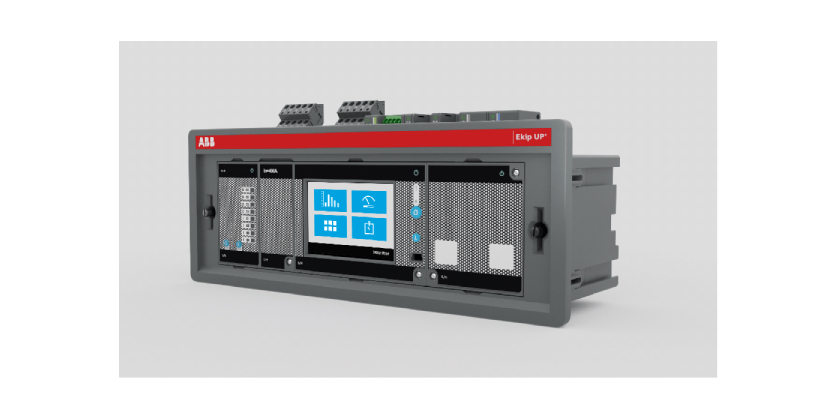
“EkipUP can take hundreds of data points, potentially, depending on how it is set up. We can look at voltages, currents, power factors, harmonics, phase-to-phase, and more. EkipUP can pull out this data, from an ABB component, or a non-ABB component, and digitalize it. The beauty of this is being able to visualize it, analyze it, and make decisions based on it,” says Palajsa .
Digitalization is a step in the right direction, but it is what people do with the data that takes them to the next level. The ABB Ability™ platform allows customers to confidently understand their energy consumption (and in turn, their energy efficiencies), and from there, they can make improved business decisions.
Improving energy efficiency is an opportunity to reduce both costs and emissions. A recent example Palajsa shared is from Woodstock, Ontario. A partner that Palajsa has worked with for years was tasked with saving energy at an automotive industrial plant. “They installed several different types of systems that are all part of our ten-step plan. Having the proper motors and drives and bringing connectivity to physical assets, ABB and its digitization efforts helped garner savings of more than $500,000 a year in hydro costs.”
The take-home message is that this is only one facility. Interpolating a similar scenario for other businesses in other industries and extrapolating these results across all sectors, makes CO2 emission reductions within grasp. The benefits are two-fold: saving money and the planet. These solutions exist today and can be implemented in essentially any facility or industry. Moreover, the return on investment is there, in more ways than one. The investments made today in smart building technologies to reduce greenhouse gas emissions will have an impact on tomorrow. Whether it be economical, societal, or environmental.

Palajsa says, “There is no limit to the scope or size that will make a retrofit impossible, whether it be industrial, manufacturing, institutional, commercial, or residential. When we start looking at CO2 emissions and energy consumption and quality of life going forward, it will be very important.”
Endnotes:
![Guide to the Canadian Electrical Code, Part 1[i], 26th Edition– A Road Map: Section 74 — Airport installations](https://electricalindustry.ca/wp-content/uploads/2026/05/EIN-Stock-Guide-Code-Canada-Map-1200-768x403.png)




![Guide to the Canadian Electrical Code, Part 1[i], 26th Edition– A Road Map: Section 74 — Airport installations](https://electricalindustry.ca/wp-content/uploads/2026/05/EIN-Stock-Guide-Code-Canada-Map-1200.png)