Major Projects Under Consideration by the Federal Government
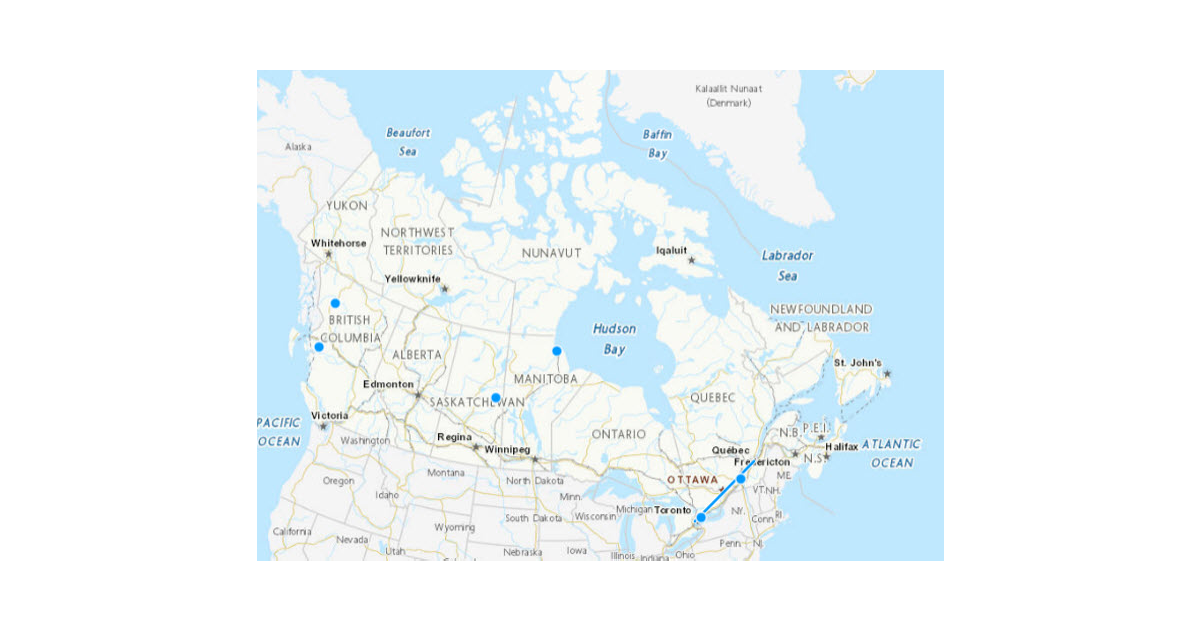
Projects deemed to be of national importance and significance are being referred to the Major Projects Office who will continue to work with proponents, provinces, territories and Indigenous Peoples to find the right way forward for these projects. The initial projects under consideration are:

LNG Canada Phase 2 – Kitimat, BC
Proponent: LNG Canada
This project would double LNG Canada’s production of liquefied natural gas, making it the second largest facility of its kind in the world. It is expected to attract $33B in private-sector capital to Canada, contribute to our GDP growth, and support jobs and economic growth in local communities. It will deliver low-carbon intensity Canadian energy to global markets and help diversify Canada’s trading partners – including those with increasing energy demands in Asia and Europe. The Major Projects Office will ensure that the final work on LNG Canada will create the pathway for other proponents of LNG projects that are strategic to the nation.

Darlington New Nuclear Project – Bowmanville, ON
Proponent: Ontario Power Generation
This project will make Canada the first G7 country to have an operational small modular reactor (SMR). Once complete, Darlington’s first of four planned SMR units would provide reliable, affordable, clean power to 300,000 homes, while supporting 200 high-paying jobs – in addition to 1,600 jobs during construction. The project has the potential to position Canada as a global leader in SMR technology for use across the country and for export as early as 2030.

Contrecoeur Terminal Container Project – Contrecoeur, QC
Proponent: Montreal Port Authority
This project will expand the Port of Montreal’s container capacity by approximately 60%, to give Canada the trading infrastructure it needs to keep goods moving, meet growing demand, and diversify trade routes. It will deploy AI capabilities to strengthen supply chains, create thousands of jobs, and generate lasting economic benefits across Québec and Canada.
McIlvenna Bay Foran Copper Mine Project – East-Central, SK

Proponent: Foran Mining
This project in one of Canada’s richest mineral belts will supply copper and zinc to strengthen Canada’s position as a global supplier of critical minerals for clean energy, advanced manufacturing, and modern infrastructure. It will create hundreds of jobs, boost local economies, and will be one of the lowest-emission operations of its kind.
Red Chris Mine expansion – Northwest, BC
Proponent: Newmont Mining & Imperial Metals

This major expansion project will extend the lifespan of the mine by over a decade, increase Canada’s annual copper production by over 15%, employ about 1,500 workers during operations, with a peak of approximately 1,800 workers during construction, and reduce greenhouse gas emissions by over 70% when operational. Working in close collaboration with the Tahltan Nation, it is an important step in reconciliation and further developing the potential of Northern British Columbia and will strengthen Canada’s role as a reliable supplier of copper and other resources essential for global manufacturing and clean energy technologies. This mine is part of the proposed Northwest Critical Conservation Corridor. This corridor is being moved to the MPO for consideration, as it presents opportunities for critical minerals development, clean power transmission, Indigenous project leadership, and a potential new conservation area the size of Greece.
These projects are examples of the kinds of major infrastructure Canada needs to connect our economy, diversify our industries, and create thousands of high-paying careers while protecting the environment and upholding the rights of Indigenous Peoples. The Major Projects Office will continue the work to find the right way forward for each project.
The Major Projects Office will continue to review major projects and will announce more nation-building projects over the coming months.
Transformative Strategies
In addition to the five projects being announced today for referral to the Major Projects Office, the Government has identified strategic areas of focus and activity that will be transformative for Canada and Canadians. Moving forward with the speed and urgency of building Canada for the future.
First, the Government wants to make sure that projects in the national interest advance quickly. Building on this goal, the Prime Minister directed the Major Projects Office to transform regulatory processes to provide the certainty that all major projects are reviewed within two years, from start to finish.
Additionally, there are transformative projects for Canada, these cover critical mineral development, wind energy, critical infrastructure in the North, ports, and transportation infrastructure connecting Canadians and our goods with the world, as well as innovative carbon capture and storage and carbon management technologies. All meet the criteria of growth, security, diversification of markets and reconciliation.
The concepts and projects that fit within these nation-building strategies have boundless potential but are at an early stage and require further development. The Prime Minister also directed the Major Projects Office to create business development teams to work with provinces, territories, proponents, and Indigenous Peoples to further develop and make these nation-building projects a reality.
- Critical Minerals Strategy: Canada can be a powerhouse in the extraction and upgrading of critical minerals for industries that can emerge in Canada and to diversify and serve export markets. A priority for the Major Projects Office will be to get more critical minerals projects get to final investment decisions, with a focus on sustainability and regulatory certainty. This will enable critical mineral proponents working with Indigenous and local communities, investors, and provinces and territories to develop projects in regions like the Fosse du Labrador in QC and NL, the Northwest Critical Mineral and Conservation Corridor in BC, and the Ring of Fire in Ontario. The strategy will lead to the construction of ports and roads and focus on the first and last mile. Canada through its leadership at the G7 is also connecting with global partners to develop a Critical Mineral Alliance to match secure supply from projects with global partners who have industry demand. This work seizes opportunities to build new critical mineral value chains for clean technologies and defence applications for example: developing “mines to magnets” using our rare earth resources and building processing and manufacturing abilities; and refining and processing minerals needed for clean energy and electricity battery storage, as well as electric vehicles.
- Wind West Atlantic Energy: A project that would leverage over 60 GWs of wind power potential in Nova Scotia, and more across Atlantic Canada, connecting that renewable, emissions-free energy to Eastern and Atlantic Canada to meet rapidly growing demand. The Major Projects Office will advance Wind West Atlantic Energy with proponents to develop the projects and provide the regulatory certainty that attracts private investment and sets a course for long term wind resources development in the Maritime provinces. Wind West could be Canada’s first offshore wind development and will set the scale, direction and trajectory for future growth. Unlocking 5,000 MW in the first phase could produce 24 TWh of clean energy every year and drive billions in new investment and economic activity across Canada, led by the private sector. This Eastern Energy Partnership could include important projects like interties between New Brunswick and Nova Scotia, transmission cables between Prince Edward Island and New Brunswick as well as Quebec’s and Newfoundland and Labrador’s further development of Churchill Falls and Gull Island.
- Pathways Plus: An Alberta-based carbon capture, utilization, and storage project with additional energy infrastructure that would support a strong conventional energy sector while driving down emissions and emissions intensity from the oil sands. Pathways creates the prospect of facilitating low-carbon oil exports from the Alberta oil sands to a variety of potential markets. The Major Projects Office will develop a strategy to build the Pathways project which would reduce upstream emissions from the conventional energy sector, while catalyzing private investment in additional energy infrastructure that would support a strong conventional energy sector while driving down emissions and emissions intensity from the oil sands. The Pathways project represents $16.5B in GDP, $12.2B in labour income, and between 18,500 and 43,000 jobs annually.
- Arctic Economic and Security Corridor: The Arctic and Security Corridor is a strategic lifeline. Designed as dual-use infrastructure, it supports both Canada’s defence and economic goals. From fortified ports and all-season roads to runways and communications systems, it is built to serve military operations and commercial development alike. This corridor strengthens Canada’s Arctic sovereignty and opens new opportunities for northern communities and Canadian industry. It is where deterrence meets development — a backbone for both security and prosperity.
- Port of Churchill Plus: Building upon the leadership of the Arctic Gateway Group, this project will upgrade the Port of Churchill and expand trade corridors with an all-weather road, an upgraded rail line, a new energy corridor, and marine ice-breaking capacity. The transformative strategy would prioritize Indigenous equity ownership, through a new Manitoba Crown Indigenous Corporation, and develop the projects needed to turn the Port of Churchill in major four season and dual-use gateway to the region. Expanded export capacity in the North through Hudson Bay would contribute to increased and diversified trade with Europe and other partners. The Major Projects Office will work with prospective proponents to bring certainty to the regulatory processes that will attract private and public sources of capital investment and more strongly link Churchill to the rest of Canada.
- Alto High-Speed Rail: Canada’s first high-speed railway, spanning approximately 1,000 km from Toronto to Québec City and reaching speeds of up to 300 km/hour to cut travel times in half and connect close to half of Canada’s population. Joining major centres through Canada’s most densely populated areas, this initiative will yield benefits for key government priorities, including:
- Housing: contributing to the housing supply along the route, with a target of 63,000 units.
- Environment: providing a sustainable means of travel, with a target of 25 million tonnes of CO2 emissions savings.
- Job creation: delivering well-paying jobs with a target of 51,000 new jobs over 10 years.

![Guide to the Canadian Electrical Code, Part 1[i], 26th Edition– A Road Map: Section 74 — Airport installations](https://electricalindustry.ca/wp-content/uploads/2026/05/EIN-Stock-Guide-Code-Canada-Map-1200-768x403.png)




![Guide to the Canadian Electrical Code, Part 1[i], 26th Edition– A Road Map: Section 74 — Airport installations](https://electricalindustry.ca/wp-content/uploads/2026/05/EIN-Stock-Guide-Code-Canada-Map-1200.png)