Powerline Contact Continues to Be Unforgiving – Powerline Safety Week Starts May 13 with Ontario-wide Education Campaign
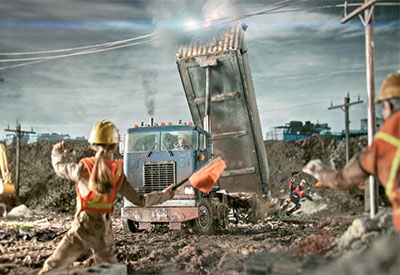
EIN ESA powerlinesafety 400

May 13, 2019

The invisible impact of powerlines should never be underestimated. In the past decade alone, 19 people in Ontario have lost their lives from overhead powerline contact. May 13 to 19 is Powerline Safety Week, which is meant to inform people across the province to stay vigilant of powerlines when doing work at home or on the job.

“Our work in raising awareness of powerline safety won’t be finished until there are zero injuries or lives lost from contact,” says Dr. Joel Moody, Chief Public Safety Officer, Electrical Safety Authority (ESA). “All it takes is a misstep or careless error to change the life of you, your colleagues or family.”

There have been 1,248 reported overhead powerline contacts in Ontario in the last ten years. Construction workers are at an especially high risk. Sixty per cent of powerline contacts have occurred on construction sites with dump trucks, the leading cause of contact. But accidents can happen easily at home too, even without powerline contact.

“Electricity can jump and activate areas up to 10 metres away from the source,” adds Moody. “Although simple work and yard tasks may seem danger-free, we encourage Ontarians to always look up and look out for overhead wires before beginning a project.”

ESA’s 2019 Powerline Safety Week campaign includes compelling digital and television advertising targeting both construction workers and homeowners; life-saving tips at esasafe.com/powerlinesafety; social media content aimed at educating Ontarians on the risks associated with powerlines; and partnerships with local electric utilities to help spread the powerline safety message.

5 Tips to #RespectThePower at Home:

  1. Locate the wires. Before starting any outdoor job, first look up, look out and locate the powerlines. Then keep track of where they are as you move around your yard. 

  2. Stay back three metres from all powerlines – that means you as well as any tools such as ladders or pruners. Coming too close to the wires can cause electricity to jump or “arc” to you or your tools. 

  3. Never attach, drape or brace anything on a powerline. And never grab a line for balance when working at heights. 

  4. Carry ladders, pruners and other long equipment horizontally, not vertically. This helps you avoid, touching or attract arcing from an overhead line as you move around your yard. 

  5. Plant trees away from overhead powerlines and call Ontario One Call before you dig to ensure underground cables and other utility-owned equipment are located and marked. If existing trees have grown into or close to powerlines, contact a trained utility arborist or your local electric utility to have the tree safely trimmed.

5 Tips to #RespectThePower at Work:

  1. Look up, look out! Identify all powerlines on site and make sure people and equipment stay at least three metres away to prevent an incident. Electricity can jump to you or your equipment if you’re too close to a powerline.

  2. Drivers of dump trucks and other high-reach vehicles must get a signaller to ensure equipment doesn’t come within three metres of overhead powerlines. This is outlined in the Occupational Health and Safety Act. 

  3. Ensure that dump trucks on site drop their box after dumping the load. It’s good practice to have a raised box indicator installed in the truck to remind the driver the box is raised.  

  4. Stay alert! Many incidents happen at the end of the day when workers are tired or rushing to finish a job.

  5. If wires fall down on the truck or the ground, always assume they are still energized. Stay in the vehicle, call 911 and keep everyone back at least 10 metres – the length of a school bus. Only the local utility worker on-site can confirm when the power is off and tell you when it’s safe to exit the vehicle. 

Source

Related Articles


Latest Articles

  • Guide to the Canadian Electrical Code, Part 1[i], 26th Edition– A Road Map: Section 56

    Guide to the Canadian Electrical Code, Part 1[i], 26th Edition– A Road Map: Section 56

    February 6, 2026 By William (Bill) Burr The Code is a comprehensive document. Sometimes it can seem quite daunting to quickly find the information you need. This series of articles provides a guide to help users find their way through this critical document. This is not intended to replace the notes in Appendix B or Read More…

  • 3D Printing: Inside Lighting’s Next Revolution

    February 5, 2026 While 3D printing in mass production was once a dream, advancements in the technology have moved it more into the mainstream. The technique, which is also referred to as additive manufacturing, has rapidly evolved from a niche prototyping tool into a transformative production method for many sectors, including the lighting industry. As Read More…

  • Microgrids & Power Quality: Designing Resilient, Clean Facility Power

    Microgrids & Power Quality: Designing Resilient, Clean Facility Power

    February 5, 2026 In an era of extreme weather, aging infrastructure, and ever‑rising energy demands, many facility managers are rethinking their relationship with the grid. Microgrids offer a way to take control and operate autonomously when necessary. A microgrid is more than just backup, when designed properly, it becomes a platform for resiliency, efficiency, and Read More…

  • ITC 101: Understanding NEMA Ratings for Electrical Enclosures

    ITC 101: Understanding NEMA Ratings for Electrical Enclosures

    February 5, 2026 Understanding NEMA Ratings for Electrical Enclosures NEMA Ratings are an essential classification system used across North America to define the environmental and mechanical protection provided by electrical enclosures. Developed by the National Electrical Manufacturers Association (NEMA), these ratings help engineers, installers, and specifiers identify the appropriate enclosure type for industrial, commercial, and outdoor Read More…


Changing Scene

  • Lighting What’s Next: Stanpro Celebrates 65 Years

    Lighting What’s Next: Stanpro Celebrates 65 Years

    February 6, 2026 “We didn’t get here by standing still. For 65 years, we’ve shaped how we think, how we design, and what responsibility means,” the company said in a LinkedIn post. “Today, that thinking takes a new form. Not to change who we are, but to express our evolution more clearly. This is Stanpro, Read More…

  • Housing Priorities on Track in New Brunswick, but More Work to do: Hickey

    Housing Priorities on Track in New Brunswick, but More Work to do: Hickey

    February 6, 2026 Efforts to support the creation of new affordable housing and reduce chronic homelessness are on track, but there is still lots of work to do, according to David Hickey, the minister responsible for the New Brunswick Housing Corporation. New data indicates progress has been made on three key government priorities related to Read More…

  • BJ Electric is now Bernie’s Electric Supplies Ltd

    BJ Electric is now Bernie’s Electric Supplies Ltd

    February 6, 2026 BJ Electric had been teasing a major announcement on their social media recently, before finally announcing last week they have rebranded as Bernie’s Electric Supplies Ltd, a nod to the company’s founder and legacy. “BJ Electric Supplies is now Bernie’s Electric Supplies—in honor of our founder, Bernard Joseph Thompson, and the values Read More…

  • The Government of Canada Introduces the Build Canada Homes Act

    The Government of Canada Introduces the Build Canada Homes Act

    February 6, 2026 The Government of Canada has introduced the Build Canada Homes Act, legislation that will establish Build Canada Homes as a Crown corporation whose mandate will be dedicated to building affordable housing in communities across the country. As Canada’s affordable housing builder, this legislation will equip Build Canada Homes with the necessary tools to Read More…