CaGBC Report Shows Green Buildings Are Engines of Economic Growth
Feb 19 2016
Over the past decade, Canada’s green building industry has generated $23.45 billion in GDP and represents 297,890 full-time jobs in 2014, more than Canada’s oil and gas extraction, mining and forestry industries combined.
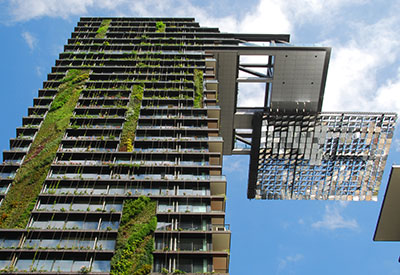
Photo: en.wikipedia.org
Green Building in Canada: Assessing the Market Impacts & Opportunities, a new report from Canada Green Building Council (CaGBC) and The Delphi Group, details the wide economic impact that the green building industry has had in Canada over the past decade. Canada is a global leader in green building with the highest number of LEED buildings per capita in the world. The report finds, when indirect and induced contributions are included, the overall economic impact of Canada’s LEED projects certified from 2005 to 2015 will lead to $128 billion in gross output over their lifetime, $62.3 billion in total GDP, and create 701,700 jobs.
“This report showcases the impressive market transformation that is underway across the country in the green building and sustainability industries. By quantifying the significant economic value and growth of green building and LEED certification in Canada, we are demonstrating that green building is not just good for the environment, but it is also good for the economy,” says Thomas Mueller, President and CEO of the Canada Green Building Council. “It is clear that Canada’s current economy would benefit from increased investment in green building and sustainable infrastructure. We believe that a national, cross-sector strategy, led by industry and supported by all levels of government, could help further accelerate the market transition toward an economy that benefits from reducing greenhouse gas emissions.”
Designed to support accelerated market transformation to high-performing, healthy green buildings and communities in Canada, the report provides an overview of the current status of activities in Canada’s green building industry.
The report, sponsored by Toronto and Region Conservation Authority (TRCA), highlights many significant impacts and findings, including:
• Ontario and British Columbia have more green building jobs as a percentage of their total labour force than any other areas of the country in 2014 – equal to 2.1 and 1.6% respectively, due in part to greater market leadership, progressive building code requirements, provincial and municipal green building policies.
• Companies active in the Construction and Trades segment accounted for the largest percentage (55%) of green building employment and GDP in Canada, equal to approximately 164,445 jobs (approximately 13% of Canada’s total construction work force) and $13.13 billion dollars in GDP.
The Green Building in Canada report also makes a number of suggestions on how to accelerate industry growth and maximize economic opportunities. Expansion in these areas will positively impact jobs and the economy, along with providing significant environmental, health and societal benefits.
• Investing in research and innovation. The construction sector in Canada ranks at the bottom of all industries in terms of its expenditures in research and development (R&D). Greater federal and provincial government support for green building on the research and innovation agenda would help, with both economic and export development.
• Addressing the gap between building design and performance. Benchmarking, reporting and disclosure, along with greater standardization of modeling building performance in Canada, would result in buildings with better end-use performance and enhanced environmental and business benefits.
• Supporting industry training and continuing education. Green building requires professional expertise and a better trained workforce. Investing in education and training, as well as the policy, regulatory, and incentive frameworks to support skills development and ongoing learning will be essential to industry growth.
• Developing supportive policies and incentives. Closing the gap between the market leaders who have embraced green building and the bulk of the building industry, through a range of incentive and financing options, progressive policies and changes to building codes, is the key to long-term market transformation.
“Canada is on the brink of an economic transition and the green building industry will be an important part of that transition,” says Paul Shorthouse, co-author of the report and Regional Director with The Delphi Group. “As the policy landscape shifts and lower-carbon products and services become the norm, green building represents a huge opportunity for Canada. We are hopeful that the report findings spur more interest in and greater support for the sector as we look to diversify Canada’s economy and tap into the talent and expertise we have in this country.”
The report was generated through extensive secondary research and literature review, 35 industry stakeholder interviews, and economic impact assessments quantifying GDP, job and industry strengths and capabilities.
Read the report’s executive summary: http://www.cagbc.org/CAGBC/Advocacy/Green_Building_in_Canada_Assessing_the_Market_Impacts_Opportunities.aspx.