Global Unit Shipments of Organic LED Luminaires Are Expected to Reach 300,000 in 2025
May 18, 2016
A new report from Navigant Research analyzes the global market for organic LED (OLED) lighting in residential and commercial buildings, with forecasts for unit shipments and revenue, segmented by vertical, product type, construction type, and region, through 2025.
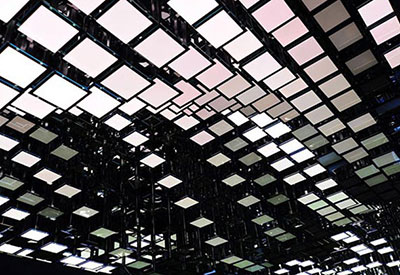
Photo: http://www.lighting.philips.com
Since mid-2015, OLED prices have been falling at a pace that is reminiscent of LED pricing trends. While OLEDs are not expected to ever beat LEDs in terms of price in the general market, price declines do signal that OLEDs will reach a low enough point that the benefits they offer in lighting quality and design aesthetic will make for a reasonable choice between the two.
“OLEDs hold the promise to revolutionize architectural lighting through their superior aesthetic quality and new form factors,” says Benjamin Freas, principal research analyst with Navigant Research. “As prices have declined, OLED adoption has made inroads into the applications where a premium is placed on quality.”
Further reductions in the cost of OLEDs will make them more competitive and need to be the primary focus of manufacturers if the market share is to grow, according to the report. In the meantime, significant niches are expected to be carved out in task lighting, decorative fixtures, and accent lighting, where higher-priced products are acceptable to consumers when the perceived quality is worthwhile.
The report, OLED Lighting for Residential and Commercial Buildings, examines the global market for OLED lighting in residential and commercial buildings. The study provides an analysis of the market issues, technological developments, and regional trends, with a focus on task lighting, decorative fixtures, accent lighting, and general space lighting. Global market forecasts for unit shipments and revenue, segmented by vertical, product type, construction type, and region, extend through 2025. The report also examines the key technologies related to OLED lighting, as well as the competitive landscape. An Executive Summary of the report is available for free download on the Navigant Research website.