Siemens Launches Depot360 Zero-Emission Fleet Management in Canada

May 3, 2024
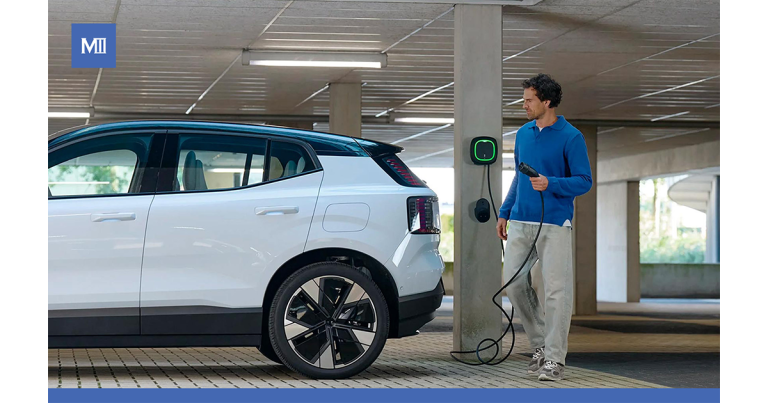
With transportation being the second biggest emitter of greenhouse gases and road transport responsible for almost three quarters of these emissions globally*, Siemens Smart Infrastructure has launched Depot360, a portfolio to optimize fleet electrification. The initial focus of the solution is on logistics vehicles, municipal transit and private bus fleets within depot, warehouse, and terminal facilities. Canada is among the first countries to offer Depot360 to customers, alongside the US, Germany, France, UK, Sweden, and Norway.
Siemens is committed to helping Canadian customers manage and simplify their fleet electrification with innovative solutions, including locally-developed software.
Faisal Kazi, President and CEO, Siemens Canada
The two initial offerings from the Depot360 portfolio are Depot360 Managed Services and Depot360 CaaS.
Depot360 Managed Services optimizes charging and fleet infrastructure operations to maximize fleet performance, lower energy costs, reduce cost-per-kilometer and meet sustainability goals. To enable the Managed Services offering, Siemens has developed the Depot360 AI Platform. Approximately half of the employees developing this software are based in Canada.
“The electrification of transportation is complex and requires a growing system of partners to tackle this enormous challenge,” says Faisal Kazi, Siemens Canada CEO. “Siemens is committed to helping Canadian customers manage and simplify their fleet electrification with innovative solutions, including locally-developed software.”
Using this platform and its algorithms, a team of Siemens experts monitors and manages the charging infrastructure and fleet performance. Risks are proactively identified and resolved to improve fleet operations. Depot360 aims to guarantee charging station uptime and vehicle state-of-charge (SoC) for route completion.
Depot360 Managed Services will also help customers reduce energy costs with load-shifting (charging at off-peak, less expensive hours), and peak-shaving (schedule-based load management) capabilities. In future, participating fleets will be able to provide their DERs (Distributed Energy Resources) to wholesale markets for further energy cost savings.
We are thrilled to work with Siemens towards our shared goal of derisking the scaling of EV infrastructure for fleets. Together with Geotab’s leading EV telematics capability, Siemens Depot360 will help ensure that vehicles are properly charged when needed, while also optimizing charging schedules to minimize costs and carbon emissions.
Eric Mallia, Vice President of Sustainability Solutions, Geotab
Thanks to telematics partnerships with companies such as Geotab, Siemens accesses near real-time connected vehicle data to further improve fleet operations. Siemens is pleased to have joined the Geotab Sustainability Alliance, a group of solution and service providers offering integrated solutions to help fleets operate efficiently and reduce their carbon footprint.
“We are thrilled to work with Siemens towards our shared goal of derisking the scaling of EV infrastructure for fleets,” said Eric Mallia, Geotab’s Vice President of Sustainability Solutions. “Together with Geotab’s leading EV telematics capability, Siemens Depot360 will help ensure that vehicles are properly charged when needed, while also optimizing charging schedules to minimize costs and carbon emissions.”
For customers looking for a one-stop-shop for fleet electrification, Siemens offers Depot360 CaaS. This is a zero-upfront investment solution encompassing consulting, depot design, construction, commissioning, and equipment – all financed into a single monthly payment. Routed in intelligent planning, all requirements are addressed in the solution, including fleet size and scope, grid connection, charging infrastructure, software, and ongoing maintenance, ensuring a future-proof solution to customer needs. With Depot360 CaaS, customers will also enjoy all the benefits of our Managed Services.
More information is available is at www.siemens.ca/depot360