Family, Factory, Future: Inside Liteline’s Second-Generation Leadership and Canadian Manufacturing Push
April 9, 2026
By John Kerr
Kerrwil had the opportunity to sit with Daniel Silverstein, Co‑President of Liteline, whose career at the company began on the shop floor as a junior fabricator building counter‑top displays a grounding that still shapes how he thinks about product, process, and people today.
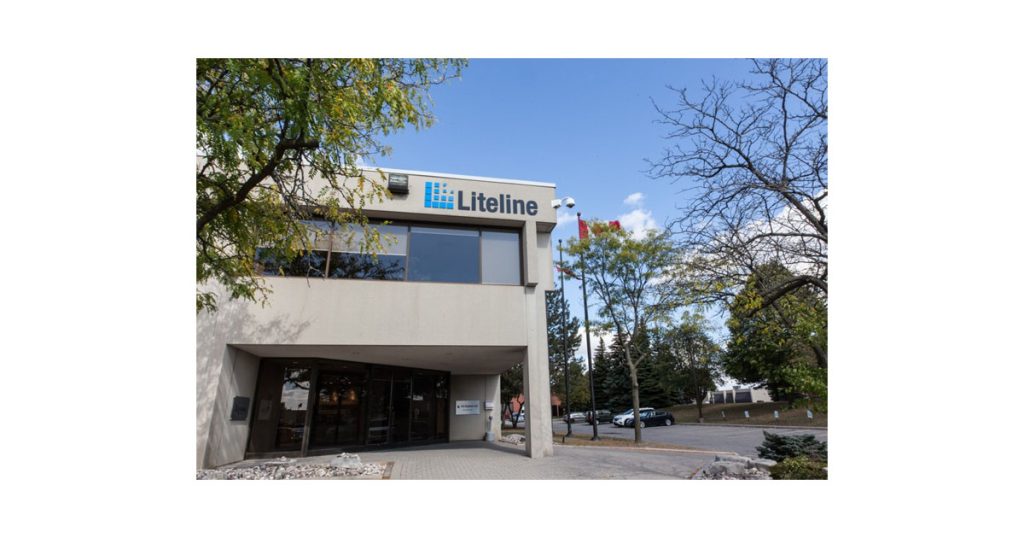
His energy and passion for the business were on full display as we toured Liteline’s expanded Canadian manufacturing and testing facility, where a 65‑person team builds Liteline products domestically in more than 20,000 square feet of dedicated manufacturing space in their 160,000 square‑foot Canadian headquarters, a clear signal of the company’s commitment to making lighting solutions in Canada rather than offshoring that capability.
As Daniel walked us through the factory, he repeatedly connected what we were seeing on the floor to the story his parents began nearly five decades ago. That tour became a live narrative of how a family company that started with lenses has evolved into a vertically integrated, design‑driven manufacturer of LED and smart‑lighting solutions.
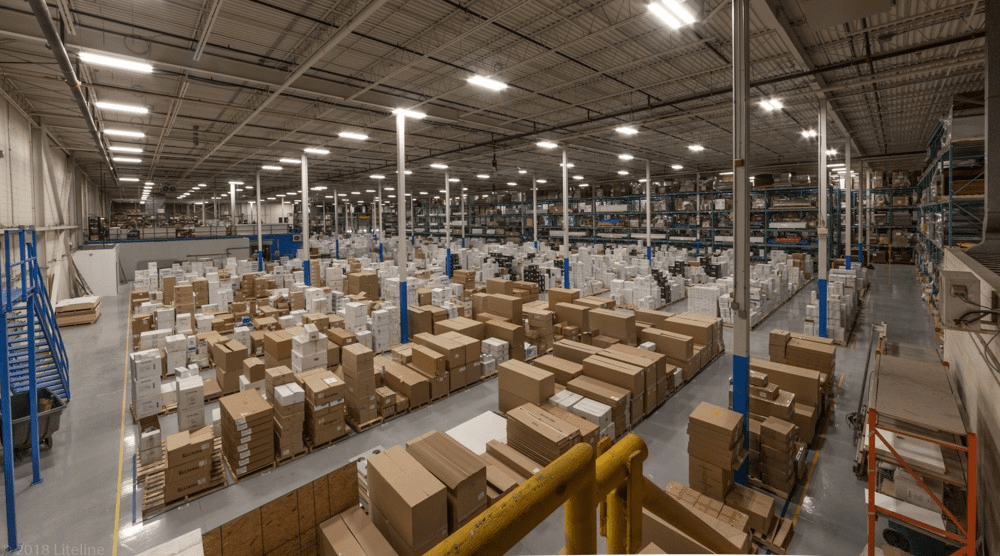
Founded in 1979 by Steve and Helen Silverstein to solve a specific anomaly, a distributor struggling with custom‑cut lenses in a fluorescent world, the company grew as a classic founder‑driven venture during the mature incandescent/fluorescent paradigm. From an apartment and a single truck, Steve built Liteline into a national presence and Canada’s largest independent lighting manufacturer.
For four decades, Steve embodied the incumbent paradigm of leadership: a visible founder cultivating deep relationships with agents and distributors, reinvesting earnings into manufacturing capacity, and personally championing the Liteline brand. The early business was built around lenses and components, solving practical problems for distributors and contractors and steadily expanding its catalog as it mastered the fluorescent and early electronic eras.
As LED emerged and began to disrupt the industry’s assumptions shifting value from lamps to integrated systems, optics, and controls the family recognized that the old playbook would not be enough. The move from lenses and components into fully integrated LED solutions marked a true paradigm shift for Liteline, changing not just what it sold, but how it thought about design, manufacturing, and innovation.
Under Steve Silverstein’s leadership, and with Sarah, Mark and Dan deeply involved, Liteline began operationalizing this new LED paradigm through product families such as LUNA, Sigma, Helios, Genesis, KLICK and FORUM. These series introduced features like field‑selectable CCT and wattage, innovative trimless solutions, and high‑output, low‑glare performance to address persistent “anomalies” of legacy fixtures: SKU proliferation, installation complexity, and inflexible light. FORUM was first to market with a colour‑selectable switch, and LUNA led the market as the industry’s first wet‑location‑rated adjustable downlight, earning IES recognitions along the way.
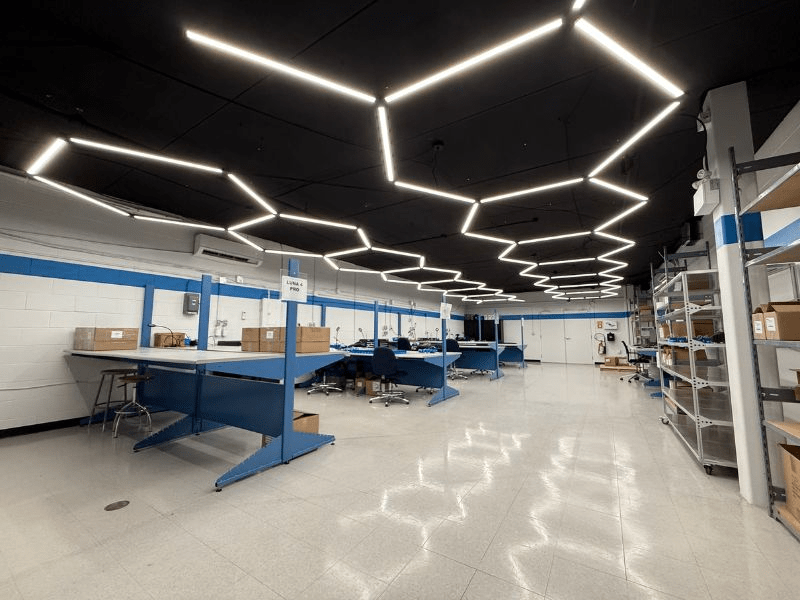
This shift in product strategy required a corresponding shift in manufacturing and infrastructure. The expanded manufacturing and testing facility in Richmond Hill is more than a capacity upgrade; it is a strategic statement that the future of Liteline innovation will be engineered, built, tested, and refined in Canada. Liteline engineers, configures, wires, tests, and finishes fixtures and solutions domestically, turning a bill of materials of imported and Canadian components into architectural and commercial lighting products for the North American market.
Daniel’s own progression from junior fabricator to Co‑President mirrors this evolution. His early years assembling displays and seeing firsthand how products are presented to distributors and contractors give him a grounded sense of what matters on the counter, on site, or at the designer’s desk: installation ease, clear value, and a story that resonates in seconds. That frontline perspective is especially important in a world of never‑ending paradigm shifts, when the industry is moving from conventional luminaires to intelligent, connected systems and needs leaders who understand how abstract technology changes the day‑to‑day of those who specify, stock, and install the product.
Today, Liteline’s second‑generation leadership is deliberately building on that foundation with an even sharper focus on innovation, ease of installation, and application‑driven design. The co‑presidency model shared by Daniel, Mark, and Sarah reflects the complexity of modern lighting: one sibling may lean deeper into operations and manufacturing, another into sales and customer relationships, and another into product and brand strategy. Together their shared leadership structure reduces dependence on any one individual and creates a built‑in forum for challenging assumptions, exactly what is needed when an industry is navigating a paradigm shift and the rules for success are being rewritten.
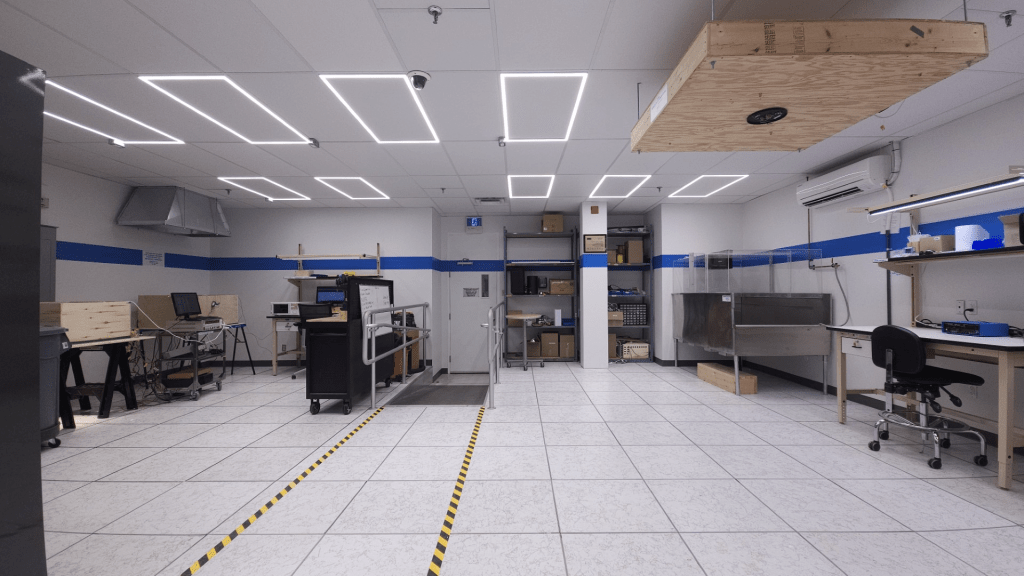
With that leadership model in place, Liteline has continued development of the Richmond Hill facility. What was once expanded for capacity is now structured for flexibility. Beyond assembly and testing, the facility incorporates board-level integration and specialized configuration areas, allowing Liteline to install LED boards in-house and move further upstream in the manufacturing process. This added depth is not simply vertical integration for its own sake; it enables tighter quality control, faster iteration, and the ability to respond to project-specific demands.
The practical result is a growing range of small-aperture and architectural fixtures capable of full-colour and tunable-white performance, assembled and validated domestically. By controlling more of the production environment in Canada, Liteline can balance two pressures that increasingly define the market: customization and simplicity. Contractors require efficiency and predictability on site; designers seek flexibility and nuance in light. The expanded facility is designed to serve both.
Looking ahead, Daniel sees controls as the next major paradigm shift: a world where DMX, Wi‑Fi, and other protocols make colour, intensity, and distribution as flexible as the spaces they serve. Liteline is already positioned for that future with OnCloud products for Wi‑Fi‑based control and a growing range of RGBTW fixtures compatible with DMX, giving designers and integrators a platform for dynamic scenes, tunable environments, and immersive experiences across applications.
From custom-cut lenses to fully integrated LED platforms, Liteline has consistently evolved alongside the industry’s defining shifts. Today, innovation and ease of installation remain foundational, even as expectations around interoperability and control continue to expand. The company’s growing in-house capability and its emphasis on adaptable product design reflect a practical understanding of where the market is headed — toward more configurable, more connected environments that still demand simplicity at the point of installation. Under second-generation leadership, Liteline’s trajectory is not a departure from its past, but a continuation of its core discipline: respond to change with engineering depth, operational control, and products that make complexity manageable.
To learn more about Liteline, visit their website HERE.
![Guide to the Canadian Electrical Code, Part 1[i], 26th Edition– A Road Map: Section 74 — Airport installations](https://electricalindustry.ca/wp-content/uploads/2026/05/EIN-Stock-Guide-Code-Canada-Map-1200-768x403.png)



![Guide to the Canadian Electrical Code, Part 1[i], 26th Edition– A Road Map: Section 74 — Airport installations](https://electricalindustry.ca/wp-content/uploads/2026/05/EIN-Stock-Guide-Code-Canada-Map-1200.png)