Study Assesses Canada’s Potential EV Market
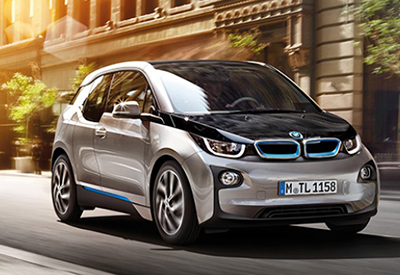
Using today’s electricity grids, plug-in electric vehicles (PEVs) could potentially cut greenhouse gas emissions by 80-98% in British Columbia, 45% in Alberta, and 58-70% in Ontario, reports a new study on Canada’s potential market for PEVs.
Conducted by the Energy and Materials Research Group in the School of Resource and Environmental Management at Simon Fraser University, the study engaged a sample of Canadian new vehicle buyers and British Columbian owners of PEVsin a mixed-method survey and interview process.
This research report addresses a number of objectives. Among them are the following:
• identifying current and potential PEV buyers and assessing their preferences, motivations, behaviour and lifestyles
• Assessing consumer awareness and understanding of PEV technology
• Assessing awareness of public charging and access to home charging
• Quantifying consumer demand for different PEV designs
Here’s how Matthew Klippenstein summarized the findings for Clean Energy Canada. [1]
1. More than one-third of Canadians are willing to buy a plug-in electric vehicle
SFU researchers surveyed 1,754 recent car buyers from across English-speaking Canada. Respondents were given price information for gasoline, hybrid, plug-in hybrid and battery-electric versions of a generic automobile, and were asked which they would purchase… Despite its higher up-front costs, one-third chose the plug-in hybrid vehicle; comparatively few chose the battery-electric. In follow-up interviews, some explained that they preferred plug-in hybrids because they could fall back on the gasoline engine in case of battery problems.Extrapolating to the general population, that means more than 8 million Canadian drivers were willing to buy electric cars. There are about 25 million people with drivers’ licences nationwide.
2. Car shoppers strongly prefer plug-in hybrids over pure battery-electric models
When mainstream car buyers were shown the relative purchase prices of conventional, hybrid, plug-in hybrid, and pure battery-electric versions of a given vehicle, about one-third went for the hybrid. Very few opted for the battery-only car. The biggest barriers to purchasing electrics cars were limited model options, and sufficient inventory such that customers could find their preferred trim, colours, and options.
In a similar survey, 96% of plug-in pioneers chose one of the electric vehicle options over conventional and hybrid choices. More than half opted for a battery electric vehicle, suggesting that familiarity is the best cure for range anxiety.
3. 30% EV interest doesn’t translate to 30% market share
Despite more than 8 million Canadians potentially being open to buying plug-in electric vehicles, researchers concluded that electric car market share in 2020 could be as low as a measly 1%, due to a compounding of factors. The biggest barriers were limited model options, and sufficient inventory such that customers could find their preferred trim, colours, and options… Car dealerships’ interest in electric vehicles has so far been tentative, and despite the popularity of SUVs and trucks in Canada, almost all early electric car offerings have been sedans.
4) Home is where the plug is, two-thirds of the time
Another factor limiting EV uptake is that only two-thirds of car buyers surveyed had access to electric outlets where they parked, and only one-third could easily install the faster Level 2 chargers needed to make battery electrics a realistic option.
Coincidentally, thanks to plentiful charging infrastructure, plug-in pioneers in British Columbia charged at home about two-thirds of the time, splitting the rest of their recharges between work and public stations. These home-charging numbers were a lot lower than commonly reported data in America, suggesting that drivers there “filled up” at home up to 90% of the time.
5) Canadian EVs are cleaner than hybrids (yes, even in Alberta)
Finally, researchers compared the greenhouse gas intensity of plug-in electric vehicles with that of conventional and hybrid vehicles in three provinces. They did so by measuring the pollution from marginal electricity supplies when owners were most likely to charge their vehicles. The result? Even on Alberta’s coal-reliant grid, electrics are about half as polluting as conventional vehicles and are, in fact, cleaner than hybrids. It’s possible to foresee a not so far-off future where electric vehicles become half as polluting as even hybrids. And in such a world, would the Toyota Prius be classified as a relatively high-polluting gas guzzler?
Policy implications
Global climate change, local air pollution, oil dependence, and energy security are all fuellinga political push for PEVs in many parts of the world, says the study. Its analyses suggest that inducing a transition to PEVs significant enough to achieve deep greenhouse reduction targets would required a combination of
• demand-focused policies (e.g., vehicle tax exemptions, large taxes on conventional vehicles and other financial incentives), and
• supply-focused policies (e.g., a low carbon fuel standard, a zero emissions vehicle mandate)
For example, in Norway PEVs represent over 20% of new vehicle market share, owing primarily to demand-focused policies such as vehicle tax exemptionsand other financial incentives. Other regions have also implemented
• demand-focused policies (e.g., BC, Ontario and Quebec), but they are less stringent
• supply-focused policies such as a low carbon fuel standard (California and BC) or a zero emissions vehicle mandate (California), which put the onus on vehicle or fuel suppliers to develop the market for PEVs and other low- or zero-carbon vehicles.
The study suggests that supply-focused policies offer greater potential to boost PEV market shares in North America because demand-focused policies (are less politically acceptable.
Read the study: http://rem-main.rem.sfu.ca/papers/jaxsen/Electrifying_Vehicle_(Early_Release)-The_2015_Canadian_Plug-in_Electric_Vehicle_Study.pdf.
1. Adapted from “The Five Things You Need to Know About the Most Authoritative Study Ever on Canadian Electric Vehicle Adoption,” Clean Energy Canada, http://cleanenergycanada.org/the-five-things-to-know-electric-vehicle-canada/.