Safety Checklist: 10 Dumb Things Smart People Do When Testing Electricity, Part 1
Safety Fluke

Feb 5, 2017

People who make their living by working with electricity quickly develop a healthy respect for anything with even a remote chance of being “live.” Yet the pressures of the getting a job done on time or getting a mission-critical piece of equipment back on line can result in carelessness and uncharacteristic mistakes by even the most seasoned electrician. Here in Part 1 are the first five of 10 quick reminders of what not to do when taking electrical measurements.

DO NOT:

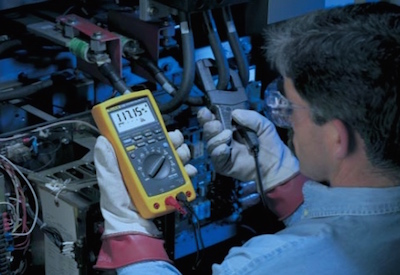
1. Replace the original fuse with a cheaper one. Digital multimeters (DMMs) that meet today’s safety standards include a special high-energy fuse designed to pop before an over- load hits your hand. Fluke meters use a special sand-filled fuse designed to extinguish an arc within the fuse enclosure. Be sure to replace it with the same kind of authorized fuse.

2. Use a bit of wire or metal to get around the fuse. That may seem like a quick fix if you’re caught without an extra fuse, but it won’t provide protection against a spike headed your way.

3. Use the wrong test tool for the job. Make sure your test tool holds the correct CAT rating for each job you do, even if it means switching DMMs throughout the day (see Table, below).

4). Grab the cheapest DMM on the rack. If that cheap test tool doesn’t actually have the safety features it advertised, you could end up a victim of a safety incident. Look for independent laboratory testing markings like CSA or UL that ensure the tool meets standards.

5. Skip out on PPE. They’re called “safety” glasses for a reason. Take them out and put them on. The same goes for insulated tools, insulated gloves, ear plugs, your face shield/hood, and arc-resistant clothing.

This article was first published by Fluke Corporation; http://content.fluke.com/platforms/wpcf/downloads/10_common_mistakes_EN.pdf. Watch for the five remaining safety don’ts in the March 21 issue of EIN.

Table: Measurement Categories IAW IEC/EN 61010-031

Safety Table


Related Articles


Latest Articles

  • What 2025 Revealed About Canada’s Electrical Industry

    What 2025 Revealed About Canada’s Electrical Industry

    December 16, 2025 By Carol McGlogan, President & CEO, Electro-Federation Canada The past year required Canada’s electrical industry to adapt to a rapidly changing environment. In 2025, businesses across the value chain navigated shifting trade conditions, evolving policy landscapes, and growing expectations tied to electrification and infrastructure expansion. Trade uncertainty introduced new complexity. Organizations reassessed Read More…

  • Considerations for EV Charging Installation and Site Preparation

    Considerations for EV Charging Installation and Site Preparation

    December 15, 2025 By Blake Marchand As part of our recent discussion with LEDVANCE EVSE Product Manager, Erich Bockley, he emphasized the importance of site preparation Site preparation can be the most complicated part of the project, Bockley emphasized, a lot needs to be considered before the installation work begins. Many public charging applications will Read More…

  • Ontario’s Multi-Family Component Leads Residential Sector Increases in October Building Permits

    Ontario’s Multi-Family Component Leads Residential Sector Increases in October Building Permits

    December 15, 2025 In October, the total value of building permits issued in Canada rose $1.8 billion (+14.9%) to $13.8 billion. The increase in construction intentions was led by the residential sector (+$1.1 billion). An increase was also observed in the non-residential sector (+$702.8 million). On a constant dollar basis (2023=100), the total value of building permits issued in Read More…

  • Residential Investment in Building Construction Declines in September

    Residential Investment in Building Construction Declines in September

    December 15, 2025 Overall, investment in building construction decreased 1.1% to $22.4 billion in September. Investment in the residential sector declined 1.7%, while that in the non-residential sector was virtually unchanged. Year over year, investment in building construction grew 6.0% in September. On a constant dollar basis (2023=100), the total value of investment in building construction in September decreased 1.4% Read More…


Changing Scene