Whitepaper: Achieving Energy Efficiency and Sustainability with Data-Driven Insights
August 13, 2020
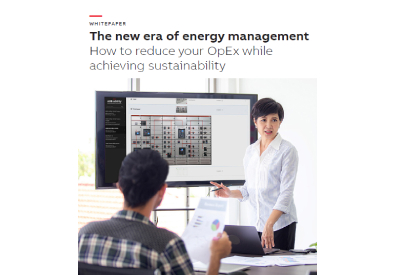
In a recently released white paper, ABB revealed that smart energy management systems can help facility managers reduce energy consumption by up to 45 percent.
In “The new era of energy management,” ABB explains the multiple benefits of utilizing smart energy management systems that leverage new digital technologies, such as artificial intelligence, machine learning and the Internet of Things (IoT). These technologies are paving the way for greater efficiency and higher cost savings while ensuring sustainable operations.
With global energy consumption expected to almost double by 2050, according to the U.S. Energy Information Administration1, the spotlight is on companies around the world to sharpen their focus on both the amount of energy they are using and the resulting emissions they generate.
ABB’s comprehensive portfolio of energy management solutions, including cloud-based digital services powered by ABB Ability™, are helping industrial, utility and commercial customers in this evolution. As a key part of ABB Electrification’s Mission to Zero, the company is committed to supporting its customers in reducing energy usage and using cleaner energy resources in industry, homes and cities.
“For more than a decade, Microsoft and ABB have been investing to reduce environmental impact while striving to support the digital transformation of organizations and people around the world. Our partnership with ABB drives to continuously improve sustainability in innovative ways that empower us to achieve more on every level.” said Neal Meldrum, Global Business Strategy, Microsoft.
Today, smart energy management systems can exploit the IoT to collect a colossal amount of data from devices and process them to form actionable insights. The ability to monitor different systems and collect information on key parameters helps organizations get clear visibility of their systems, and thus a better understanding of how to optimize them to boost efficiency, productivity, and profitability.
Data-driven decision-making also improves reliability and performance by enabling organizations to predict system behavior, accurately verify their energy bills and compare energy usage across multiple sites at a glance.
With digital technologies quickly gaining traction in the manufacturing and building sectors, cloud-based solutions are becoming more flexible as well as affordable. To ensure a sustainable future, organizations will need to reimagine and alter their energy infrastructure to implement these technologies and solutions.
Andrea Temporiti, Digital Lead for ABB Electrification concludes: “Energy efficiency is becoming an important competitive asset on many levels. The time for organizations to digitalize their energy management is now and we look forward to supporting our customers in this exciting transition.”
Download the whitepaper HERE