Industrial Control Panel Testing and Certification – Your Questions Answered
September 28, 2022
By Owen Hurst
There is a clear and open movement toward automating Canada’s industrial sectors to gain more efficient and sustainable operations. At the heart of much of that automation implementation is the industrial control panel.
Advancing industrial sectors must be done in a calculated and safe manner. With so much reliance on industrial controls systems, it is essential that they meet quality standards and are tested to help ensure they meet all requirements and can be employed safely in an operation where machines and people often work in proximity.
Panel Builder & Systems Integrator connected with Dana Parmenter, Vice President, Industrial, CSA Group to get a full understanding of the testing, certification and support provided to those designing, building and implementing Industrial Control Panels (ICP) in Canada. To understand, we will discuss what certification is, why it is important, how and where testing of panels is conducted, and in general why it is essential to ensure your panels meet certification standards.
First, we really need to understand what certification is and how it works.
Simply put, the process of certification is to verify that a product has met the requirements that are outlined in recognized industry standards. Standards help to ensure that products and services meet minimum requirements for safety and performance.. The certification of a product is an ongoing process that involves follow-up factory inspections and retail surveillance to help ensure that the product meets the requirements outlined in the standard(s).
In Canada, CSA C22.2 No. 286, the Standard for Industrial Control Panels and Assemblies and the installation requirements of the Canadian Electrical Code (CEC) apply. Canadian requirements for components used in the assembly of ICPs are primarily covered by CSA C22.2 No. 14, the Standard for Industrial Control Equipment. Neither of these standards includes hazardous locations requirements.
As an alternative to certification, when ICPs are evaluated at a Canadian installation location, compliance with the SPE-1000 Model Code for Field Evaluation of Electrical Equipment may be required. SPE-1000 provides construction requirements, testing criteria, and minimum marking requirements for ordinary locations but does not include hazardous locations requirements.
With a grasp now on what certification is and the general standards required to build control panels, it is crucial to understand what goes into testing panels and what that process looks like for panel builders.
The testing of panels and components can happen in a variety of ways and in multiple settings.
“Testing and certification can happen at a CSA Group lab, at the customer’s location, at a third-party testing laboratory, or even at the point of manufacturer”, noted Parmenter.
To further understand how each of these operate Parmenter explained that CSA Group offers a variety of programs to evaluate whether the control panel and component products comply with applicable standards:
- Model Certification: For mass-producers of fixed-design ICPs, model certification is the best option for confirming product compliance. This involves having samples tested either through one of CSA Group’s labs and/or at the customer’s or third-party locations. If representative samples comply with the requirements of the applicable standards and codes, a Certificate of Compliance (CoC) is issued, and all products produced of the same design may display the CSA Mark.
- Special Industrial Control Panel (SICP) Shop Program: For customers looking to produce moderate quantities of individual or custom design ICPs or wish to have more control over when and how they enter the market, SICP can be a good option. In this case, CSA Group will assess and certify the customer’s general panel design principles, production facilities, and quality systems, as well as train and assess their personnel as part of the evaluation process. Upon successful completion, the customer’s production facility is designated a “certified panel shop” and they are authorized to apply the CSA Mark to all panels produced within the negotiated scope of the program.
- Special Industrial Control Panel Program for Hazardous Locations (SICPHL): Available to customers who already qualify under the SICP ordinary location program, this program provides additional safety evaluations to confirm compliance with hazardous location’s requirements for specified industrial locations.
- Field Evaluation: Known as “special inspections” in Canada, this evaluation can be performed at the point of manufacture, an interim point of distribution, the final installation site, in a CSA Group facility, or in a combination of locations. This is a good option for customers who produce very limited qualities or produce specialized panels. It’s important to note that this is not a certification service.
- Field Certification: This is an excellent option for customers who produce a set quantity of ICPs intended for use in ordinary or hazardous location. This option is applicable when ongoing production surveillance is not required because only the product available at the time of the evaluation may be labeled with the serialized field certification label.
Having an approved and certified ICP does not always mean the end to your journey. In North America, control panels are typically subject to inspection and approval at the installation site by an Authority Having Jurisdiction (AHJ). Third-party product evaluation verifying that all applicable safety requirements have been met can help ensure timely AHJ approval and minimize the potential for red-tagged equipment and costly delays.
ICP safety requirements differ based on the location where a panel will be installed. Requirements for panels used in ordinary locations are significantly different than those for panels used in HazLoc (hazardous locations).
The focus and difference for ICP’s used in Hazloc is an interesting topic that we will briefly address before turning to a discussion about what control panel certification means to your business and your clients.
ICPs manufactured for use in HazLoc installations must conform to the requirements for panels used in ordinary locations, as noted above, and then meet additional requirements to manage the potential for ignition caused by an electrical spark in an explosive atmosphere. Explosive atmospheres exist where concentrations of flammable gas, liquid, dust, or fibers pose an ignition hazard.
In North America, requirements for implementing these ignition management methods are defined for various types of hazardous locations according to the North American Class/Division/Zone classification system. Depending on the Class, Division, or Zone, ICPs must conform with various ANSI/ISA, CSA, UL and/or NFPA requirements based on the protection method(s) used in constructing the panels.
The use of panels in Hazloc locations certainly demands additional requirements. However, adherence to the additional standards and full understanding of the Hazloc will help ensure your ICP’s are operable and safe.
Now that we have considered what certification is and how it works, we can turn to what certification means to your business and clients and what happens after an ICP has been properly built and installed.
Certification brings credibility to your business and peace of mind for your clients, as ultimately your work is critical to their safe operation.
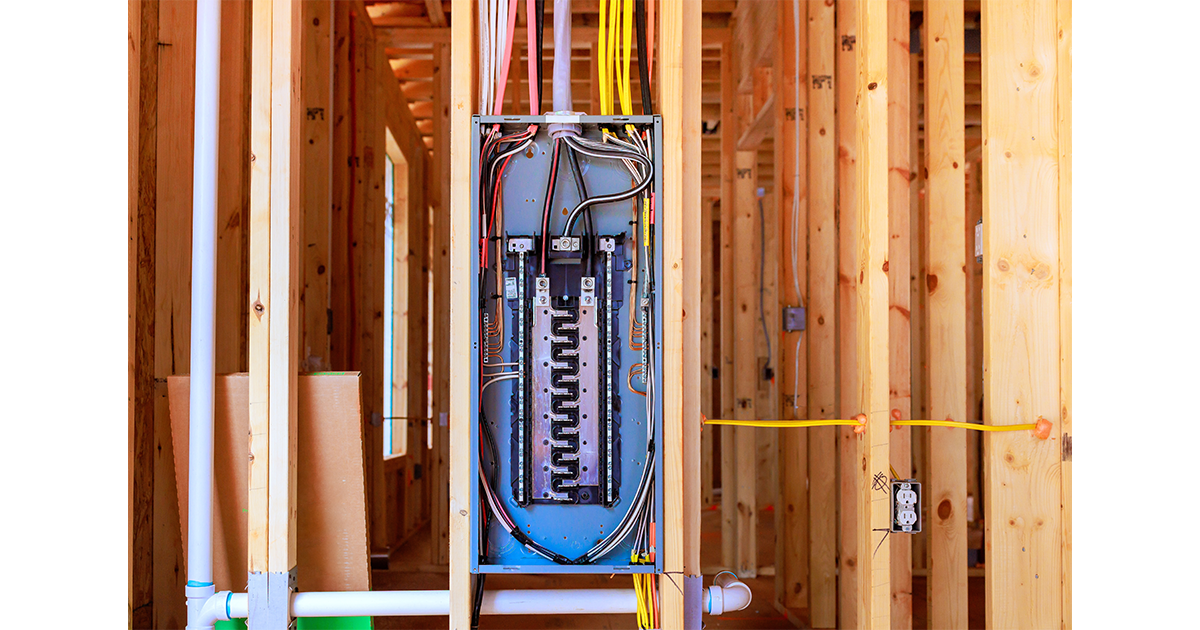
“Quality production in an industrial plant depends on the safe and efficient operation of equipment. A typical ICP includes power and/or control circuits that electrically direct the performance of machinery or equipment. ICP components may be mounted or contained within an enclosure, or they may be mounted on a sub-panel. Control panel safety and reliability are an important part of that process. In fact, with the increasing functionality of industrial control panel systems (ICPS) – including increased communications with the outside world to include possible remote control – the need for vigilance around safety and security measures is more important than ever,” noted Parmenter.
It is highly recommended that companies seeking certification of ICPs begin the process early, engaging a testing and certification provider like CSA Group in the development phase. Even before testing begins, CSA Group’s ICP experts can help educate on the local market compliance requirements, while also guiding customers through the ICP evaluation options. Engaging a testing and certification provider early can help save time in the long run. Visit HERE.
Focusing on receiving certification also provides advantages for future builds and allows panel shops to identify their certification compliance.
Product certification is valid for the lifetime of the product, or until such time as it is modified, retrofitted, or otherwise altered from the original certified design. For ongoing certification of continuing products, the manufacturer is free to continue ongoing production and marking of certified products of the same design as outlined in their certification report until such time as design change(s) to the product is required, or the underlying requirements from the applicable standard(s) may be subject to change because of evolution of the standards themselves. Product safety standards are living documents subject to periodic review and update processes to reflect changing technologies or safety considerations.
Ongoing production is subject to periodic inspections by a testing and certification provider to verify continued certification compliance. Periodic surveillance inspections are a requirement of a Certification Body’s accreditation and represent an additional assurance of your product’s acceptance in the marketplace.
ICPs will only continue to grow in use as our automation infrastructure advances throughout Canada’s industrial sectors. This will ensure a greater demand for ICPs and knowledgeable designers and builders that are compliant. As noted above, Standards help to ensure that products and services meet minimum requirements for safety, performance, and energy efficiency.
Learn more about ICP’s or connect with CSA Group today.
![Guide to the Canadian Electrical Code, Part 1[i], 26th Edition– A Road Map: Section 74 — Airport installations](https://electricalindustry.ca/wp-content/uploads/2026/05/EIN-Stock-Guide-Code-Canada-Map-1200-768x403.png)

![Guide to the Canadian Electrical Code, Part 1[i], 26th Edition– A Road Map: Section 74 — Airport installations](https://electricalindustry.ca/wp-content/uploads/2026/05/EIN-Stock-Guide-Code-Canada-Map-1200.png)