


Cabling Certification: Multi-Everything Is the New Normal — Part 2
Feb 26, 2016
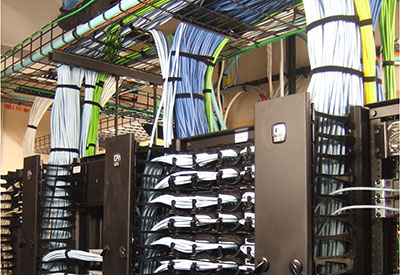
The industry is awash in “multiples” — multiple cables, multiple standards, multiple teams, multiple tools, multiple projects, multiple test regimes, multiple skill levels and more. That puts two opposing forces — increasing complexity and thinly stretched expertise — on a collision course that affects the fundamental connectivity of technology.
The implication is that if something doesn’t change, then some other factor has to give.
Part 1 discussed the evolution of datacom cabling and emerging challenges. Here in Part 2: the 6 steps of a certification process and the future of certification.Let’s take a look at what that certification looks like at the project level.

1. Planning — the first part of the install and certification process is typically left to the project manager. Most installers these days are managing the testing and certification of multiple jobs simultaneously, each with multiple teams, test tools and requirements. This is not only time consuming, but the increased complexity can, and is, leading to costly errors.
2. Setup — the next phase is setup, ensuring that the requirements are known and the tool is correctly configured to test those param¬eters. Complexity is growing in this area as well: we have multiple media types, different categories and varying standards. For frontline technicians, the impact is either in needing to wait for a particular expert to set up the tool or run the risk of making costly errors that require rework.
3. Testing — testing can always be faster. But again, the speed of current testers is such that the ability to gain huge advantages in this part of the process is limited — there are now much greater gains to be had elsewhere.
4. Troubleshooting —the varying skill levels of technicians, or even simple lack of familiarity with certain types of installations or different standards, typically means that projects are delayed until the needed expertise is available to troubleshoot.
5. Reporting — in many ways, reporting has become the bane of installation. Not only is it increasingly complex — working in an environ¬ment with multiple testers, teams, standards and test regimes makes generating the requisite reports a time consuming process — but this is also the point at which errors and oversights from earlier in the certification become apparent, resulting in delays.
6. System acceptance — this is a growing challenge for customers. If installers, who live and breathe cabling, are overwhelmed by the increasing complexity, one can only imagine what it’s like for customers. Multiple complex reports, varying test regimes, etc., can all impact system acceptance.
The future of certification
All things being equal, a possible answer to these requirements would be adding more expert project managers to the process, so that they could apply the insight, training and oversight needed to eliminate errors and improve efficiency. Unfortunately this isn’t economically feasible.
The solution then is a testing tool that helps take on that role, managing the test process as well as the test itself.
What’s needed is a new solution that would be much more agile, able to address every part of the certification process from planning through system acceptance, and multiplex testing scenarios. It would also incorporate built-in intelligence and a revolutionary touch-screen interface that would walk technicians through testing and project requirements, regardless of training. It would be built from the ground up for the “multi” environment, and help project managers and technicians meet the evolving challenges associated with cable certification.
Looking at the six-step certification process again, such a solution would deliver significant benefits:
• Planning — the appropriate tool would incorporate project management capabilities to seamlessly plan and manage multiple jobs, different cable types or testing regimes, multiple teams, and more. In short, it would be adept at simultaneously handling all the complexity thrown at the typical cable infrastruc¬ture installation, thus improving efficiency and eliminating costly errors.
• Setup — test setup wizards would deliver guided referencing and link budget configuration, as well as incorporating built-in standards to ensure the right tests are performed (see Figure 5). This approach eliminates the “wait for an expert” delay as well as further reducing errors.
• Testing — as we’ve said, testing can always be faster, and tools continue to improve in speed. More importantly, built-in wizards and a graphical interface will quickly get the user to the right test configuration, also improving speed.
• Troubleshooting — the ability to drill down to identify root cause (see Figure 6), as opposed to a simple pass-fail, is critical to effective troubleshooting. This drill-down, along with precision graphical wiremaps, allows technicians of varying skill levels to quickly pinpoint and correct problems.
• Reporting — reporting, as we’ve shown, is evolving and the need for flexibility and agility never ends. To eliminate this challenge, test tools should incorporate a project system that manages results across multiple teams, media and testers to control and integrate results into a single report across an entire project (see Figure 7). Moreover, the dramatic improvements made in earlier segments of the certifica¬tion process should largely eliminate common errors and oversights, speeding project completion.
• System acceptance — if complexity tends to “complicate” system acceptance, then the antidote is a clear system that uses concise statistics, event maps and ISO Level V accuracy certification to deliver instant insight into job quality without the need to page through thousands of reports.
• Remain Agile — if the future of cable infrastructure, and technology in general, is ever increasing complexity, then we must demand more from our tools to keep up. We must be more agile. And today that means much more than just raw speed. Keeping the cable infrastructure healthy and on-pace with the rest of the industry means focusing on the entire certification process, optimizing workflow as needed around the ever-increasing multitude of job requirements to speed system acceptance. Contractors that do not successfully evolve to address these complexities will simply be replaced by those that can.
Cabling infrastructure is evolving, fast. Everything else must evolve with it.
About Fluke Networks
Fluke Networks is the world-leading provider of network test and monitoring solutions to speed the deployment and improve the perfor¬mance of networks and applications. Leading enterprises and service providers trust Fluke Networks’ products and expertise to help solve today’s toughest issues and emerging challenges in WLAN security, mobility, unified communications and data centres. Based in Everett, Washington, the company distributes products in more than 50 countries. For more information, visit www.FlukeNetworks.com or call +1 (425) 446-4519.
*All research in this white paper is based on a Fluke Networks research study.

![Guide to the Canadian Electrical Code, Part 1[i], 26th Edition– A Road Map: Section 74 — Airport installations](https://electricalindustry.ca/wp-content/uploads/2026/05/EIN-Stock-Guide-Code-Canada-Map-1200-768x403.png)



![Guide to the Canadian Electrical Code, Part 1[i], 26th Edition– A Road Map: Section 74 — Airport installations](https://electricalindustry.ca/wp-content/uploads/2026/05/EIN-Stock-Guide-Code-Canada-Map-1200.png)






